Categories
mental health Writing

Helpers

As I swim in a quiet gym pool, sun brightened bubbles form under my fingernails then rise to the surface. I turn my head and inhale, first on the left, then three strokes later, on my right. The bliss of being in water has never left me. Seven months after tripping over rough sidewalk and bashing my forehead and shoulder onto concrete, swimming consistently erases the post-concussion headaches that have plagued me for months. Today, my left shoulder feels like a hunk of canned meat—heavy, impenetrable, shadowy.  Is my swim stroke completely asymmetrical?

The only other person in the pool is a large man, maybe in his thirties, with a pale round belly and a butterfly kick that roils his lane into a froth. At the end of the pool, we both pause to catch our breath.

Hey, I venture, any chance you could spec my left shoulder for me? I can’t tell if my elbow is going up like it’s supposed to or tipping off to the side.

He doesn’t hesitate, smiling through the kind of big beard I see all over town. No problem! Let me get out of the pool so I can see better.

I do a quick half lap, out and back. It looks good, coming up even with the right side. Is it feeling nice and strong?  

What a nice guy!

It feels stiff and weak, but I broke it a while back, so that still happens sometimes. I’m glad my stroke looks okay. Thanks a lot for looking at it—you saved me a swim coaching session!

Oh, I’m a swim coach at a different gym. Happy to help!

You won’t believe this, I tell him with a smile, but I once had my bike brakes go out at a trailhead in a parking lot full of people, and I asked some guy if he would look at them. He said my brakes had been recalled, and I should go into town for a replacement set. Then he asked me how I had known he was a bike mechanic! I guess I’m lucky that way.

The swim coach laughs at my story then barrels on with his tsunami butterfly kicks. As I burble my own way back into my workout, I smile to myself at another memory. Twenty years earlier, when my husband, Brad, was new to mountain biking and had way more leg power than sense, he did a classic “endo” speeding over a berm. He launched over his handlebars and must have added a twist, because he also “face dabbed,” earning a decent cut over his right eyebrow. When I reached him, it was bleeding pretty well, making me wonder if we should hustle to urgent care for a stitch or two. By the time a couple of super fit bikers came along and checked on us, I’d run some clean water over the cut and was thinking a butterfly band aid would probably do the trick. One of the riders came over and took a close look at the cut. She said, You know, it doesn’t look at all bad. If it were me, I’d get it real clean in the shower and bandage it like you said.  After we thanked her for her help, she told us she was an ER nurse.

Lucky, lucky, lucky.

I finish my swim, shower, then meet Brad for the drive home. I tell him all about it, like I tell him all about everything. Knowing how avoidant I’ve been of writing because of my headaches, he softens his voice to an extra-gentle tone and says, This would make a good blog post. I miss your blogs.

Me, too, I say. Me, too.
Categories
Memoir Writing

That Time I Didn’t Have a Concussion

On February 18, I learn that if you have an open head wound, there’s no waiting at the ER. They make sure you’re in a wheelchair and take you right back to a room. Before seven stitches close the gash above my left eye, and before an x-ray confirms my shoulder fracture, a doctor tells me I have a mild concussion. I twist my face into a disdainful smile. What an idiot, I think.

The next day, when I overhear my husband telling a friend that I am concussed, he gets the same ugly smirk. Bah! I think. Why can’t he get his facts straight?

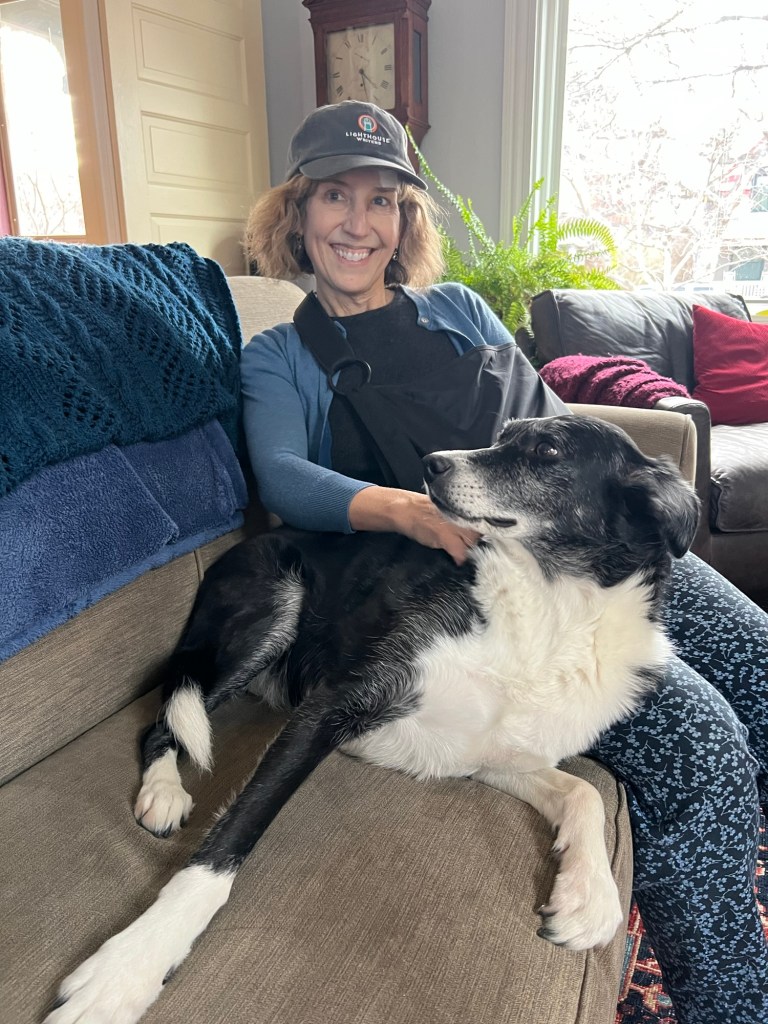
After my fall, I am propped up on pillows on the couch, doing that miserable calculation between pain management and side effects. Sleep is elusive and brief. On day three, I announce to Brad that the grand collie hasn’t been walked for six hours. While he’s out with her, I remember that, in fact, middle son took her not that long ago.

When he comes back, I apologize. I completely forgot Westy took her!  Then comes an ugly moment of recognition, followed by a confession.  Oh my god—I think I had a concussion!

Yeah, I think you did. This man of mine looks at me with such kind patience. He unhooks the collie from her harness and starts dinner.  I get up from the couch and wince, tugging my sling around my elbow.

In the kitchen I ask, Was I daffy that day, when you got home?

Yup. You told the same stories over and over. You’ve been pretty goofy.

Weston, who sat in the ER with me for hours, joins us and adds, Mom, you told me like ten times to go get some lunch. And you were really, really happy to see every single person who came in the room. I mean, even more than your usual personality.

A few days later, a half-moon of pain appears inside my forehead, a pulsing white headache that extends backwards through my skull. I am, once again, simply amazed. On bright days, I wear sunglasses inside. I close my eyes and become curious about the shapes of my headaches, how the half-moon becomes a crescent or sometimes splits into two purple lights. Over zoom, my doctor tells me that concussions need time and rest. She tells me not to go back to my normal activities and to limit screen time. No more one-handed loading of the dishwasher so I can feel at least minimally useful. No more binging Love is Blind on my iPad as the meds smooth down some of my bone pain. And no writing for week after long week.

Categories
Memoir

Snow Flowers

Off the corner of 28th and Race, I am on my knees, watching small circles of brilliant red bloom onto a patch of snow. I’m dizzy, afraid I might throw up. I stop moving and watch the crimson drip, drip, drip.

A voice behind me. Are you okay?  I see the blue uniform of our mail carrier, a friendly man I’ve chatted with before. Burly, with a beard and ruddy cheeks, he looks especially tall from the ground. He came around the corner just as I fell–my right hand extended to hold sweet Micki’s leash. My left arm now hangs useless. That shoulder is an iron band of electrified pain. I am, more than anything else, amazed.

No, I’m not okay. I’m hurt.

Patrick, the mail carrier, stands in front of me now, his phone in one hand, Micki’s leash in the other. My friend’s sweet husky mix is excited to meet another human. Patrick says, Cuts on the head can really bleed a lot. I’ve shifted onto my behind, and cold slush seeps into my blue corduroys. I pull a kleenex out of my ski jacket pocket and hold it above my left eye. It comes away soaked, carrying the smells of rusted iron and old rivers, of steel mill smoke and sweet tea. Dots the color of my mother’s front yard tulips land on my sleeve.

I just want to go home. I just want to rewind five steps and stop looking up at the bluebird sky, turn back time and put my attention on my feet.

As Patrick waits with me, a stranger calls from across the street. Are you okay? Do you need help?

A few minutes later, Micki and I are in his car. His is the face of compassion. Mid-thirties and clean-shaven, he pales when he glances over at my cut. I direct him to my house. My shoulder is so fucked, I tell him, probably more than once. His name is Mike, and he makes sure my son is home to take me to the hospital. He says he doesn’t care if I get a little blood on his car’s pristine white interior. Patrick will tell me later where Mike lives. I still owe him a thank you note.

Good collie medicine!
Categories
Memoir mental health

Summer, 2024

Five of us sit at a round table in a back corner of The Shed, a Santa Fe restaurant with low roof timbers and art on every wall. To my right is my youngest son’s girlfriend, Felicia. Her chin-length brown hair is pulled back in a clip, her long dancer’s legs crossed under the table. Across from her is Weston, my middle son. At thirty, he looks much like his father did when we met, with the same long ponytail and those bright blue eyes. Tom, our youngest and tallest, is often mistaken for Max, who is seven years his senior. They have matching dark eyebrows and smiles that light up a whole room. 

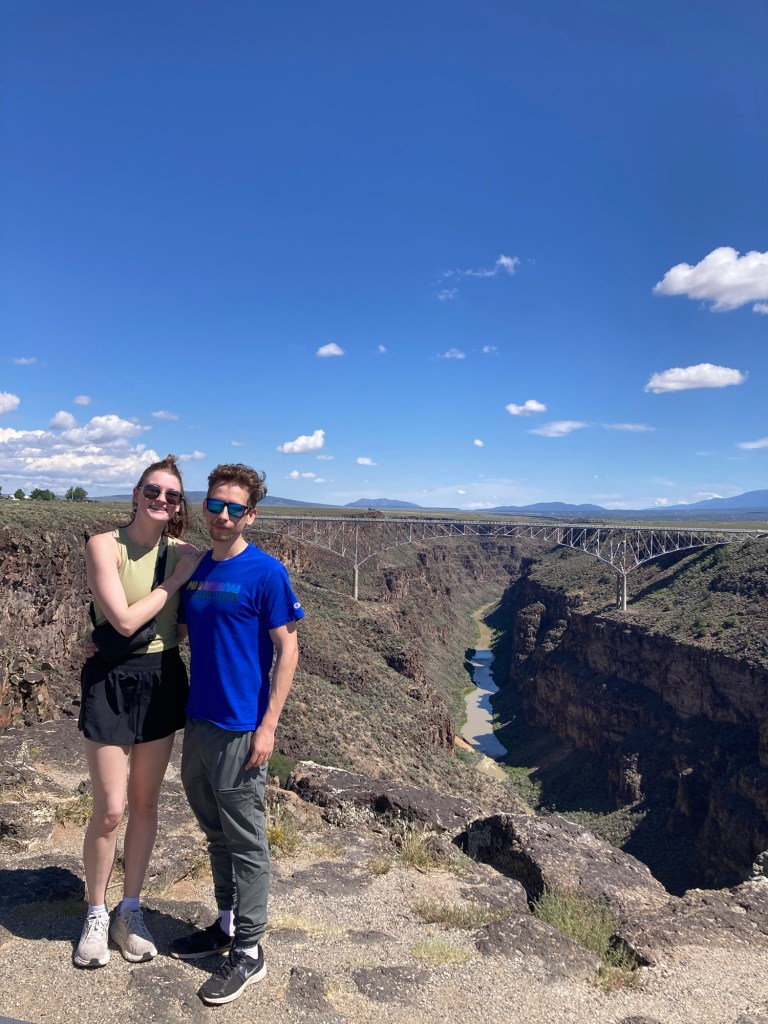
I have started calling this four-day August road trip the “foodcation.”  We have laughed our way through heaping plates of enchiladas smothered in chili sauce and told story after story over chocolate cake and caramel flan.

“Tom,” I say, “Remember when we came here for Thanksgiving, and you couldn’t walk back to the hotel because you were so full?” 

“How could I forget?  You almost killed me making me move around after that buffet!”  We recall the perils faced by youngest brothers who refuse to surrender during eating contests.    

Brad says, “We have some bad memories here, too.”

“Hey,” I respond, “let’s not talk about those sad times.”  Felicia hasn’t heard the Santa Fe chapter of Max’s mental health saga, and part of me is afraid that she will be horrified. Another part of me wants to avoid the belly-clenching fear this story invokes, a fright that has lived inside me like a restless tenant. 

Tom asks, “What happened? I don’t really remember.”  He was only eleven then.  I sigh and look across the room at a landscape painting that conveys the sheltering feel of this high valley surrounded by mountains. Captured in a simple frame are the taupe and green, the unexpected flashes of gold, that animate this part of New Mexico.

“It’s okay,” Brad reassures me and rests his warm hand on my shoulder.  “When Max was eighteen,” he explains, “we dropped him off at college here.”

“It was his dream school,” I add.  “He was so happy when he got accepted. We shielded you from a lot of the details.” I look over at my youngest, who lives half a country away.  “After we dropped Max off, he stayed in his dorm room for two days. Then, when a Resident Assistant checked in with him, he told him that he wasn’t safe. That night, the RA drove north, and we drove south. We met halfway, in the middle of the night, to get him home.”

Weston remarks, “Sounds like a pretty incredible RA.”

“He was.” And I see Max’s pale face as he stepped out of that stranger’s car at a rest stop near Trinidad.  My son’s despairing silence on that three-hour drive lands once again on my chest.  “I don’t know what we were thinking dropping him off at school when he was so depressed.”  A wave of remorse washes over me at the depth of my denial then. I pretended that a little bit of Lithium and a fancy college would make Max well, that his depression would magically give way to the brilliant future we had all expected for him.

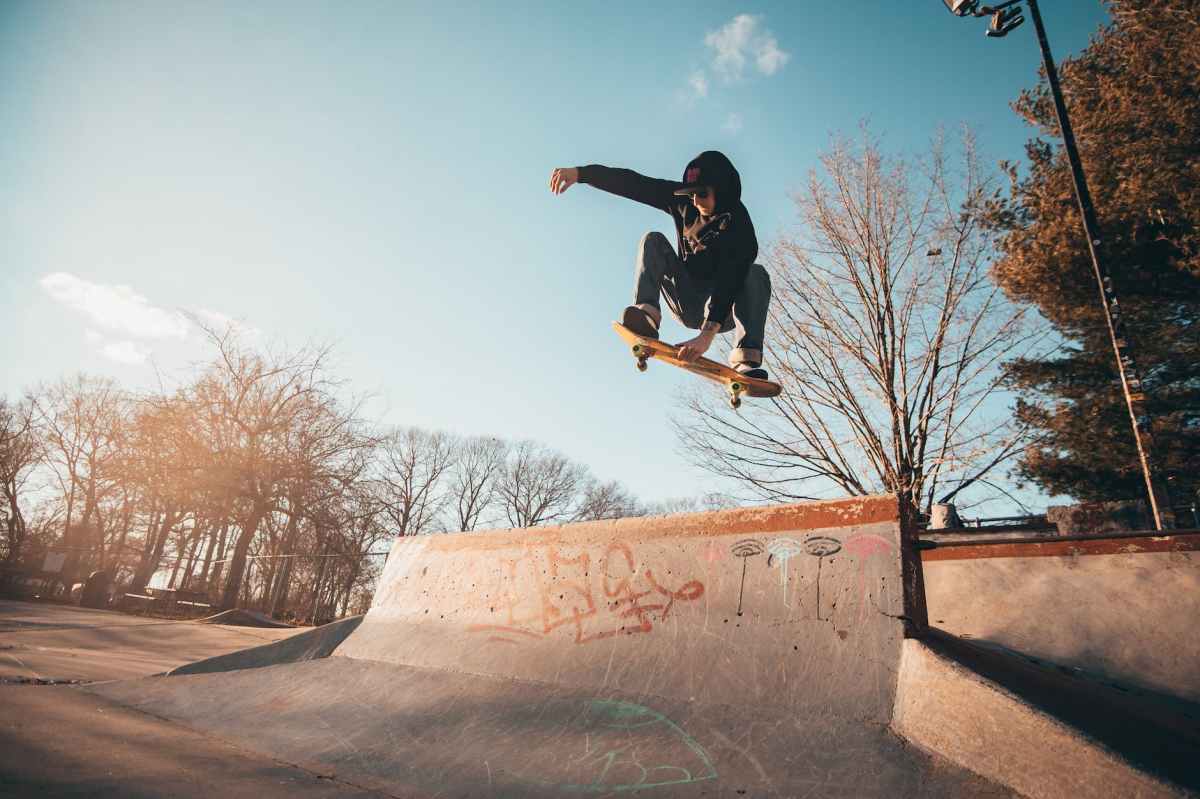
I put my dessert spoon down and feel around inside myself for the shame I carried at failing to keep Max safe. My mind holds a clear wish that I had been wiser in those years.  Yet, glancing at the faces of my family, the regret is met by clear, bright gratitude. Max is in Denver today, going to work, building skateboard community, taking care of the dogs.  

Brad has filled in more details of the Santa Fe saga.  “A few weeks after we brought him home, we had to come back and get the rest of his stuff.”   

“Oh, yeah, I forgot that part.”  Our smiles to one another are rueful.

“Tom, remember you were carpooling with Carolyn that fall?  She told me that when she asked you how Max was doing, all you said was that he was really sad.” 

“I don’t remember telling her that, just coming home from school and he was still on that futon couch.”

Weston looks at his baby brother. “Yeah. He was on that couch for a long, long time.”

I nod. “I would go to work and worry about him, but coming home was even harder. I felt like I could help my counseling clients more than I could help my own kid.”  I take a deep breath, switch gears.  “And then he bounced back like a rubber ball, not sleeping, never happier, like his mood grew wings.”

We are all laughing now.

            Dessert plates cleared, we wait for the check. Weston says, “This was cathartic. I’m glad we talked about it.”

            “Me, too,” I respond.  “I guess sometimes the past just gets to be the past.”

Categories
mental health Writing

Flowers of Light

Ten thousand feet on a Friday, and I am happy again. The shadowy November mood flood has finally receded. Along with it, at last, has gone the lingering mistrust of my mind.  

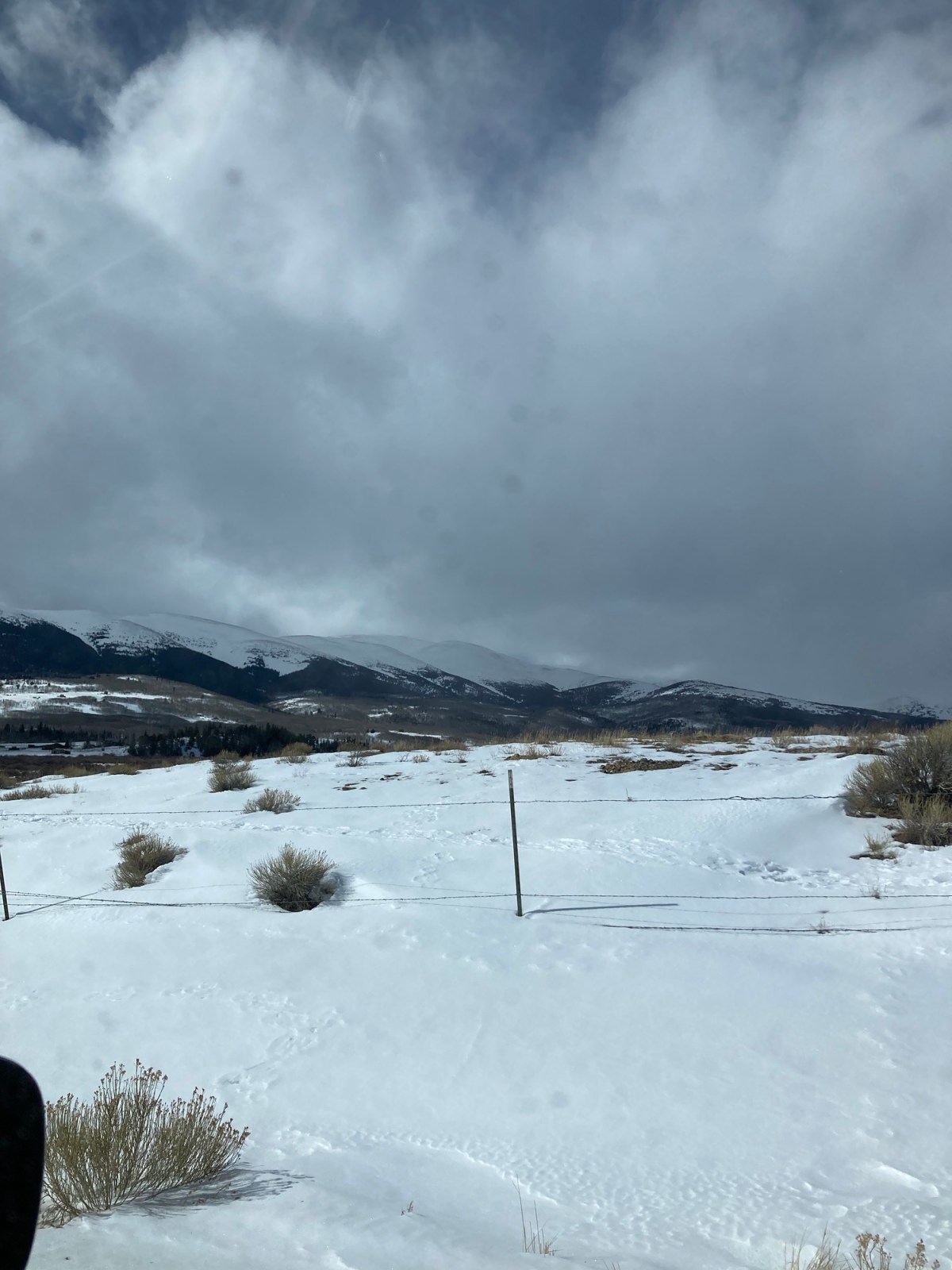
Flowers of light scatter over the snow. Aquamarine and burnt orange glint fire into the winter air.  Weston Pass Road splits this broad field of prism-flowers. My sky-blue skis float over the gathered cold-water specks, cutting paired boat wakes that cast minute waves. In the quiet morning, snow hums a high-pitched “swish.”  My heart drums faster with each push up the hill. Still hesitant to let myself fully reach, to stretch my capacity, I slow a bit and remind myself that undercurrents of grief-fueled sadness won’t take me over today. The season has turned.

I whoosh over last night’s wind-smoothed dusting, then leave the unplowed road to flounder between sets of aspen and over brown tips of sunken grass.  The small slab under me compresses, then sinks with a groan. Are there mice below, whose tunnels have been buried?  Are there fish? 

The more I write, the more grateful I am for the elemental freedom to convey experience, to net up words then plop them down, to embrace imperfection in a moment just like this.

Categories
mental health

Thanksgiving

To not be depressed, again, pretend you are okay. Buy new makeup. Feel the touch of the lovely young woman who steps out from behind the counter and uses a soft brush to smooth foundation over your face. Listen as she tells you with kindness how important it is to blend with care.  After she puts blush on your cheeks, look in the mirror and feel better.  Accept the samples she gives you.  At home, use a cotton ball to remove the layers of pale brown, of cheerful pink, until you look like you did before, just a little less tired.

Avoid going to therapy. Believe you can afford perfume that makes you want to love yourself again, but therapy is too expensive.

Keep exercising, no matter what. You know how to cope. You know you won’t give in. Crave the shelter of your queen size duvet like you once craved summer. Resist the craving. Remind yourself that the living room catches enough November light that even if your eyes are closed, one speck of encroaching darkness might have been frightened off.

When your back starts to hurt, know whose fault it is. Hear the voice blaming you for exercising when you needed rest. Question its logic. The next day, notice that you think you are in pain because you didn’t do enough.  Crawl under the duvet at noon and prop pillows under your knees. Sleep until you feel like getting up. Be cheerful as you eat the dinner your sweet husband made for you. Go to bed early.  Wake up late.

Decide that you can eat all the sugar you want, then do it.  When you wish you could cry, eat ice cream because for a few minutes, you feel like a normal person.

Let your sleep patterns become Fucked Up Beyond All Recognition. Walk around thinking FUBAR, FUBAR. I am FUBAR.

Cancel plans. Stay home. Ignore texts and emails. Anyone who loves you, really loves you, knows that this happens to you sometimes. Wish it weren’t happening as you avoid people who you now think have no reason to love you.

Wake up early today, feeling something. Stand outside shivering under it all as the blue-greens and purples deepen, as they shift to orange and pale pink. Touch your wet face and feel grateful for a kind of letting go. Remember that crying for yourself and all of your invisible losses–that weeping for the world and all the wasted lives—can be a prayer, too, can be, in fact, a form of thanksgiving.

Categories
humor

Magic Chef

Fifteen years ago, when we first showed our newly acquired antique cook stove to a friend in the construction business who is also a gourmet cook, his jaw dropped. “Whoah,” he said.  “I can’t say anything about this appliance until my erection subsides. Where did you find this thing?”

A 1930’s Magic Chef gas range with four burners, storage drawers, and a small oven, it is covered in pristine white enamel. Instead of horizontal handles to open the oven and the burner below it, we tug hanging vertical grips. The stove is a work of art, even if it weighs a gajillion pounds and was hell to lug up the two back stairs and into the cabin kitchen.

When the cook stove arrived, our “kitchen” here consisted of a white sink and very occasional running water. Wine crate shelves once nailed to the walls were still stacked in a corner when our gently used cabinets arrived. The same friend who first admired the stove had rescued them for us from a remodel project. Above the Magic Chef, the husband and two of our then teenaged sons installed a shelf and spice cupboard.  They list heavily to starboard. I straighten them now and then by tilting my head just a tad.

Through years of zero extra time or money, the stove sat cold, uninstalled. We percolated coffee or boiled spaghetti on a tiny camp stove perched on its top. Redemption came one day in the form of a Fairplay plumber who confidently ran propane to the originally natural gas burners. A trick he taught me:  to turn on the sluggish front ring after the pilot is lit, just give it plenty of propane and blow a good, strong, birthday-candle breath over the top to help with ignition. Only bits of stray bangs and the very top of an eyebrow have been sacrificed over the years using this technique.

One Thanksgiving, we filled the cabin with young folks and set about heating side dishes and warming pies, coaxing extra heat from the fickle oven. More than once, with a small “boom,” flames erupted ever so briefly from the Magic Chef’s torso. These weren’t explosions, exactly, but they were big enough to leave black smudges on the cabinet next to the stove. Now that the husband is the only one brave enough to run the oven, he likes to warm up the house on winter visits by baking enchiladas or banana bread in the ninety-year-old, leaky heat cave.  This November, we will once again, with courage, heat savory and sweets, proteins and greens, in the Magic Chef. We will throw a tablecloth over pine planks long ago nailed to a set of alley-found white table legs.  Before the husband and I reach our own tenth decades, surely, we will have a more predictable, less magical stove here.

Turns out we can both wait at least one more season.

Categories
mental health

Skateable Hills

I bet I recognize some of those skateboarders, says my thirty-year-old son, whose Instagram followers see him fly over the hood of a pickup truck, land on his shoulder, then do it again and land all four wheels. We sit with his dad, at Illegal Pete’s on Colfax, warm smothered burritos and Baja tacos in front of us. My oldest child is well today, clear-eyed, and hungry for life.

Above the bar, a TV broadcasts skateboard after skateboard zooming down the hilly streets of San Francisco. They move at impossible speeds and accomplish death-defying tricks–leaping trash cans in narrow alleys, defying gravity on vertical “wall rides” before continuing down a handrail to a smooth landing. One young man scutters his board down a steep, block-long set of three-inch concrete steps. His white shoes vibrate, and his ankles shake all the way down.

I turn away from the flashing colors and lights of the video, worrying, as I often do, about injuries, about the devastation a blow to the head can wreak. I can’t watch scary movies, and that damn video of my son, helmetless, jumping the pickup truck, turns my ribs to ice.

When he was fourteen–already an avid skateboarder–none of us understood the bipolarity fueling his adolescent “behavior problems,” his inability to get up in the morning, his impulsive bursts of spring rebellion. Diagnosed at eighteen, much of the following decade of his life was consumed by paralyzing depressions quickly followed by brief, destructive manias. Only seven years ago, his atypical brain produced one of those spiking electrical storms that can kill. That almost did kill.

All the twists and turns, the jumps and falls in his pursuit of a livable life, a life out of reach for too many people. Today, we pay for our lunch from a full checking account; we wear the skin of privilege, easily forgetting how many ways the world is built to keep people like us comfortable. And here is this young man, so capable, so confident. Able today, able this year, able to do and be so much. 

Jesus, these guys are flying! he says now, as I, too am pulled back into the video.

His dad asks, How are they not getting hit by cars? A moment later, a skater does gets hit by a car, and the three of us flinch in unison. The camera zooms to the injured young man’s face. He sits on a curb, holding a bleeding hand, his face blank with pain.

I look away from the next cascade of young men twisting, jumping, flying.

My charismatic, athletic son passes for a person without disability. He teaches skateboarding to kids in schools, and he teaches behavior skills to young people on the autism spectrum. Nine months into his longest stretch of stable mood since he became a teenager, he can work three six-hour shifts per week, plus teach a few skate lessons. He needs hours of down time every day to play video games or read or nap. He walks over from the carriage house apartment where he lives to our big family kitchen that I compulsively stock with greens and walnuts, with organic kombucha and ripening avocados. He goes to meetings. He goes to therapy. He takes three psych meds–seven pills a day–to keep his mood on reasonably level ground. To keep him alive.

As we gather our lunch refuse, one more run pulls our attention back to the TV. At the bottom of a hill, after an especially fast and skilled descent, a group of skateboarders hug and fist bump, eyes shining.

It’s the love. My son says this about the sport that helped save his life. It’s all about the love.

Categories
humor Memoir Writing

That Damn Mustard

Whenever I write about my dad, who died almost ten years ago, at 91, I feel happy. He had a big heart and a brilliant wit. Of course, as my sister likes to say, our folks didn’t read all those fancy parenting books, but even writing about hard times, I appreciate finding my father on the page. He always reminds me to take pleasure in words, in food, and in family.

I want to tell you about the mustard. I wandered outside on a break from the book and looked around for a stone to add to the marker where his ashes are.  How my father’s ashes ended up buried here by the Fairplay cabin, and not in Iceland as he had wished, is not the mustard story. Why I place stones when I go see that spot is also a different story. I will, however, tell you this, loosely related to mustard, which was his favorite condiment. My father loved going to church, and this place felt like church to us. Both of us used to cry when we sang hymns, maybe out of relief. (God does love a sinner, I’ve heard, because we tend to be more interesting people.) Dad also loved old drinking songs: “How Dry I Am” and “In Heaven there is No Beer” were two favorites that he might sing to wind up a night at the campfire.

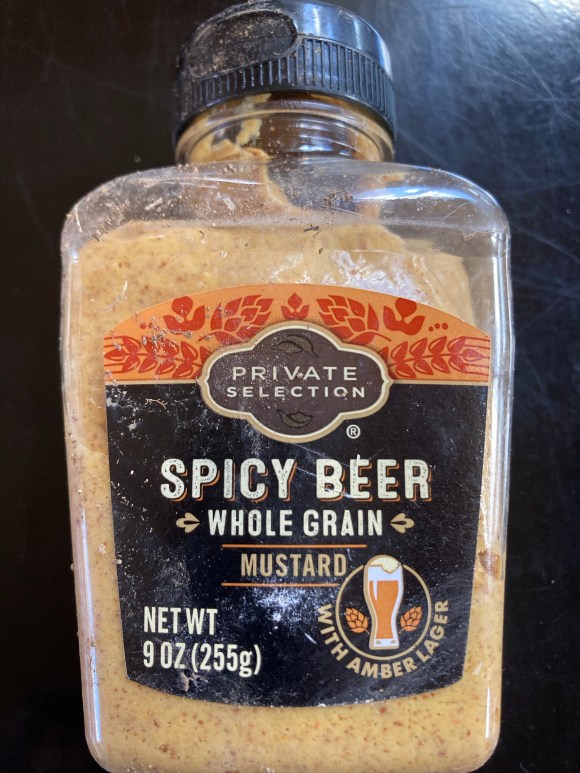
This morning, hunting around for the right stone, I came across a plastic bottle of mustard next to the fire pit. It’s Safeway brand: spicy beer whole grain mustard. Dad loved our neighborhood Safeway, and whenever I go there, I put in the old phone number he gave them twenty years ago so we could get our discount.  It always makes me smile. The Safeway mustard is peppery, like my dad could be. And it’s got lager in it. He preferred Stroh’s, but now and then, he could really enjoy a fancy beer.

Before the cabin got walls and a roof, my parents would visit from Florida and sit outside with my husband and our boys. Dad demonstrated the fine art of making his wife laugh, and soon, my husband took up the habit. This has been one of my dad’s most lasting gifts.

Today I picked up this mustard that one of our sons left out a couple of nights ago. Dad would be glad I didn’t even think of throwing it away. I carried it with me to the little bench by his ashes and his stones and said Hi Dad! Like I always do. And I said I miss you, which I don’t always do.

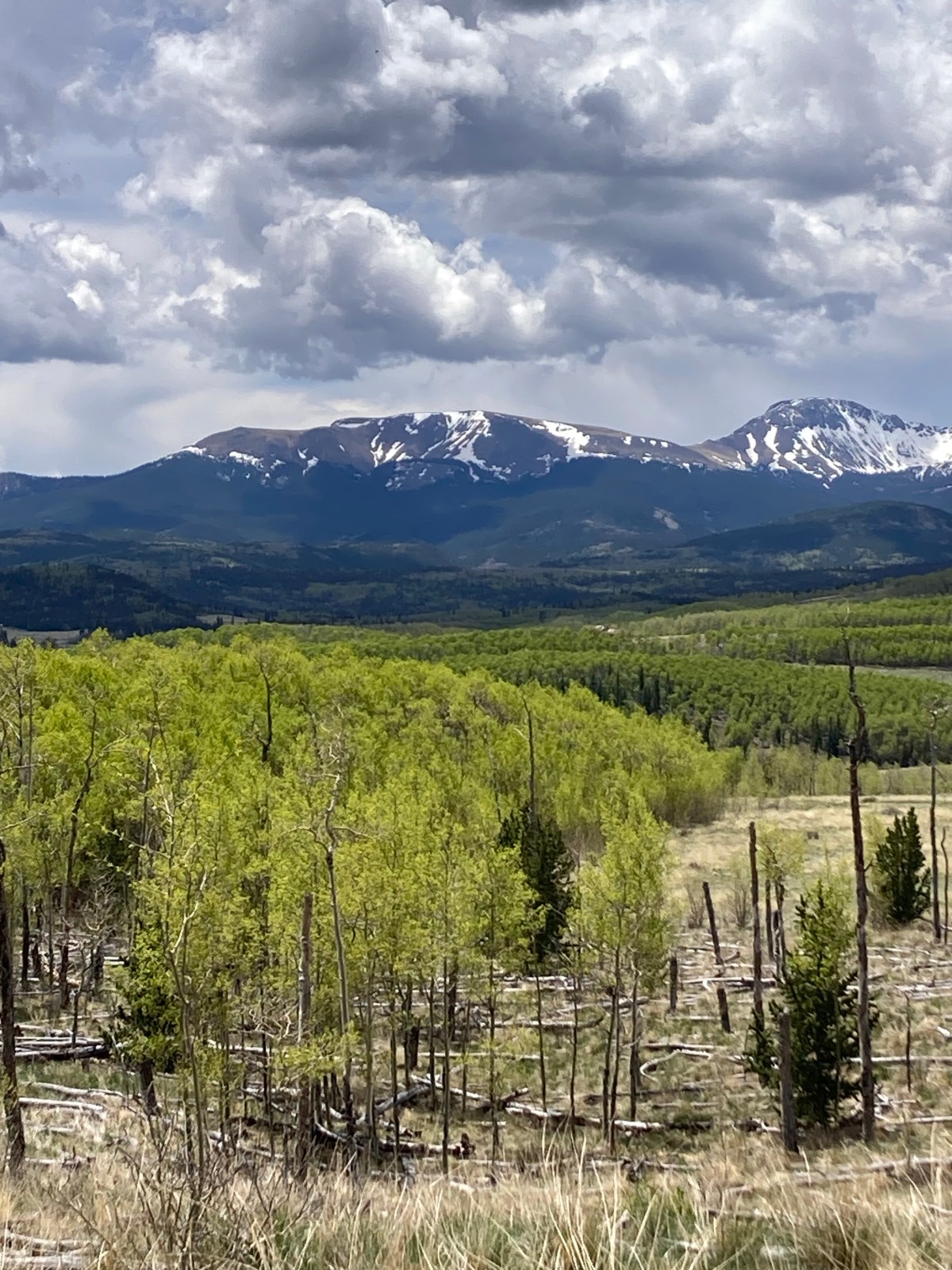
Then out of nowhere—and I mean nowhere, because I’m grateful for his long life and his peaceful death and wherever he is now; this is a man who drank (almost) all the beer he wanted and danced (almost) all the dances he could. He had a good, good life, and a long one. Still, out of nowhere, I said, I wish you were here, I wish you would come back!  And I burst out crying. I don’t usually cry hard anymore. I really have no reason. This morning, though, when I stood there with that mustard in my hand, I was just a little girl wanting to put her head on her daddy’s shoulder one more time. I sat on the bench for a while, and I’m telling you, the meadow was beautiful like I’ve never seen it, the kind of green in the new aspen leaves and in the sprouts of grass that can only happen after a month of rain.

I know there’s nothing special about my grief, how I walk around in middle age without parents and with four sisters instead of five. I know that when I was in my forties, the friends who scooted ahead of me into the beyond, the counseling clients who tried and tried but just couldn’t make it–I know all those funerals and tears were warmup for the privilege of getting older and missing more people. I know Junes can just be like this. And I’m perfectly all right.

Categories
Uncategorized

Merrimac, Michigan

Across the bay, afternoon sun illuminates the north end of Plum Island, where we walked this morning and where fresh water meets salt. In this harbor town of Newburyport, my friend and I sit on a third-floor deck overlooking the intersection of the Merrimack River and the Atlantic. A lull in conversation announces that after half a year, she and I have just about caught up. We open long-neck steamers one by one and eavesdrop on other tables.

As rain pours down day after day in Denver, I rest my eyes on the kind of green that just doesn’t grow there, regardless of how much rain we get. Here is the emerald green of coastline marsh, a weighty green edged by black mud. This serrated shore abuts year-round water that goes on and on and on.

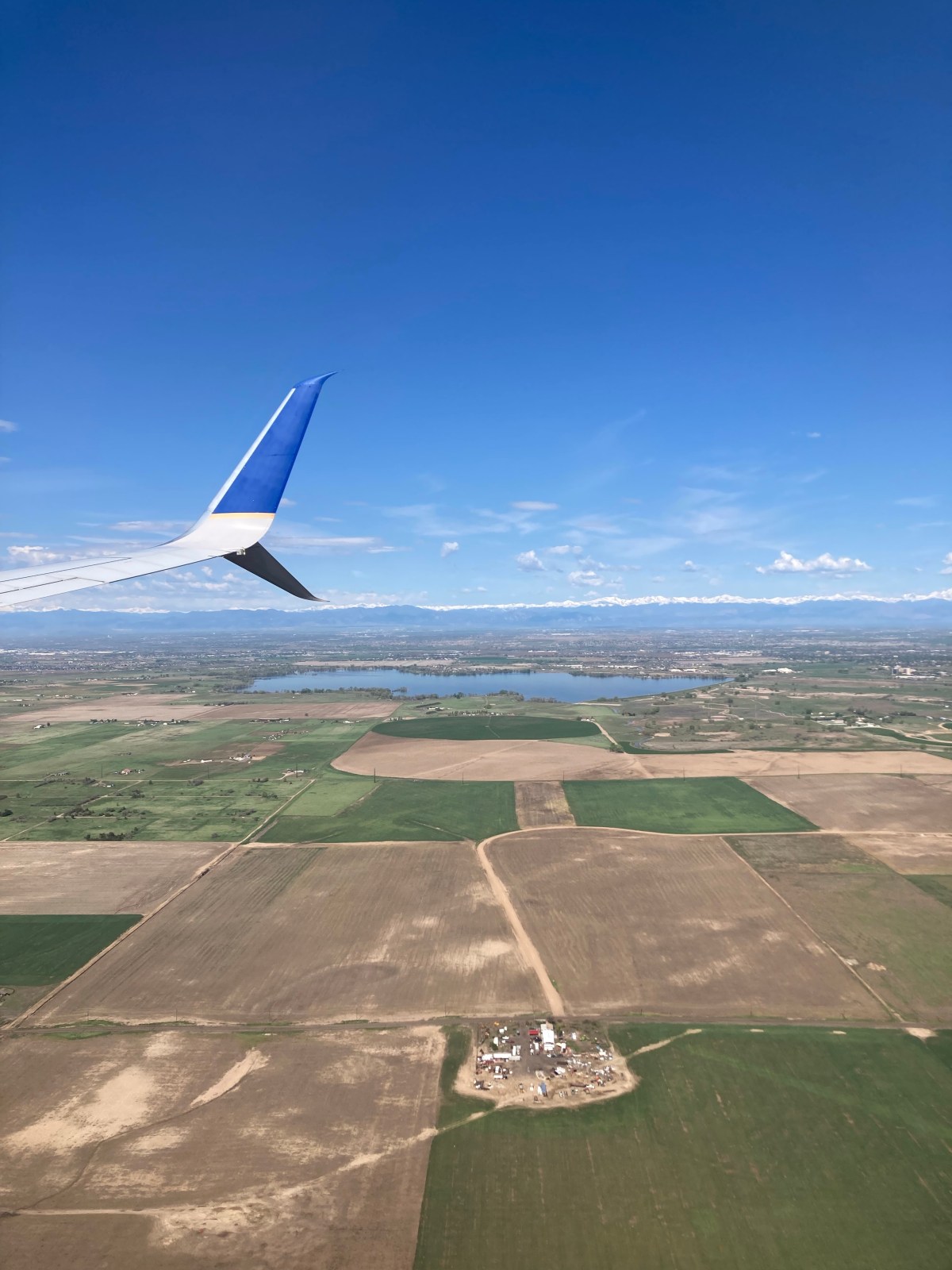
The next day, I’m at 30,000 feet looking down at a Great Lake, but which one? All I know is that it isn’t my great lake, not Michigan. The south shore of this other fresh-water ocean is almost touching farmland, near wide-open countryside. A little later, big water gleams below again, and I look for the Indiana Dunes lakeshore, bracketed by the cooling tower of a nuclear power plant and the vertical stacks of steel mills. This next great lake is also not my lake, not where my body learned to be a body in water, a body at rest. Just inside this other lake’s curved edges hangs a long border of brightness–not beach, not yet, but submerged sand waiting for small summer waves to lift it ashore.

If we do fly over the lake of my life, clouds block it from view. Finally, I see Colorado’s eastern plains. Vapor mountain-shapes on the horizon slowly give way to the line of jagged, white-tipped peaks telling me I am almost home.