Categories
Memoir

Iceland, Island, Eesland

Iceland, spelled in Icelandic, is Island, the plain English word “island.” But when Icelanders pronounce their country’s name, Island, it sounds different, Eesland, instead of island. “Island” spells “Island” means Iceland, my mother’s first home. As a child learning to love words, I ponder this oddity and the unpredictable nature of that far-away and mysterious place. Iceland is the land of fire and ice. It can explode like my mother does sometimes, in white-hot rage. And it has cold dark winters as bleak as my mother’s face on a November morning when she can’t get out of bed, when the effort of making breakfast for us before we go to school is too much. 

It is the 1970s, and I am maybe seven. I watch a color tv documentary with my mother about the emergence—through four years of volcanic eruptions–of a new island, named Surtsey, off the southwest coast of Iceland.  My mother was born and raised in village of Isafjordur that rests in the crook of a northern fjord. In her thirties, she moved to the US with my American dad and their combined family of five.  I am her seventh child, one of two girls born to her after she became a foreigner, living just outside America’s capital city.

Usually when she watches tv, my mother’s hands are busy with knitting or needlepoint, her eyes glancing up at the screen as she works. But now, sitting in the basement of our five-bedroom house that she keeps “spic and span,” Mamma’s attention is rivetted, her chin resting on her palms as she leans toward the image of a hot ash explosion lifting over ocean water. This is unbelievable! She exclaims. There was nothing there, and now there is an island. A cooling gray river of lava, red underneath, flows slowly into the water and hardens with a crackling hiss, meeting the North Sea like a sworn enemy.

Under the water, subterranean vents continue to discharge magma that piles on top of itself in layers until it expands the land mass named for Sutr, a Norse fire giant. Surtsey began to form in 1963, and grew into a rounded mile of land where once there was only moving water. It is a slowly greening island, now eroded to half its original size. Surtsey holds a solitary place above the ocean; its only part-time residents are sea birds, seals, and scientists.

In fifth grade, in Mrs. Corkum’s class at Green Valley Elementary, each of us draws our own map of the world. Standing in her blue skirt, brown hair pulled back into a bun, our teacher holds a globe in her hands. I locate Iceland by looking for the white-painted oblong of Greenland at the top of the Atlantic, then finding the rough-edged island tucked below to its right, just outside of the arctic circle. The class is paying attention because we all like Mrs. Corkum–she is fair and talks to us like we are smart, almost grown-up. Class, when we draw our maps, continents that are small will look bigger, and some things that are big will look smaller. We are flattening something that is curved to fit it on our paper. The round world, represented flatly, is distorted. This feels true to me.

I pencil faint guide-lines, holding my hand next to a wooden ruler with a thin, metal edge bent at one corner. My map is bisected vertically by the Prime Meridian, which is intersected by the Equator, and by the Tropics of Cancer and Capricorn. We draw Madagascar first, a fat ell-shape off the right-hand coast of Africa. I trace precise coastal shapes set within the grid of latitude and longitude. Starting with Madagascar, then working our way around the world, my class copies the world map one shape at a time. Tracing coastlines through meridian grids, pencil gripped too tightly, I recreate the world in the shape of islands.

Americans don’t even know where Iceland is! my mother complains. But I do. I know Iceland is a small, independent country that had democracy hundreds of years before America got its start. And I know about Leif Erikson–Mamma teaches me to say his name right, so it sounds like “Laif,” not like “leaf”. He was the first European to go to North America, in a sturdy Viking ship. Iceland is part of Scandinavia and also part of Europe. In Iceland, women know how to dress. They don’t go around to the stores in blue jeans, and they don’t have to be skinny or stupid to be pretty. Icelandic women are not like American women. They are one right way. Like me at ten, they know that they know a lot.

Iceland happens apart from me as I watch my mother’s back. She turns herself to the endless routine of cooking and cleaning, grocery shopping and cigarette smoking. She scrubs and she shines, always moving. A few months later, she seems to just sink into herself, the fiery island pummeled by scouring waves.

As I grow up, my mother’s language is like the water surrounding Iceland, chilling in its depth. Icelandic mystifies me, pulls my full attention to its musical cadence of words I don’t speak or understand. I see the surface of the language; images appear in my head when one of the few words I know float by. I can say “sael” for hello with a proper back-of-the-tongue click on the ell, and I say “bless” for goodbye, the polite beginning and ending. “Jaejae” is an all-purpose word of mild impatience that winds things up. Jaejae, says my mother as she inhales and stands up from the kitchen table, where a yellow ashtray rests half-full. I know she is getting ready to hang up the phone after talking to one of her Icelandic friends who also lives not far from us. The landline phone is anchored high to the wall, in the doorway to the dining room. It has a twisted cord long enough that Mamma can get up and look out the back door, toward the north, as she talks in her private language.

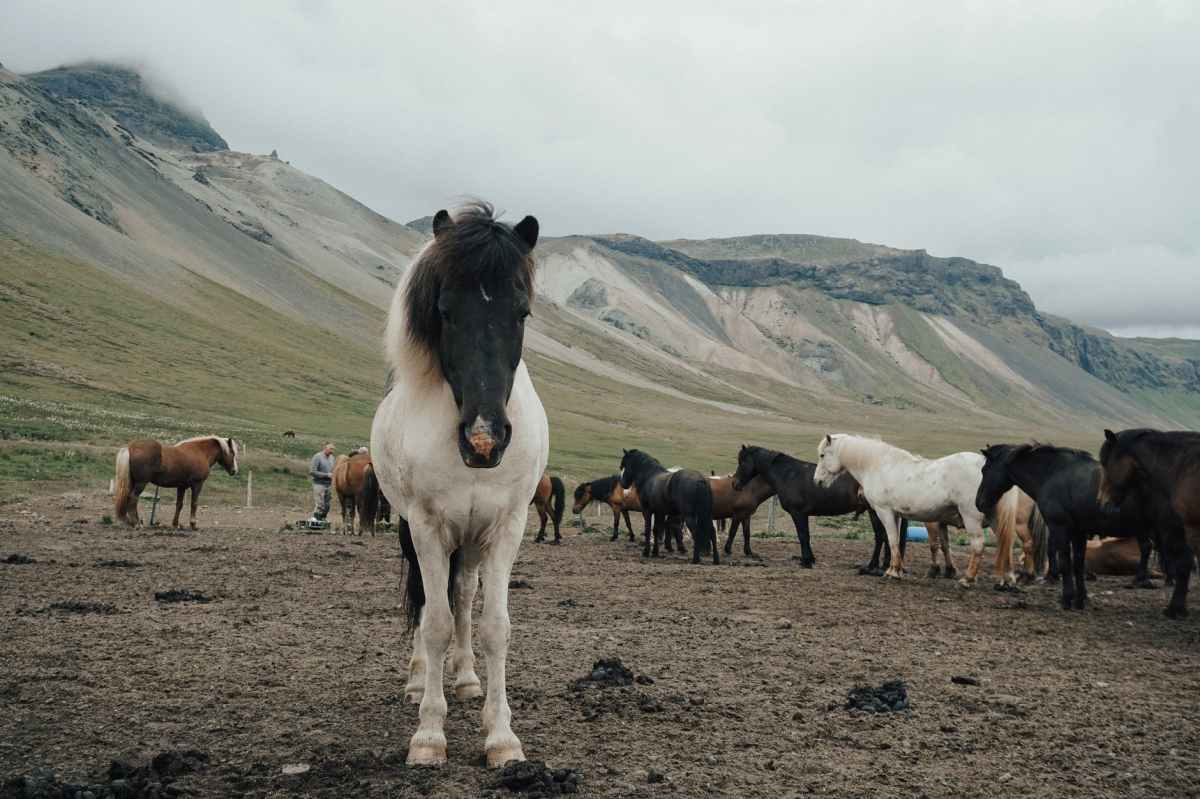
Every land form surrounded by water is a version of my mother’s home. I sit with the tip of my tongue drying in the air, tracing the shape of Madagascar. It is bigger than Iceland. It is warmer than Iceland. It is far away from Iceland. Iceland. Island. Eesland. The place I go in my mind where the air is always clear, where my mother is happy because she is in her real home. My Iceland is both far-away and more real than this America where childhood plods along, where I make the dreary winter walk to school while dreaming of riding a sure-footed Icelandic pony past moss-covered fields of ancient lava rocks.

But I am not there. I am not even all the way in America. I can’t be popular or all the way American or brash like a boy, so in fifth grade, I try to copy the world onto paper and make it look good, make it right. Over weeks, all of the continents appear, and finally, I add the dragon shape of Iceland. Sitting up in my wooden chair and setting my blue pencil down, I see a miniscule piece of the gigantic world, almost meaningless next to so many other place shapes. Surtsey is so tiny that even adding it as a dot would be wrong.

Our world maps are drawn on three separate sheets of paper that cover the surface of our small desks. After weeks of work, with new calluses on our index fingers, we carefully connect our pieces of flattened earth using invisible tape. My map looks how I want it to look, just right, pleasing to Mrs. Corkum and to me. It is hung in the school hallway alongside the worlds of my classmates, and every time I walk by, my eye goes straight to Iceland, confirming its existence. Even today, I can’t help but center the world and much of my imagination exactly there.
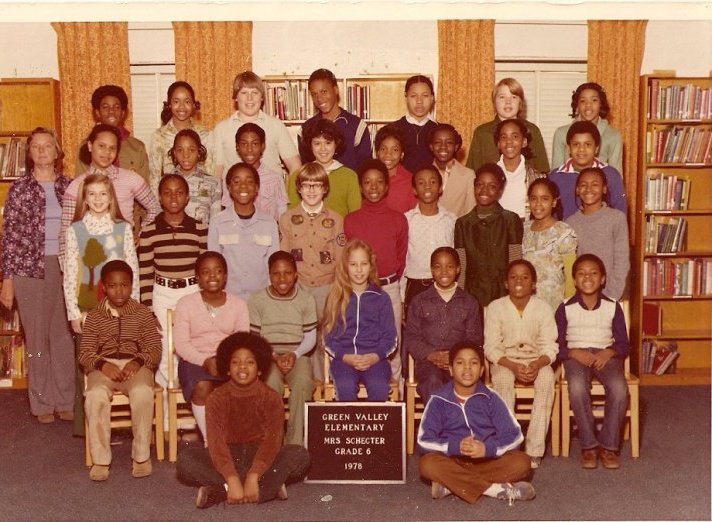
Front and center in 6th grade.

Categories
biking Memoir

Blazes

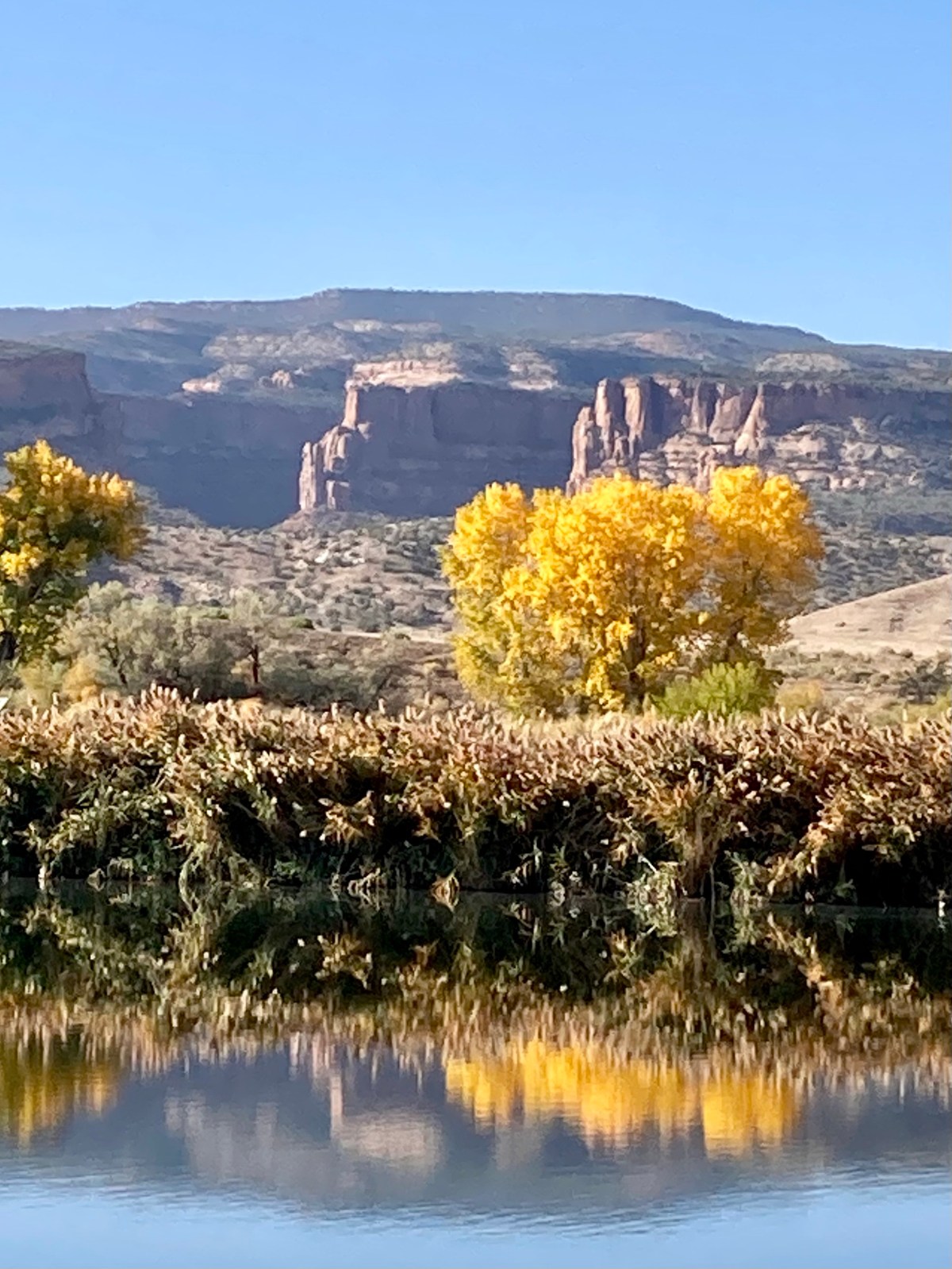
A week before Election Day, the husband and I drove six hours west on I-70 to the town of Fruita, on the sun-warmed Western Slope of the Rocky Mountains. Our campsite was a short walk from the banks of the Colorado river. Gold-topped cottonwoods offered shade, and renegade fall mosquitos flew in clouds around our heads. I could almost forget about the pandemic, about the anger and fear swirling in its wake.

In a burst of forgetful optimism, we went to a Chinese restaurant, deciding that if it got crowded, we could leave.  But soon after we dug in to our steaming entrees, a short woman with light brown hair and no mask stomped past the Masks Required sign that was posted by the door. Her bare-faced family trailing behind, she paused only to tell a carefully masked and gloved server, We’ll go to our favorite table. And there she strode, with a look on her face that said nobody was going to stop her. Certainly not the staff, all of whom, I think, were immigrants and who know much better than I how much casual racism has been give free rein when the sitting US president uses terms like Wuhan Flu and Chinese Plague.

Was I angry first or scared first as we took a few more bites and rose to leave? And was it the fright or the outrage that roiled more powerfully in my belly? Almost immediately, it felt good to resent this woman, to know that she was wrong, wrong, wrong. Us-versus-them thinking, in which we are always the better people, might be built into human DNA. But that doesn’t mean I want to play along, to taste the sourness of self-righteous anger like bad whiskey on the tongue.

As we drove to Moab the next morning, I sang along to Alanis Morissette’s song “Ablaze,” in which she cautions her young children about Some separation from each other, yes it’s a lie we’ve been believing through time immemorial. But I struggled with how satisfying my resentment toward that smug woman felt.  Anger is one thing–a natural and often clarifying emotion. But a grudge is something else; resentment morphs into a heavy and barbed burden. The trick is reminding myself, over and over, that I can put that weight down. And yes, the fact that contemplative biking is part of my package of privilege is not lost on me. Easier to feel the oneness of all life with a full belly and secure housing, not to mention the presumed acceptance that my whiteness still too-often conjures. I’m spoiled and I’m forgetful, losing my way every single day.

Amid the shales and sandstones of Moab’s trails, where shrubs grow in low gaps between rock slabs and root in crevices along cliff walls, few options exist for way-finding. Blazes painted directly on slick-rock hummocks dot the route like lane markers. But a rider must trust the blazes, must believe that the dashes do, in fact, reveal the optimal route. Trusting the blazes, even when they seem at first glance to offer a more difficult path, could save you mashing your body between a bike and a very hard place.

As I pedal up and down under blue sky, still ruminating about the maskless woman, I trust the blaze that tells me I can’t hate just one person. I look for the loving blaze that tells me to be less afraid and more generous. I swoop and swerve and am reminded that gravity will be gravity. The world will be the world. And a more loving perception is always an option.

Post-election, we are home in Denver where Covid 19 marches relentlessly on its own destructive path. Close friends get sick. Two of my nephews test positive. A week later, after a few unmasked minutes with a loved one who soon got sick, we isolate. We wait for our own test results. Thanks in part to sheer dumb luck, they come back negative. Our loved ones were also lucky, recovering well from non-severe cases. And this week, the election results are sticking, like yesterday’s soothing blanket of snow.

Today, gratitude hunkers down with us, mingling with memories of that restaurant and those blazes of light. I see the yellow-crowned cottonwood framing our view from camp under a blue dusk sky, how the perfect black commas of starlings flew and circled, then fell like rain to their evening roost. A perfect trip, really, one to draw joy from over a long winter.

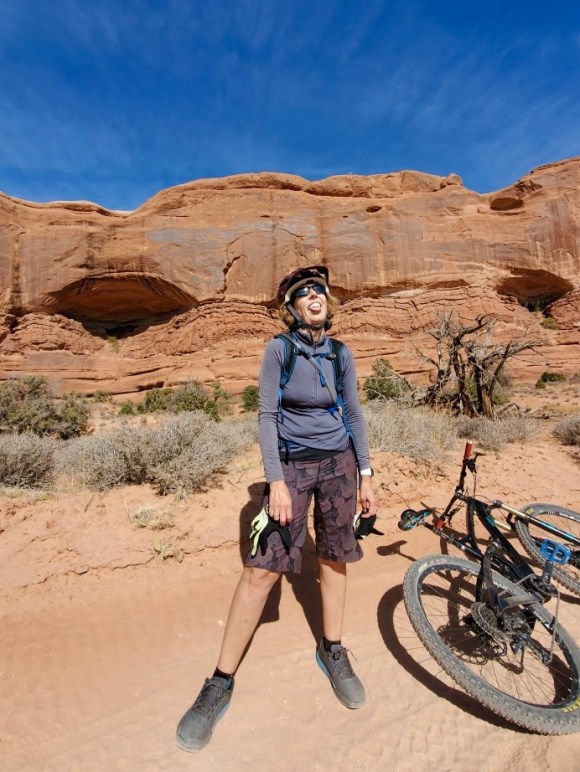
Contemplating blazes on the Big Lonely trail.
Off blaze.
Categories
Memoir

Porches

Open fields were flattened into dusty pans by the Colorado sun, and an old thermostat shaped like a coke bottle read eighty-six degrees that noon. I stood in a narrow line of shade cast by a dusty porch pillar. A thin layer of dirt and cobwebs clung to the house’s beige siding, and behind me, the wide lawn was yellowed by heat. Rain refused to land in those weeks; wildfire smoke colored the sky day and night.

At my feet sat two bags of medically tailored, frozen meals that I volunteered to deliver to Project Angel Heart clients, all of whom live with a life-challenging illness.  On this porch in a Denver suburb, I knocked and waited, hoping that a favorite client was well enough to make it to the door. As the sun baked my bare calves, I heard “Omar” approach. Tall and a bit stooped, he opened the door slowly, and smiled. One of his eyes was bluer than the other, and light shone from his brown skin like it does through oak leaves in November. I was fifty-two that summer and wouldn’t be surprised if Omar was twice my age.

When he asked how I was that day, I told him, I’m doing fine, but I get discouraged about this country sometimes, you know? Only six months earlier, President Obama had left office. Omar thought for a moment, leaning his tall body against the door frame. Then he touched his heart and said, Just look in here. Hand on chest, he reminded me:  This is where it all starts.  

A few Fridays later, Omar’s blue shirt bore a stain of food debris where a military honor might have been pinned.  How are you doing? I asked him.

I feel pretty good, then not so good. He said. I got hope, though. I do have hope.

What are you hoping for?

Well, it’s a general hope, he told me, and the lines of his face softened. We got some problems in this world. But the Creator put it all there. Ain’t nothing missing.

That is the truth, I responded.

Here’s the thing, he went on, the inside and the outside, you know, one of those is more important. And that’s the inside. He looked past me into the distance. As he took a deep breath, the bones of his sternum rose, suggesting he could gently lift up and fly away. The subjective is the inside. And culture can’t touch that. That’s what my mother taught me. What we make on the inside? That’s the real culture.

I haven’t seen Omar in almost a year. I volunteer less often lately, and my routes are more varied. One of the last Fridays I saw him, Omar opened the door wide and invited me inside. I have a bag for you, he told me. In those pre-Covid days, volunteers returned clients’ delivery bags to Angel Heart’s office so they could be re-used.

I stepped from the porch into his living room. The house was bright inside, with a comfortable clutter of books and papers scattered about. A 1940’s jazz tune swirled out of his stereo.

How are you today? I asked.

I’m not so well. It’s hard when you’re old, he responded.

 Well, I love the music you have on.

I don’t like the TV. I just listen to this all day. He waved his long fingers toward the stereo. It’s messy in here, he said, shuffling toward the kitchen. On the wall was a framed photo of a younger Omar, with round cheeks and dark hair. And amid family photos, a portrait of a brown-eyed Jesus gazed down from the wall. Reds and greens animated his Kente cloth robe as he held his hands out in welcome, at the table of communion.

Omar returned with the delivery bag. This music makes me want to dance, I said. He grinned at me and straightened his back.

Well, you go right ahead. I wish I could join you!  He moved one foot out to the side, then back to the center again. Here we go! he said. We stood giggling together for a moment, with Jesus looking on.

I said, Well, you just gotta be sure and not dance too fast after I go. Take it easy now! He smiled, then lowered his head and walked me to the door.

 Oh, I’ll be careful, don’t you worry. And thanks for the food. You take care out there!

I stepped off his porch, heading to my next delivery, as the door closed behind me.

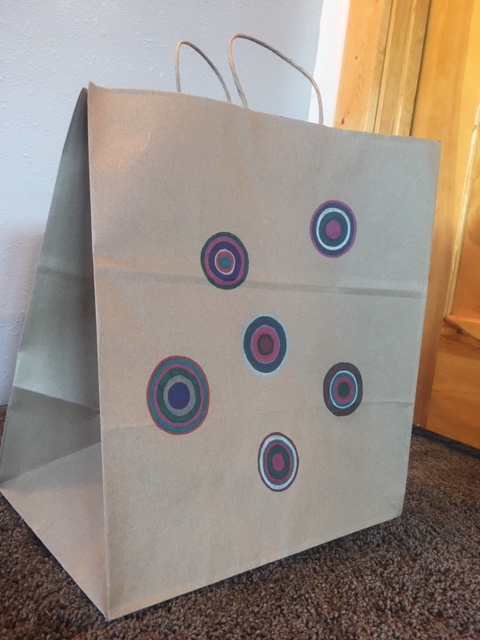
Decorated Meal Bag
Loading up for April delivery

Categories
Memoir

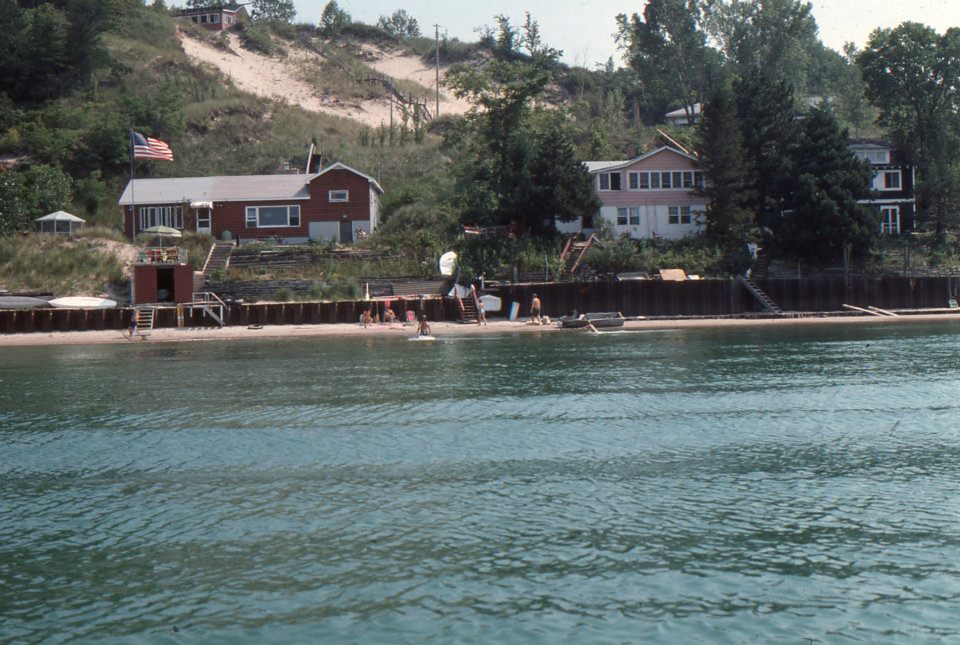
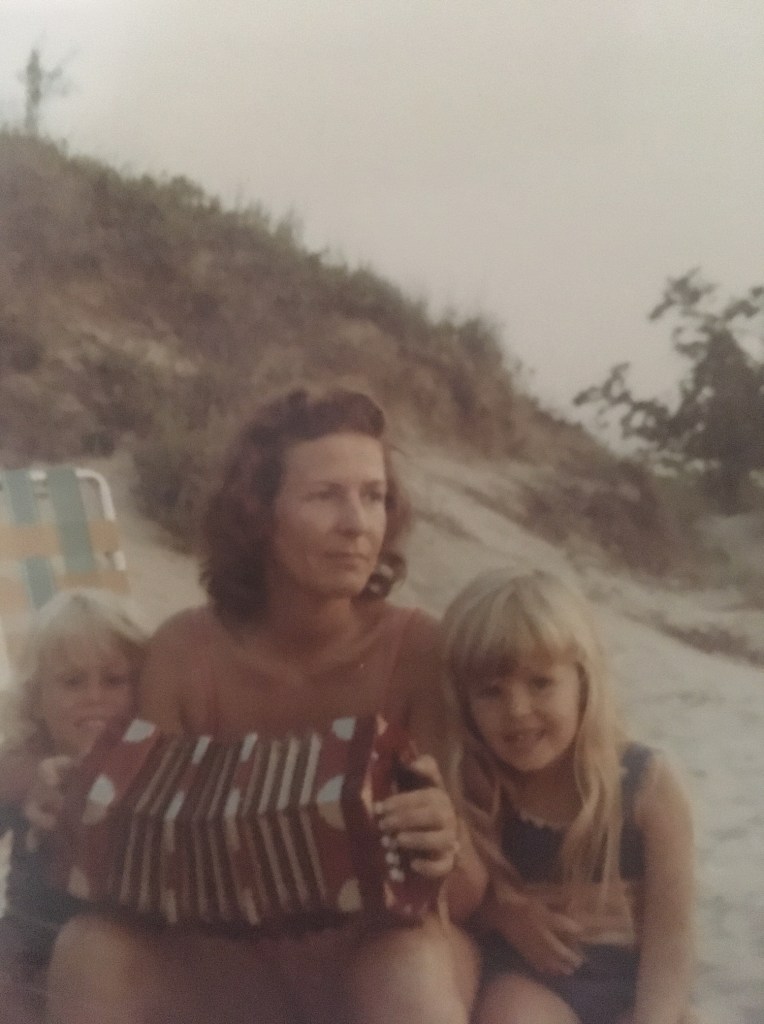
Indiana Lake Shore, c 1971

The hilltop dune rises above Michigan’s shore in an arc of pure white, ancient as the lurching staircase. Handrails offer splinters to the grip of a summer child, and bare feet, tender from the climb, wind the apex path past a mottled green door to the crest of ribbon sand shining in late morning sun. Eternal sky-face above the blank-white ridge, spikes of tall grass dividing into soft trail that will fall, fall, fall under her weight.

Mouth closed, should she drop from flight head-first and gasp grains of sand. Legs lift, then touch into drifts of forgiving white. Speed at the turning, and impossible freedom. Laughter erupts like the wild cry of a gull, to fall and fall and fall.

Under her feet, dry sand sings a whale song.

Dune angles away. Breath catches solid earth while a heart is beating and the lake is laughing its own blue-green witness. Then the magnetic southerly lean, hand reaching to grasp the brown rail squared above wooden risers. Breathe and ascend, touching every tread, toe after toe, to the velvet top of the sand hill roost.

 And run it again.

On the hilltop with Mamma

Categories
Memoir

Shamrock Viking

Thanks so much to the kind folks at Pithead Chapel for including “Shamrock Viking” in this month’s issue: https://pitheadchapel.com/.

Categories
Memoir

Colfax and Monroe

In 1985, almost twenty and on my own in Denver, I worked as a hostess at a restaurant on the fringe of downtown. Legend had it that the building–three narrow floors encased by roughhewn brick–had once housed a brothel. My manager called me the “door whore” and made sport of sidling up to me to brush his hand against my behind.

The gleaming wives and glittering girlfriends of Denver’s powerful men would sashay through the large glass doors with a gust of winter wind. Standing next to my podium, they shrugged off their fur coats for me to catch mid-air. I hung those expensive wraps in a long, oak-paneled room that soon filled with the smell of designer perfume—Cline’s Obsession, Dior’s Poison. During lulls on busy Saturday nights, my fingers brushed along the comforting softness of mink, raccoon, and fox. At the end of the night, rich men veiled in cigar smoke filled my tip jar with five-dollar bills.  Their cash paid for white Russians at the corner bar, or– sometimes—for lines of cocaine at all-night parties.

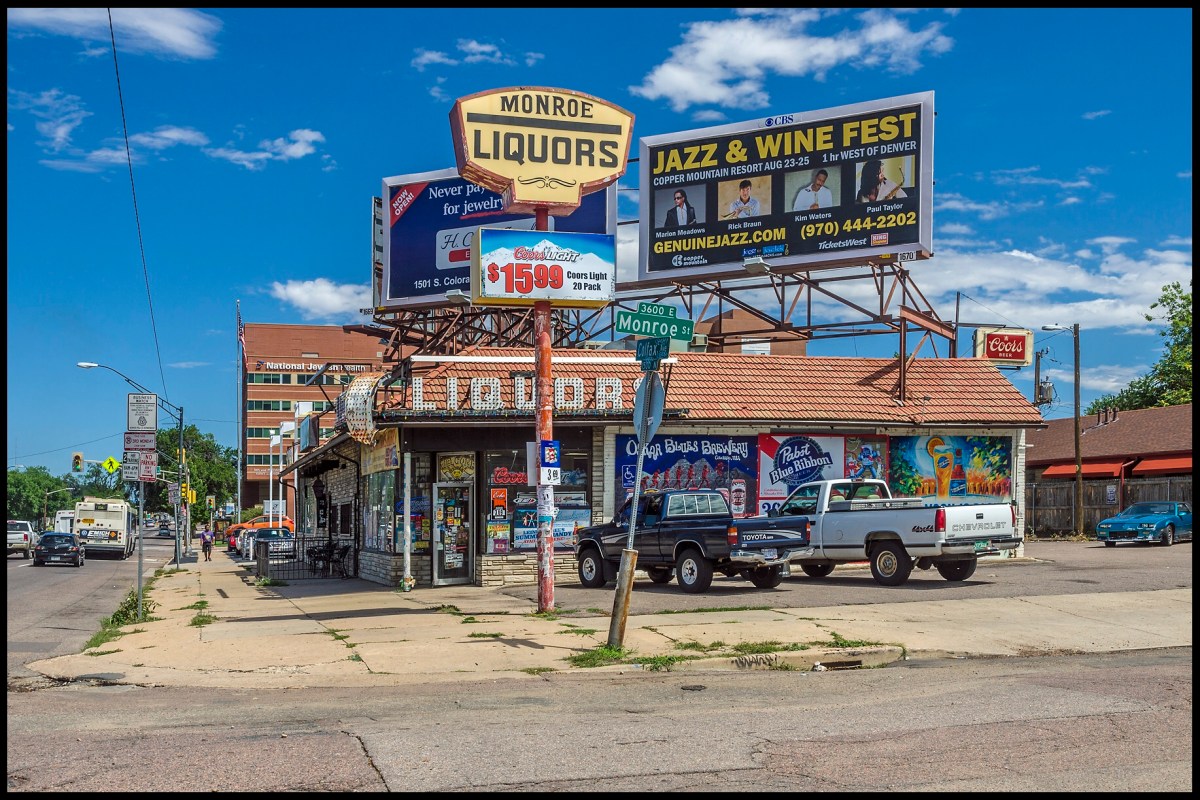
Finally away from the small flat house in Florida where my mother drank and raged, the sane and stable independence I’d envisioned eluded me. Instead, a gnawing loneliness festered under my rib cage, growing sharp and dangerous edges.  I shared an apartment off the corner of Colfax and Monroe–a block from the number fifteen bus downtown–with a roommate I once hoped to befriend but now avoided. A few nights a week were spent with my boyfriend, who liked to “wake and bake” on his days off, pressing his mouth to a bong as he sat up in bed, then raising his glazed eyes to the late morning.  Sometimes, he and I would walk from his place near Cheeseman Park to a small grocery and buy Soft Batch cookies to binge on together. The chemical sweetness of those cookies was choking, but like so many things then, I thought I could take it, that I should be able to withstand any discomfort, no matter how tainted.

That second winter away from home, a long coke high morphed into depression and thoughts of suicide. I sat in the back of a cab one night after work, under the midnight streetlamps, and watched the reflections of tidy brick bungalows flick past the window.  Families lived there who were safe and normal, people who knew how to be good, to be happy. As the cab pulled over on Monroe Street, I quietly handed the driver a small wad of one-dollar bills.

As I entered the dark vestibule and trudged up the grimy flight of stairs to my apartment door, my tabby cat meowed her insistent welcome. In the bathroom, she waited for me to pull dental floss along the cracked linoleum, then pounced on the white thread in mock ferocity. She turned on her back, and I knelt to play my fingers over the warmth of her belly. Batting at my hand, claws retracted, she purred. When we went to bed, she curled into the bend of my knees while I cried in the dark. I could never abandon her.

On the back page of Westword magazine, near the personal ads and photos of escorts for hire, I found a therapist with a sliding scale fee. Esther was tall and beak-nosed, her dark hair faintly shot through with gray, and her gaze both alert and tender. Session after session, she listened to my stories, then offered a brief hug as we said goodbye. When Esther told me You’re a very strong person, I believed her. Before long, I registered for classes at the Denver campus of CU, toting shiny pumps that I’d slide on after class to hostess the dinner shift.

I didn’t understand–as I started my adult life that year–how my moods would continue to cycle. The tentacles of sadness that wound around my chest in November would sometimes swing upward in spring until I was filled with more energy than my body seemed able to handle. Much later, my mother’s family tree was lit up like a hazard sign with bipolar symptoms and diagnoses of her siblings and grandchildren. While my mood problems never crossed the threshold to that diagnosis, my patterns of withdrawal and impulsivity were much like my mother’s and—like hers–driven more by heredity than lack of effort or love. Now and then, with my grown sons, I will drive past the gentle slope of porch roof where my old cat would lounge on sunny days. Inside the upstairs bedroom that was mine are freshly painted white walls and a whirring ceiling fan. The neon light of Monroe Liquors still glows on the corner, but across from its parking lot are an upscale restaurant and a pie shop. Like a tour guide, I have pointed out to my family the landmarks of my lost days. My boys know well the vulnerabilities they’ve inherited, the tender traps they must navigate as they map their own adult lives.

Categories
Memoir

The Last One

Back then, I lived adjacent to the HIV pandemic, as cells share membrane walls. In 1984, when I was eighteen and flirting with a cocaine addiction, I had a lover with saucer pupils and long white fingers who tripped on acid through Thanksgiving dinner at my sister’s house, staring at brown gravy as it dripped over his mashed potatoes. In bed, a dreamy expression floated over his pale face as he described to me the incredible high of injecting heroin.  He was telling me this just after we had sex without a condom. I think he had recently started sharing needles.  

That young lover, whose name I’ve forgotten, danced with me at a party in the basement of a run-down Victorian he rented with three other men on Capitol Hill. While we shimmied to Sheila E, an exultant grin bisected his face, and locks of lightning-blond hair shook into his eyes. I had briefly dated this man’s roommate, a sweetly insecure blue-eyed boy who bussed tables at my first restaurant job in Denver. After work, that boy and I rode the number 15 bus down Colfax and had unremarkable sex on the double mattress that took up most of the floor space in my tiny bedroom on Monroe Street. As fall turned to winter, I lost interest in them both. I disappeared from that house where the bedroom door of the drug-dealing roommate was sealed with a heavy padlock.

At eighteen, I knew almost nothing about the burgeoning epidemic of my generation or about how close I would come to contracting HIV. I had probably heard the term “gay cancer” at a time in my life when simmering resentment of my imperfect parents blocked out much awareness of the wider world. The link between heterosexual transmission and intravenous drug use was just beginning to be understood in the mid-eighties, as new infections in the US peaked. Oblivious, I graduated high school and took a one-way flight to Denver, my plastic pack of birth control pills tucked in the pocket of a hand-me-down suitcase.

I count, but I can’t, the times I could have been infected with HIV–had I injected with that lover, or the next one. Had I gone to just a few more parties or liked myself a little less, I could easily have gotten hooked on coke or heroin. But by luck or some genetic saving grace, I was pulled back from the edge just in time.

I count, but I can’t, how many of the generous gay men who made me welcome when I moved to Denver after high school must have died; waiters who stood with me in the biting wind and told me to get a real coat, to look out for myself. Strong men with gentle beauty who hugged me goodbye when I went on to the next restaurant job, the next lost boyfriend.

How many men whose tables I seated with customers must have faded away to nothing before tolerable antiretroviral drugs were finally developed? The server at the breakfast place where I was hostess for a few months, and his girlfriend, who wanted to marry him and was waiting out his fondness for sex with men:  did they survive? His face was marked by acne scars and hints of purplish bruises. Tall and patient, he would stand by the register with me as our shift ended, keeping me company as I tallied meal checks on a punch calculator and counted out my cash drawer.

Uncountable moments of grace saved me from the self-destructive life I courted and shielded me from addiction to drugs to or risky sex.  The kind words of the car salesmen on Colfax, whose lot I walked past every day, soothed my loneliness. The crystalline beauty of distant mountains dusted with snow gave me hope.  Luck and privilege combined to keep me HIV negative. My imperfect parents gave me love and also paid my rent one month. When I finally applied to college, at 20, Pell grants and student loans covered all of my tuition. I didn’t fight racism to get my restaurant jobs. HIV went on to decimate communities of color long after it became a more manageable illness for those who could access care.

A virus itself doesn’t discriminate, even if health care systems do. With highly-evolved opportunism, it simply proceeds through bloodstreams and airways, doing its work of replicating as efficiently as possible. No, a virus doesn’t think about the next pandemic, or the last one.

Categories
Memoir

Pandemic Lawn Care

In 1987, when the husband and I were starting our life together in Denver, we rented a tiny third-floor apartment in a white Victorian on Lafayette Street. Our bedroom snugged into a former attic and had just enough headroom between its sloping walls for two average-height people to stand up without hunching. The love nest, we called it.

On Sunday afternoons, we would ride our bikes home from the Auraria Campus, feed our cats, then walk over to Zach’s, the fern bar a few blocks away. There, we cheered on the Denver Broncos and their new quarterback, John Elway. As we came and went, we’d see our next-door neighbor, Louie, kneeling down with a sharp pair of scissors, cutting his grass by hand. Louie was short and lean, with a full head of steel-gray hair. He had a ready smile and a distinct accent from his birthplace–Vietnam, I think. His front yard was about the size of two picnic tables pushed together, and he loved his lawn with an obsessive love. Every few days, he knelt and snipped each tuft of grass, then lowered his head and squinted across the carpet of green, making it level, making it perfect.

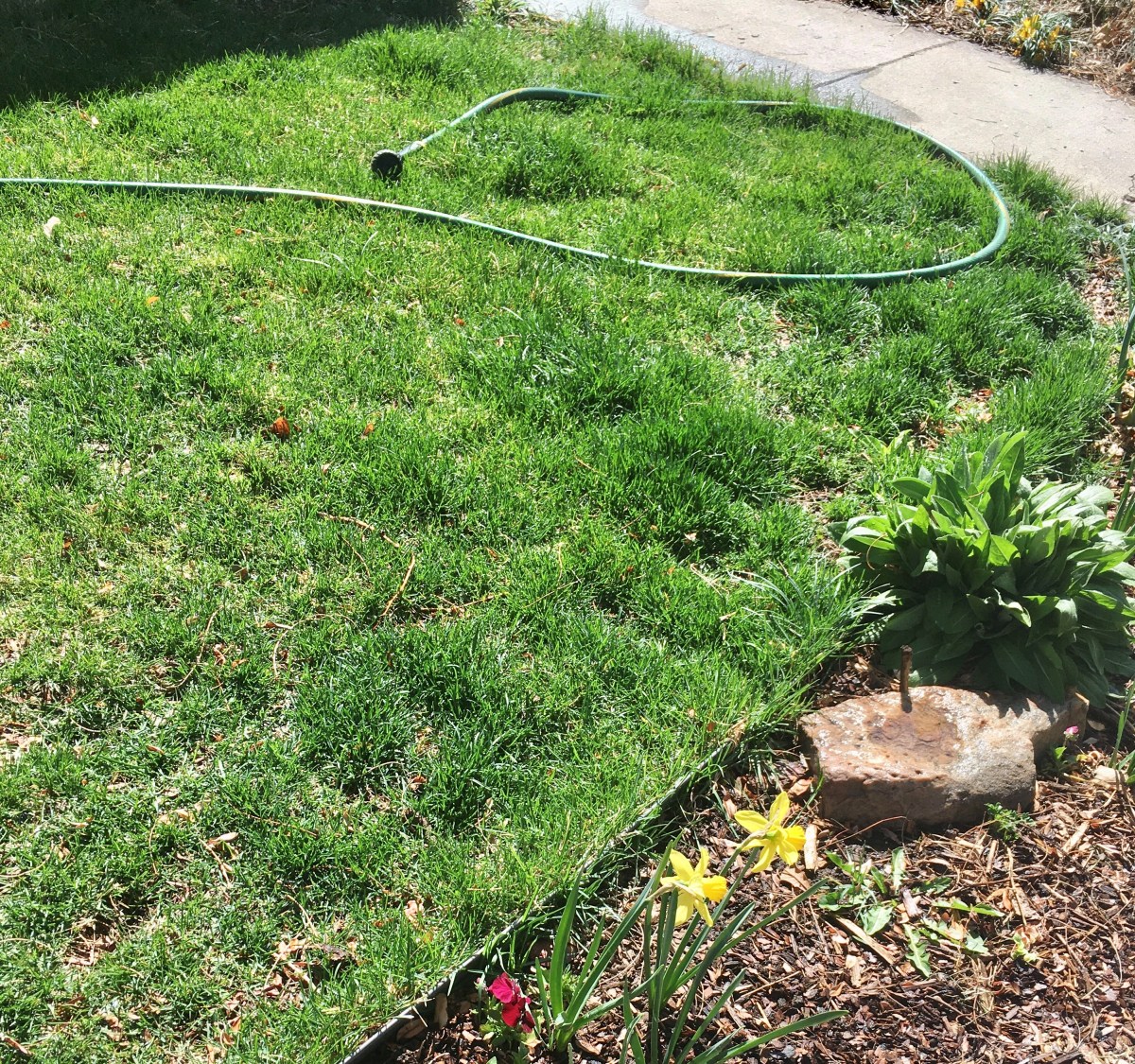
Last week, sitting on a flat stone in my own front yard, I thought a lot about Louie. Like almost everyone, I was absorbing news of the pandemic and toggling unevenly between shock and grief. My lawn was scattered with two-inch dirt cores, left by the hollow metal spikes of a hand-held aerator. Pushed into soft earth at regular intervals, the aerator expels smooth-edged tubes of soil that lay about like large, stilled worms. As the sunlight lengthened and focused, I sprayed the hose back and forth over the grass, then gradually dissolved cylinders of dirt one by one. I watched the grains of soil melt back into the turf–each small, neat hole filling with muddy water that slowly drained away.

Lawn grass is a strict task-master; every chore has a non-negotiable order and season. Aerate, fertilize, water, mow. Repeat. How tedious! I used to think. How time consuming! But last week, instead of complaining as I used to about how growing grass well only creates more work, I thought, Wow, soon I’ll be able to mow again. That’ll take at least fifteen minutes. When you’re filling time, every minute counts.

The slow days I spend obsessing about my lawn are spent, in fact, waiting to see how quickly our hospitals will fill, how many more losses will be mourned in this neighborhood and around the world. The sorrow of these pandemic days is hard to fathom. In so many ways, I am privileged. All of my loved ones are fed, housed and–so far–well. Yet I feel as if a family member has died. Most mornings, I wake up and cry. I am confused about the smallest things, and I watch my mind attempt to sort the world into before the pandemic, and after. I need to do something. Wishing I could do much more, I work in my yard.

I water my lawn and think about Louie laboring hour upon hour, manicuring his tiny patch of Kentucky Bluegrass, far from his first home. Was Louie’s lawn so perfectly loved in partial response to his traumas, to the horrific loss of a predictable world? Standing in my yard, waving my hose over small holes punched into the ground, I wished I could go back and learn about Louie’s life before he came to Denver and started cutting his grass by hand. What happened in his long long life, before the oblivious young couple moved in next door? In our fragile human lives–where grief can never be measured–I feel the wisdom of his devotion to perfection, to one lush and comforting rectangle.

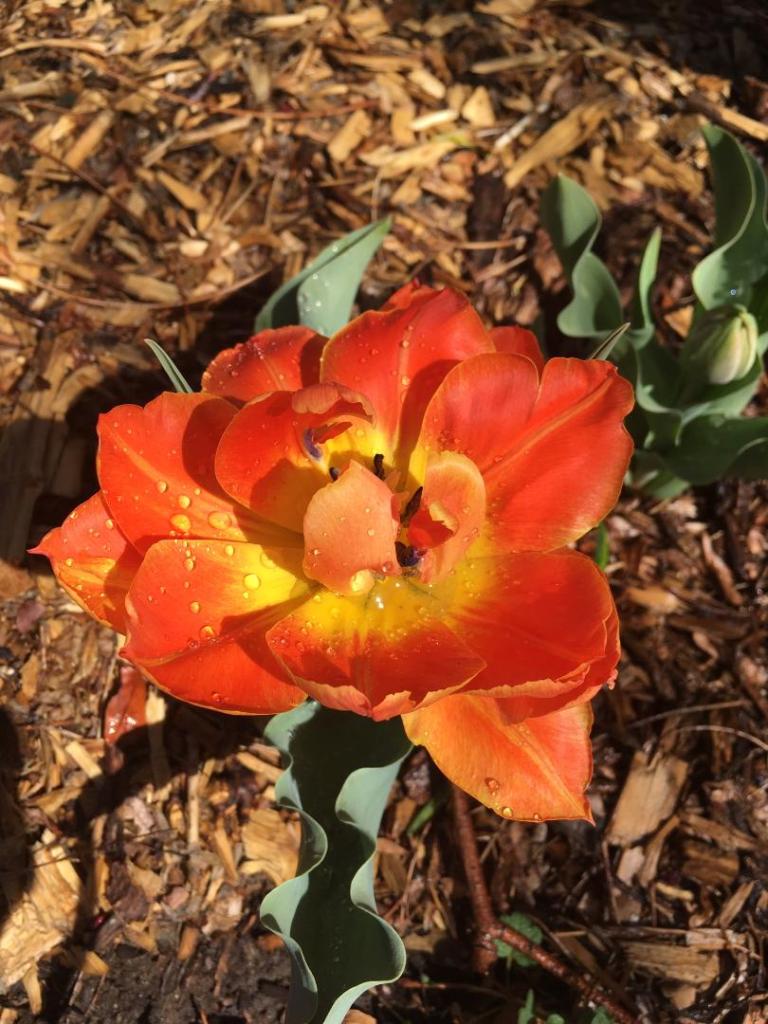
Tulip, planted pre-pandemic
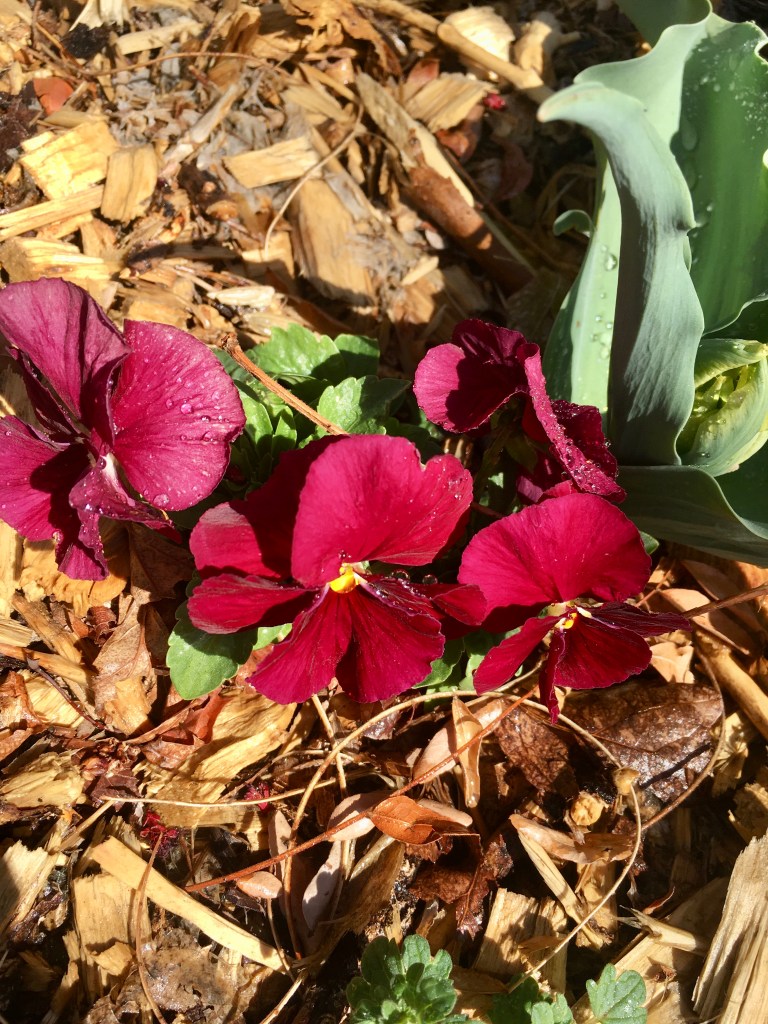
Purloined pansies, thriving
Categories
Memoir

Jammie Days

Saturday, March 14th

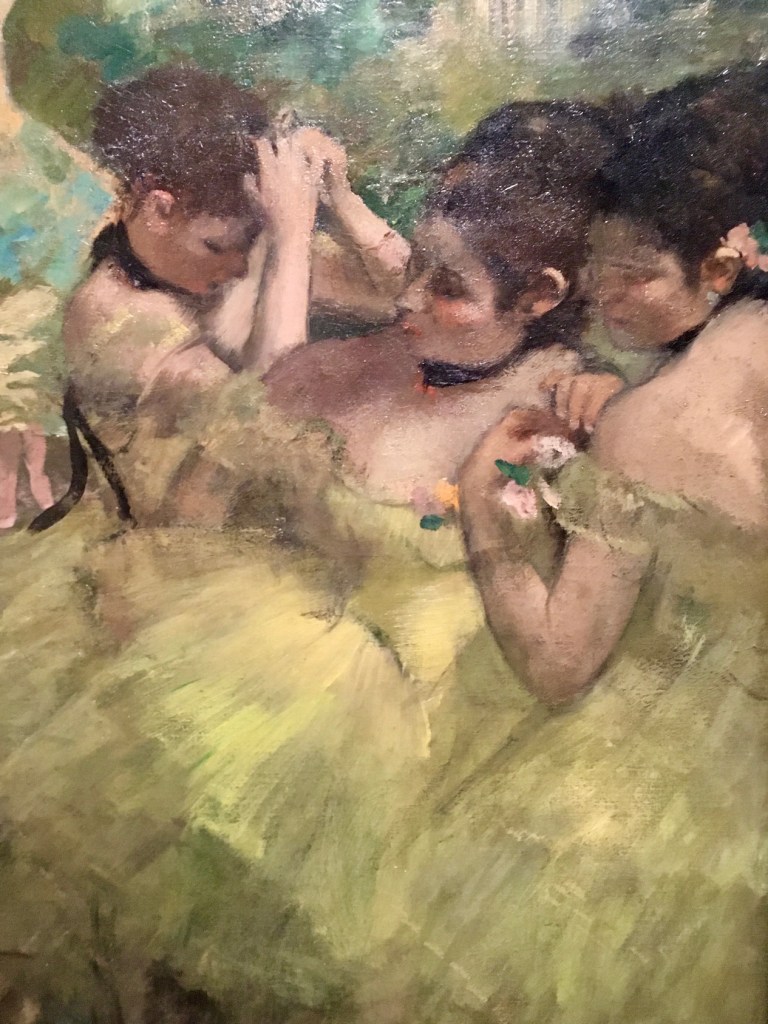
I fly home to Denver after an abbreviated trip to Washington, DC. My phone is loaded with pictures of the Anacostia River bike path and Degas paintings I saw at the National Gallery. Boarding my connecting flight in St. Louis, children are everywhere, spring breakers heading to Colorado to ski.  After landing at DIA, the concourse shuttle has a slowdown, and people press together like sardines as the train doors stand open.  A toddler with brown hair and sparkly pink pajamas sucks her thumb as she rests her head on her mother’s shoulder. The child stirs and smiles at me, then reaches out for the vertical hand rail I am also grasping. Her mother says Don’t touch that! But it is too late–her fingers are encircling the shiny metal post. Quickly, tenderly, her mother holds the small wrist still while another woman drops hand sanitizer on the child’s pudgy fingers. Her mother rubs it in, kisses her daughter’s cheek. A moment later, the thumb goes back in her mouth, and her eyes drift closed. The shuttle departs for the main terminal.

Winter sunshine on the Anacostia

Wednesday, March 18th

I am walking over to see my friend Pat, who had surgery while I was out of town. The sun is shining. I take long strides and feel soreness in my legs from biking the day before. Around the corner, my four year-old neighbor stands with her mother in front of a half-planted flower box. C has red hair and a piquant expression. Her mom and I say hello as I stand back and admire their purple and yellow and blue flowers.

Three dancers? Or one?

Look, I am in my jammies! C exclaims. I might wear them all day!

I think that’s a great idea, I respond.

On Pat’s shady porch, I drop a plastic grocery bag with half a dozen eggs and a few cough drops. I knock, then retreat to the sunlit steps.  She appears in the doorway, right arm in a sling and stylish gray hair parted on the side.  You look great, I say. You don’t look like you had surgery a few days ago.  She says, I feel pretty good, not having any pain. But, look, I’m still in my pj’s! They are lavender with a pretty print.

Friday, March 20th

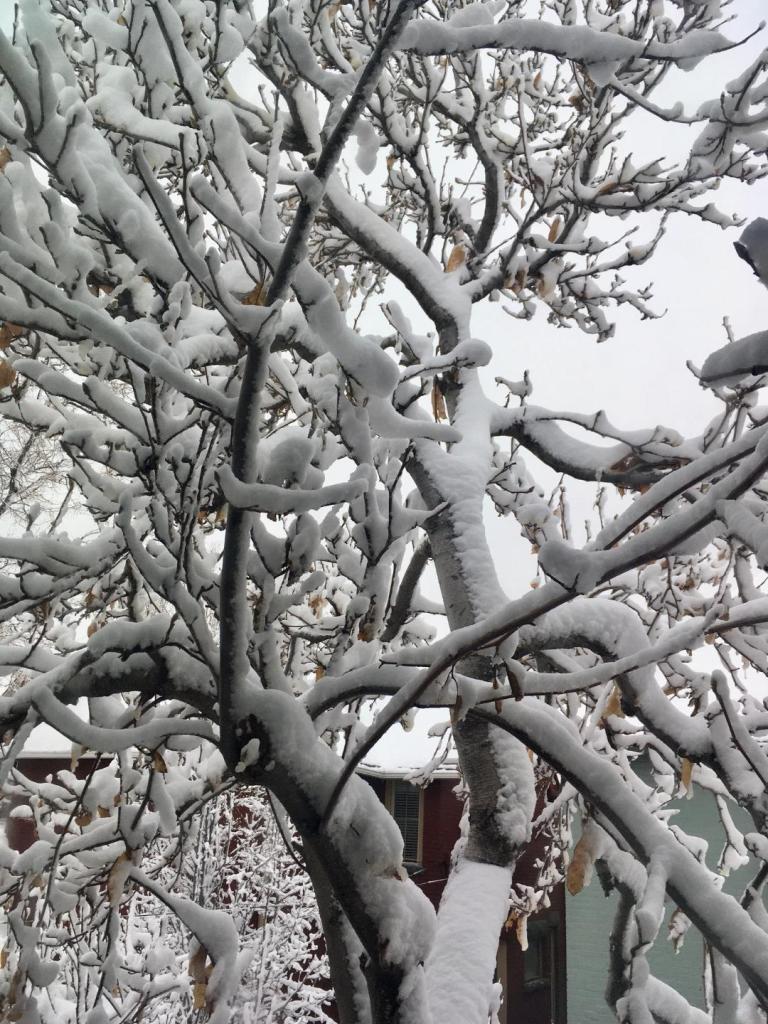
Wet spring snow is plastered on the north side of every tree trunk and street sign, and the roads are rutted with frozen slush. I arrive for my Project Angel Heart delivery shift. They are short of volunteers. As I wait to receive my cart loaded with meal bags, I am arrested by the changed expressions of the bustling staff. Always kind, the planes of their faces today hold a determination and a focus that makes me straighten my shoulders and take a deep breath. There is no small talk today. Some staff and volunteers here today are surely veterans of the AIDS crisis–all dedicated to the giving of food as medicine.  

Midway through my route, I place three meal bags on a porch, ring the doorbell with my gloved hand, and stand back to wave a quick hello. A sleepy man comes to the door in tan sweat pants and says, Oh thanks!  We both smile as he pulls the bags inside the house. Instantly, though, he is serious. In a gruff voice he asks: What in the world are you doing?! I’m startled for a moment, but then he adds, Put a hat on your head—it’s cold out there!

Wet spring storm

Categories
Memoir Writing

Katzel and Kinnell

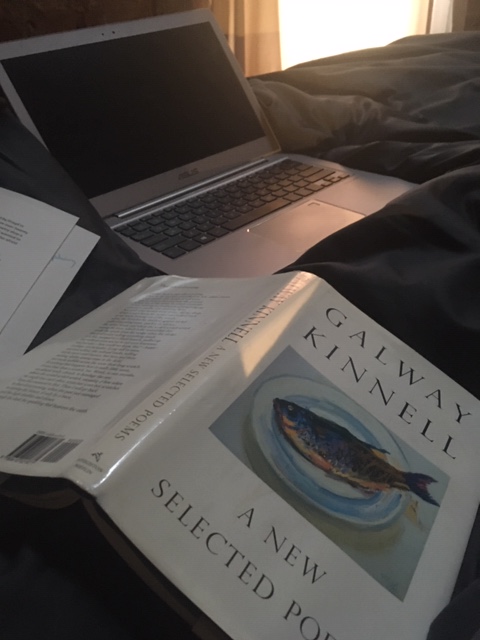
Galway Kinnell’s slim poetry volume, When One has Lived a Long Time Alone was Printed by Knopf in 1990. Tracy L. Katzel—or someone else—tossed her copy in the dumpster behind my house over twenty years ago. Her signature slopes across the inside cover in faded blue ink. I found my first book of Kinnell’s poetry atop a pile of trash at a time in my life when I was a stay at home mom who didn’t know what else I wanted to do. I knew how privileged I was to have the option of delaying finding a paying job, but I was also afraid of claiming a more defined life of my own. Overwhelmed, I was lost in the tedium and the transcendence of raising three boys.

I soon memorized a poem by Kinnell titled “Prayer”: Whatever happens. Whatever/what is is is what/I want. Only that. But that. I journaled and read Kinnell in the bathroom. I went to therapy and scraped dried playdough off the cracked linoleum of the kitchen floor. Wait, Kinnell writes. You’re tired, we’re all tired, but no one is tired enough, and the need for new love is faithfulness to the old. I didn’t know what I was waiting for, what I loved besides my family life.

I worked part-time for a temp agency, then for a non-profit. I thought about divinity school, but instead chose a graduate program in counseling.

Jotted inside the back cover of my dumpster-found poetry book is a phone number I called to ask for an internship at a substance abuse agency. I was turned down, but called again a few months later and found someone willing to supervise me. That internship became a paid job. I’d gone from wondering what I wanted to stalking goal after goal—a degree, credentials, experience. I savored time with my clients, unwinding their stories together, listening as they engaged with their own heart-held wisdom. Within a few years, I was hired full-time at the university counseling center where I had trained. It was my dream job, with an incredible team. So much waiting, fulfilled.

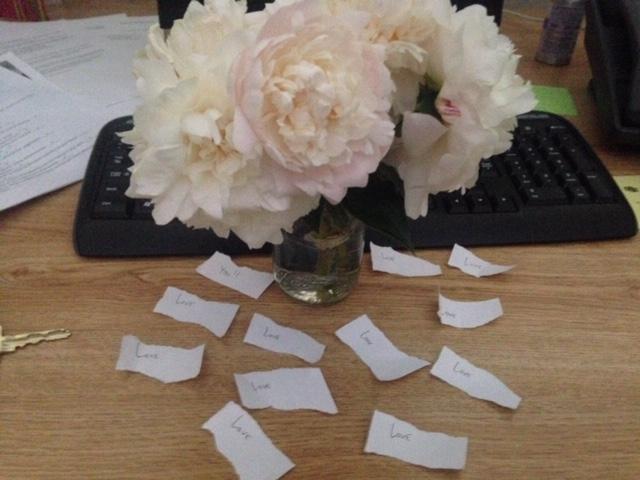
Returning to work from a funeral to find flowers and love on my office desk.

And then. Then I learned in a different way that dreams come true and change shape and give way to other dreams. Almost five years ago, I stood by my desk with my cell phone pressed against my ear and my pulse racing—another family health crisis, out of the blue. At the same moment, a colleague appeared in the doorway, alerting me that it was time to help our new batch of counseling trainees with role plays. From the middle of my forehead down through my torso, I felt pulled apart. One arm reached toward my office door and the other kept the tearful voice of my loved one pressed to my ear. In that moment, I knew I was leaving that job. At 49, I resigned my position, and began the long round of goodbyes with clients.  

I had no plans to write, just a commitment to a more balanced and peaceful life. I savored open days of reading, of geriatric dog care and of waiting for my youngest, a high school senior, to walk in the door. One of my son’s teachers asked me, So, you’re just a housewife now?

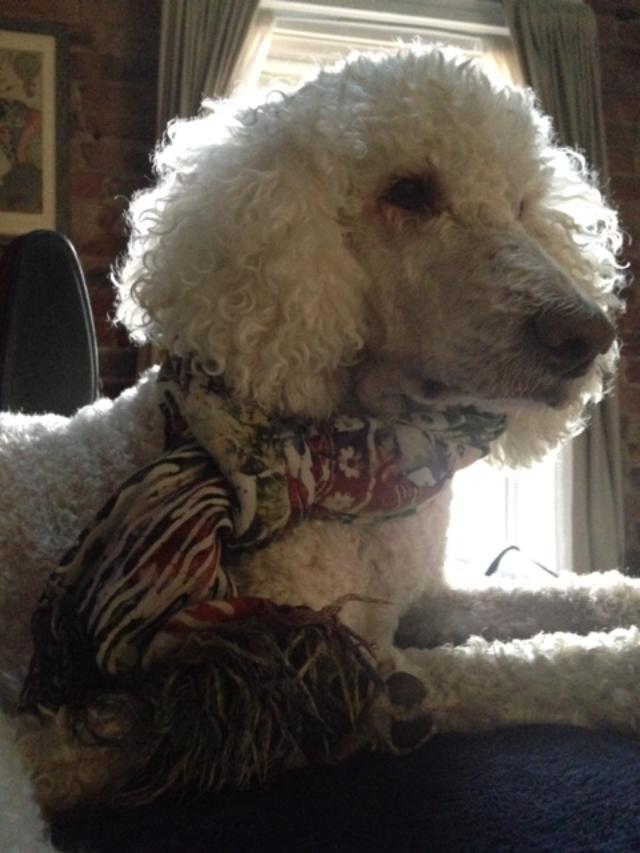
Geriatric poodle of old.

I bought a used copy of Kate Chopin’s The Awakening at the Tattered Cover book store. I’d last read it as an undergraduate and had never forgotten the term “mother-woman,” Chopin’s phrase describing women who offer not just their lives, but their very selves to their children. Caught up in the story of Edna Pontellier coming to her senses, I turned a page and saw a speck of black between the pages, a hard crescent of sunflower seed husk. I smiled at the startling artifact of another reader’s concentration and pleasure.

Kinnell woke me to poetry when I was a mothering woman (if not the self-sacrificing “mother-woman” Chopin disparages). But the desire to write came to me slowly after I left the formal work world. It was consistently fed by those years of reading Galway Kinnell. He died in 2014. A few years later, a hefty tome of his complete works arrived at my door–a gift from a writer friend whom I had told about my dumpster-found treasure. As I wend my way through Kinnell’s body of work, my love for the healing power of words continues to grow.

Whatever what is is, is what I want. Thank you for that prayer, Galway Kinnell. And thank you Tracy L. Katzel, wherever you are.