Categories
mental health Writing

Helpers

As I swim in a quiet gym pool, sun brightened bubbles form under my fingernails then rise to the surface. I turn my head and inhale, first on the left, then three strokes later, on my right. The bliss of being in water has never left me. Seven months after tripping over rough sidewalk and bashing my forehead and shoulder onto concrete, swimming consistently erases the post-concussion headaches that have plagued me for months. Today, my left shoulder feels like a hunk of canned meat—heavy, impenetrable, shadowy.  Is my swim stroke completely asymmetrical?

The only other person in the pool is a large man, maybe in his thirties, with a pale round belly and a butterfly kick that roils his lane into a froth. At the end of the pool, we both pause to catch our breath.

Hey, I venture, any chance you could spec my left shoulder for me? I can’t tell if my elbow is going up like it’s supposed to or tipping off to the side.

He doesn’t hesitate, smiling through the kind of big beard I see all over town. No problem! Let me get out of the pool so I can see better.

I do a quick half lap, out and back. It looks good, coming up even with the right side. Is it feeling nice and strong?  

What a nice guy!

It feels stiff and weak, but I broke it a while back, so that still happens sometimes. I’m glad my stroke looks okay. Thanks a lot for looking at it—you saved me a swim coaching session!

Oh, I’m a swim coach at a different gym. Happy to help!

You won’t believe this, I tell him with a smile, but I once had my bike brakes go out at a trailhead in a parking lot full of people, and I asked some guy if he would look at them. He said my brakes had been recalled, and I should go into town for a replacement set. Then he asked me how I had known he was a bike mechanic! I guess I’m lucky that way.

The swim coach laughs at my story then barrels on with his tsunami butterfly kicks. As I burble my own way back into my workout, I smile to myself at another memory. Twenty years earlier, when my husband, Brad, was new to mountain biking and had way more leg power than sense, he did a classic “endo” speeding over a berm. He launched over his handlebars and must have added a twist, because he also “face dabbed,” earning a decent cut over his right eyebrow. When I reached him, it was bleeding pretty well, making me wonder if we should hustle to urgent care for a stitch or two. By the time a couple of super fit bikers came along and checked on us, I’d run some clean water over the cut and was thinking a butterfly band aid would probably do the trick. One of the riders came over and took a close look at the cut. She said, You know, it doesn’t look at all bad. If it were me, I’d get it real clean in the shower and bandage it like you said.  After we thanked her for her help, she told us she was an ER nurse.

Lucky, lucky, lucky.

I finish my swim, shower, then meet Brad for the drive home. I tell him all about it, like I tell him all about everything. Knowing how avoidant I’ve been of writing because of my headaches, he softens his voice to an extra-gentle tone and says, This would make a good blog post. I miss your blogs.

Me, too, I say. Me, too.
Categories
Memoir mental health

Summer, 2024

Five of us sit at a round table in a back corner of The Shed, a Santa Fe restaurant with low roof timbers and art on every wall. To my right is my youngest son’s girlfriend, Felicia. Her chin-length brown hair is pulled back in a clip, her long dancer’s legs crossed under the table. Across from her is Weston, my middle son. At thirty, he looks much like his father did when we met, with the same long ponytail and those bright blue eyes. Tom, our youngest and tallest, is often mistaken for Max, who is seven years his senior. They have matching dark eyebrows and smiles that light up a whole room. 

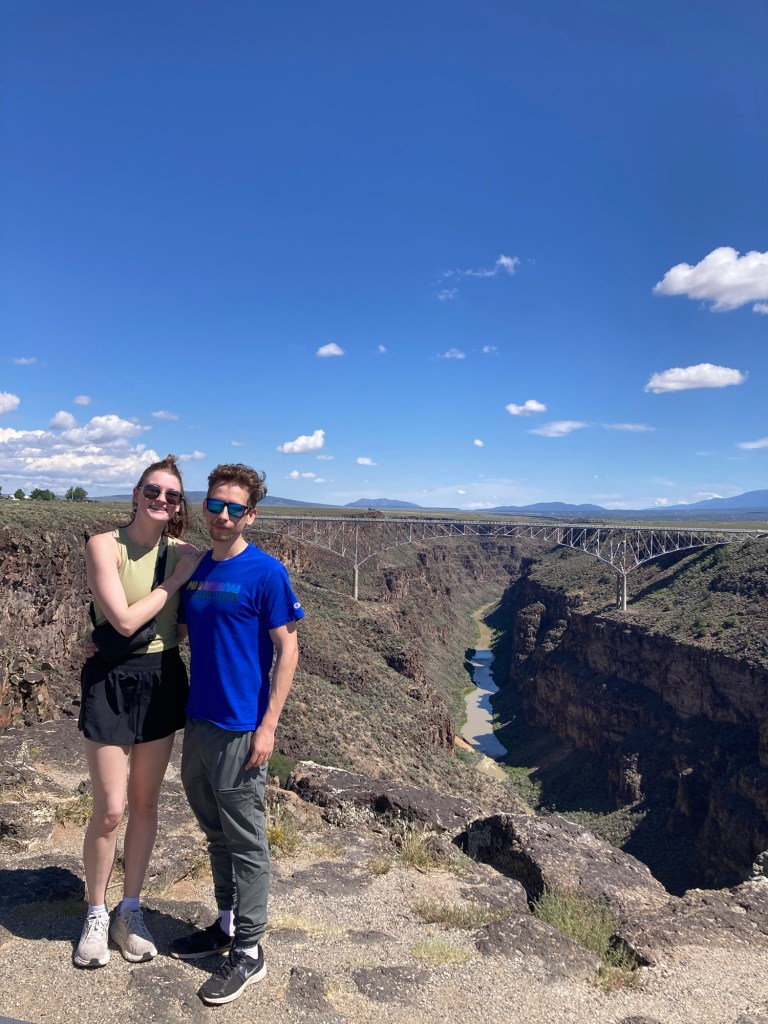
I have started calling this four-day August road trip the “foodcation.”  We have laughed our way through heaping plates of enchiladas smothered in chili sauce and told story after story over chocolate cake and caramel flan.

“Tom,” I say, “Remember when we came here for Thanksgiving, and you couldn’t walk back to the hotel because you were so full?” 

“How could I forget?  You almost killed me making me move around after that buffet!”  We recall the perils faced by youngest brothers who refuse to surrender during eating contests.    

Brad says, “We have some bad memories here, too.”

“Hey,” I respond, “let’s not talk about those sad times.”  Felicia hasn’t heard the Santa Fe chapter of Max’s mental health saga, and part of me is afraid that she will be horrified. Another part of me wants to avoid the belly-clenching fear this story invokes, a fright that has lived inside me like a restless tenant. 

Tom asks, “What happened? I don’t really remember.”  He was only eleven then.  I sigh and look across the room at a landscape painting that conveys the sheltering feel of this high valley surrounded by mountains. Captured in a simple frame are the taupe and green, the unexpected flashes of gold, that animate this part of New Mexico.

“It’s okay,” Brad reassures me and rests his warm hand on my shoulder.  “When Max was eighteen,” he explains, “we dropped him off at college here.”

“It was his dream school,” I add.  “He was so happy when he got accepted. We shielded you from a lot of the details.” I look over at my youngest, who lives half a country away.  “After we dropped Max off, he stayed in his dorm room for two days. Then, when a Resident Assistant checked in with him, he told him that he wasn’t safe. That night, the RA drove north, and we drove south. We met halfway, in the middle of the night, to get him home.”

Weston remarks, “Sounds like a pretty incredible RA.”

“He was.” And I see Max’s pale face as he stepped out of that stranger’s car at a rest stop near Trinidad.  My son’s despairing silence on that three-hour drive lands once again on my chest.  “I don’t know what we were thinking dropping him off at school when he was so depressed.”  A wave of remorse washes over me at the depth of my denial then. I pretended that a little bit of Lithium and a fancy college would make Max well, that his depression would magically give way to the brilliant future we had all expected for him.

I put my dessert spoon down and feel around inside myself for the shame I carried at failing to keep Max safe. My mind holds a clear wish that I had been wiser in those years.  Yet, glancing at the faces of my family, the regret is met by clear, bright gratitude. Max is in Denver today, going to work, building skateboard community, taking care of the dogs.  

Brad has filled in more details of the Santa Fe saga.  “A few weeks after we brought him home, we had to come back and get the rest of his stuff.”   

“Oh, yeah, I forgot that part.”  Our smiles to one another are rueful.

“Tom, remember you were carpooling with Carolyn that fall?  She told me that when she asked you how Max was doing, all you said was that he was really sad.” 

“I don’t remember telling her that, just coming home from school and he was still on that futon couch.”

Weston looks at his baby brother. “Yeah. He was on that couch for a long, long time.”

I nod. “I would go to work and worry about him, but coming home was even harder. I felt like I could help my counseling clients more than I could help my own kid.”  I take a deep breath, switch gears.  “And then he bounced back like a rubber ball, not sleeping, never happier, like his mood grew wings.”

We are all laughing now.

            Dessert plates cleared, we wait for the check. Weston says, “This was cathartic. I’m glad we talked about it.”

            “Me, too,” I respond.  “I guess sometimes the past just gets to be the past.”

Categories
mental health Writing

Flowers of Light

Ten thousand feet on a Friday, and I am happy again. The shadowy November mood flood has finally receded. Along with it, at last, has gone the lingering mistrust of my mind.  

Flowers of light scatter over the snow. Aquamarine and burnt orange glint fire into the winter air.  Weston Pass Road splits this broad field of prism-flowers. My sky-blue skis float over the gathered cold-water specks, cutting paired boat wakes that cast minute waves. In the quiet morning, snow hums a high-pitched “swish.”  My heart drums faster with each push up the hill. Still hesitant to let myself fully reach, to stretch my capacity, I slow a bit and remind myself that undercurrents of grief-fueled sadness won’t take me over today. The season has turned.

I whoosh over last night’s wind-smoothed dusting, then leave the unplowed road to flounder between sets of aspen and over brown tips of sunken grass.  The small slab under me compresses, then sinks with a groan. Are there mice below, whose tunnels have been buried?  Are there fish? 

The more I write, the more grateful I am for the elemental freedom to convey experience, to net up words then plop them down, to embrace imperfection in a moment just like this.

Categories
mental health

Thanksgiving

To not be depressed, again, pretend you are okay. Buy new makeup. Feel the touch of the lovely young woman who steps out from behind the counter and uses a soft brush to smooth foundation over your face. Listen as she tells you with kindness how important it is to blend with care.  After she puts blush on your cheeks, look in the mirror and feel better.  Accept the samples she gives you.  At home, use a cotton ball to remove the layers of pale brown, of cheerful pink, until you look like you did before, just a little less tired.

Avoid going to therapy. Believe you can afford perfume that makes you want to love yourself again, but therapy is too expensive.

Keep exercising, no matter what. You know how to cope. You know you won’t give in. Crave the shelter of your queen size duvet like you once craved summer. Resist the craving. Remind yourself that the living room catches enough November light that even if your eyes are closed, one speck of encroaching darkness might have been frightened off.

When your back starts to hurt, know whose fault it is. Hear the voice blaming you for exercising when you needed rest. Question its logic. The next day, notice that you think you are in pain because you didn’t do enough.  Crawl under the duvet at noon and prop pillows under your knees. Sleep until you feel like getting up. Be cheerful as you eat the dinner your sweet husband made for you. Go to bed early.  Wake up late.

Decide that you can eat all the sugar you want, then do it.  When you wish you could cry, eat ice cream because for a few minutes, you feel like a normal person.

Let your sleep patterns become Fucked Up Beyond All Recognition. Walk around thinking FUBAR, FUBAR. I am FUBAR.

Cancel plans. Stay home. Ignore texts and emails. Anyone who loves you, really loves you, knows that this happens to you sometimes. Wish it weren’t happening as you avoid people who you now think have no reason to love you.

Wake up early today, feeling something. Stand outside shivering under it all as the blue-greens and purples deepen, as they shift to orange and pale pink. Touch your wet face and feel grateful for a kind of letting go. Remember that crying for yourself and all of your invisible losses–that weeping for the world and all the wasted lives—can be a prayer, too, can be, in fact, a form of thanksgiving.

Categories
mental health

Skateable Hills

I bet I recognize some of those skateboarders, says my thirty-year-old son, whose Instagram followers see him fly over the hood of a pickup truck, land on his shoulder, then do it again and land all four wheels. We sit with his dad, at Illegal Pete’s on Colfax, warm smothered burritos and Baja tacos in front of us. My oldest child is well today, clear-eyed, and hungry for life.

Above the bar, a TV broadcasts skateboard after skateboard zooming down the hilly streets of San Francisco. They move at impossible speeds and accomplish death-defying tricks–leaping trash cans in narrow alleys, defying gravity on vertical “wall rides” before continuing down a handrail to a smooth landing. One young man scutters his board down a steep, block-long set of three-inch concrete steps. His white shoes vibrate, and his ankles shake all the way down.

I turn away from the flashing colors and lights of the video, worrying, as I often do, about injuries, about the devastation a blow to the head can wreak. I can’t watch scary movies, and that damn video of my son, helmetless, jumping the pickup truck, turns my ribs to ice.

When he was fourteen–already an avid skateboarder–none of us understood the bipolarity fueling his adolescent “behavior problems,” his inability to get up in the morning, his impulsive bursts of spring rebellion. Diagnosed at eighteen, much of the following decade of his life was consumed by paralyzing depressions quickly followed by brief, destructive manias. Only seven years ago, his atypical brain produced one of those spiking electrical storms that can kill. That almost did kill.

All the twists and turns, the jumps and falls in his pursuit of a livable life, a life out of reach for too many people. Today, we pay for our lunch from a full checking account; we wear the skin of privilege, easily forgetting how many ways the world is built to keep people like us comfortable. And here is this young man, so capable, so confident. Able today, able this year, able to do and be so much. 

Jesus, these guys are flying! he says now, as I, too am pulled back into the video.

His dad asks, How are they not getting hit by cars? A moment later, a skater does gets hit by a car, and the three of us flinch in unison. The camera zooms to the injured young man’s face. He sits on a curb, holding a bleeding hand, his face blank with pain.

I look away from the next cascade of young men twisting, jumping, flying.

My charismatic, athletic son passes for a person without disability. He teaches skateboarding to kids in schools, and he teaches behavior skills to young people on the autism spectrum. Nine months into his longest stretch of stable mood since he became a teenager, he can work three six-hour shifts per week, plus teach a few skate lessons. He needs hours of down time every day to play video games or read or nap. He walks over from the carriage house apartment where he lives to our big family kitchen that I compulsively stock with greens and walnuts, with organic kombucha and ripening avocados. He goes to meetings. He goes to therapy. He takes three psych meds–seven pills a day–to keep his mood on reasonably level ground. To keep him alive.

As we gather our lunch refuse, one more run pulls our attention back to the TV. At the bottom of a hill, after an especially fast and skilled descent, a group of skateboarders hug and fist bump, eyes shining.

It’s the love. My son says this about the sport that helped save his life. It’s all about the love.

Categories
Memoir mental health

Dunedin Part 3

The Light and The Dark

On the eightieth or ninetieth or hundredth day of my mother’s hospitalization, in the fall of 1980, I sit in the chancel of St Andrew’s Presbyterian Church, wearing a youth choir robe. Palm trees sway outside the sanctuary windows. I feel like a soft-limbed robot, and whatever I sing with the other altos, I sing with fear in my throat. I don’t know the word “sepsis” or that my father and oldest sister in Washington have been told to prepare themselves for Mamma’s death. I do know about fear. I know about having been bad, and about wanting another chance to be good.

On that morning, as I try to pray, my thoughts are shards of porcelain, sharp behind my eyes. Then, all at once, a bright warm light comes into my mind and lifts me out of broken thoughts. The light surrounds me, telling me without words that I will be all right, that I don’t have to be afraid. Warmth moves from the top of my head to the tips of my toes. This lifting up and calming down happens in an instant.

It could be that this exact light extends from my mind and heart and body to the mind and heart and body of my mother. Maybe you believe in something like this light, or in coincidence, or in a traumatized girl having a delusion. At different times in my life, I consider all of these. What matters is this: on that Sunday morning, my mother wakes up asking for food, for someone to please wash her hair. Instead of dying that day, she begins her recovery. And as soon as she is strong enough, my father brings her home to us in Dunedin.

Maybe because she is so skinny and pale, her eye sockets huge, that my mother seems to glow with life, to look at Florida and each of us with wonder. A snapshot of her in a wicker chair on my Aunt Barbara’s porch shows her with bony arms akimbo and legs crossed under a draping skirt. Her face is turned sideways, her cheekbones shadowed.

As her step steadies and her eyes soften, the mechanical in me recedes. I settle into her presence and into her touch. She smooths the hair from my face when I worry at night. I feel her hand and I feel her warm arm like a shawl around my shoulders.

One night, in the moist air of early winter, my parents dress for a party, he in a white shirt and dinner jacket, she in a rayon dress and low-heeled sandals. As they get into the car, my father hands my mother a cocktail. She looks down into the plastic cup filled with vodka and 7up and raises it—unsmiling–to her lips.

Panic lifts me from wherever I am standing to a view of the drink from just outside and above the car. What must that moment have been for my mother?  I imagine her having held those months of sobriety like an anchor rope growing heavier every day, until she had no choice but to let it go. 

Once again, she sits alone in front of the television for hour after hour. And once again, I start sitting with her, determined to help. On random nights, she drink-talks to me about her father not letting her go to college, because education is wasted on girls. Her voice slurs telling me how terrible it is to depend on a man: Never be stuck like I am! And tears streak her mascara into half-circles under her eyes.

Trying to save her from the shadows becomes my own night-time compulsion. I listen to her, and I shush her. I help her to bed and pull a sheet up to her chin as she tells me how sweet I am, how much she loves me. Rescuing her is my penitent duty, a chance to make up for every cigarette I ever stole from her, every lie I ever told, and every time I hated her. Like the hangovers and blackouts she must have suffered, I feel the after-effects of self-martyrdom like a slow, blistering burn. I am exhausted and increasingly confused. How, when she gets up the next day, can she not thank me for taking care of her?  I redouble my efforts to help and be good, to distract myself from the accumulating darkness of my resentment.

Categories
Memoir mental health

Dunedin, Part Two

Must Remind Myself

Wild parakeets land between the heavy oval leaves of Nanny’s grapefruit tree, the tree whose strong branches hold late winter fruit full of bitter juice and sharp, white seeds. “Oh, the parakeets were pretty,” she tells me in her husky voice, “Florida is such a special place!” The flock of birds with gleaming green heads and pale under bellies, chattering away in pairs as they rested and preened, produced a combined mini-roar like nothing Nanny has heard before. I never see the parakeets, only feel the joy of their flight as she describes it to me.

The most alive place in Nanny’s house is her Florida room, with three walls of Jaoulosie windows in rectangular aluminum frames. Against the west-facing wall is a wooden table where Nanny sets down her orange juice, her pastry plate, or her cup of coffee, clearing space amid a shifting clutter of drawing pencils and paint tubes.  Alone, she often spends the day painting, delighting in the bright plumage of migrating cardinals or blue jays as she re-creates in oil and canvass a perfect Indiana Dunes sunset or a bouquet of pink carnations.

 A long, padded bench is heaped with pillows that I would curl around when I was four, when Mamma and I extended a winter visit that seemed to stretch forever into a long horizon of calm. Nanny’s house overflows with a gentle messiness. Each surface has a small stack of books, a “Cornerstone” magazine or “Reader’s Digest”. Her Bible sits on a table by her easy chair, across from the TV where she watches Jim Neighbors sing on the Laurence Welk show. She has an old-fashioned record player and opera albums.  To her, stereo speakers are a modern marvel.

Nanny is 85 and a widow ten years when my sister and I arrive at her house to start high school, in 1980. Twin beds in the guest room are covered in green polyester spreads. When we open the closet to hang up our ironed jeans, our shirts and church clothes, we are greeted by the smell of mothballs. Nanny’s kitchen is narrow and shadowed, its counters littered with rye breadcrumbs, the fridge stuffed with small plates of leftovers, with jars of rhubarb jelly and mold-frosted applesauce. There are none of my mother’s scrubbed surfaces, her bustling cleanliness, no windowsills filled with carefully tended cuttings. My sister and I bring our arguments, sometimes whispered, sometimes not. We slam doors without thinking, and we take long, hot showers that fill Nanny’s small bathroom with smoky steam on ninety-degree days.  We burst the seams of her small house with the expanding uncertainty of our lives.

In 1980 I am in Dunedin, but not happy, there but not there. Listening to Nanny’s story about the parakeets, yearn for her serene appreciation of Florida, and I want to believe in my own innocence again. The two or three weeks we expect to wait for our parents to come to Florida and move with us into our new house stretch to a month, to six weeks, to eight. We move over to Aunt Barbara’s house on San Mateo, where we use a different set of beds, push our clothes into another closet. The backyard here is overgrown with lush fronds tended by Uncle Jerry, whose feet are calloused from walking barefoot whenever possible. My uncle is working on a translation of poems from Spanish into English. His typewriter sits facing the screened in front porch and the small, rust colored car he calls the “Wankle,” where he leaves his car keys so he can always find them when he needs them.

Years later, I learn that our mother developed sepsis that fall, that our sister and father were told to prepare themselves for her death. At fourteen, I only know that our mother’s voice has become a faint whisper. For many days, she has not been able to talk on the phone with us at all. Day after day her strength recedes as a tide might that can never fill its former pools.

At Nanny’s house, at Aunt Barbara’s house, I keep a green notebook. I don’t write about my mother or the precariousness of our family. Summer entries are about kissing boys and smoking pot, about trying to not be mean to my nephews. The addresses of two friends from Junior High are scribbled in childish block letters, oozing with sincere plans to write, to stay in touch, to be a better person, at last. One September entry, I start to write “Aug,” but disappear it with three very hard, dark lines. Amid a jumble of fragments is this: “Everything will work out. Must remind myself.” My pen presses hard into the paper. I am trying to make the writing look good, look legible and even.

Then, crossed out in black ink, and later lined over in red, is the address where I could send letters to the hospital:  Mamma (temp) 201 23rd St., Wash DC 20027.

After that, I mostly write prayers, no dated entries for a long time.

Categories
humor mental health

Him, Me, Him, Me

Its 5:40, I can get coffee!

No, it’s 4:40, your phone is messed up. We have to go back to sleep. Let’s curl up. Ooof, if I’m on my left side, my knee hurts, if I’m on my right, my shoulder hurts and my vertigo turns on.

You are a wreck.

I am a wreck. I need to call Frank Azar. Remember? Been in a wreck? Call Frank Azar!

[snoring]

[aching]

5:40. Actual 5:40

I think I went back to sleep.

Yes, you did. I had an imaginary conversation in my head with a holocaust denier. That took a long time, so you definitely slept.

Coffee!

All night, the full moon poured itself in the windows. All night until the sun came up. My friend has told me it is an agitated full moon, with mars snuggled close. I say, not sleeping, if it weren’t so cold, I could sit outside and knit in the moonlight. I say, to me, standing by the propane stove at midnight, clouds scuttling north at high speed, covering the moon to reveal a pocket of dark sky dotted with stars: Dear God, how is so much beauty possible?

Did you see the moonset from our bedroom window?

No, I’m watching the sun come up.

Categories
Memoir mental health

Son, to Part Shade

Where bold sun once beat down on hard dirt and where fresh lavender stalks pushed purple blooms toward our bright star, here we planted a tree in honor of his birth. I kneel in its dappled shade, hands coated in black soil. The sheltering arms of his skyline honey locust touch our high roofline now. Its long, brown seed pods litter the ground every summer. In the dappled shade of its yellow leaves, I seek patches of sunlit ground for pollinator plants.

This flower bed is supported by a rough line of heavy mountain stones, white and gray-veined chunks with sharp, angled corners. From the crook of one stone’s elbow, I lift a small gray rock and rest it smooth and flat against the palm of my hand. Too small to hold back dirt, too warm and smooth to throw away.

How is any rock much different from the smaller specks that clump together to make dirt? How different from molecules of air, for that matter? We move through gas particles. We inhale and exhale every day.

I need this garden like air. Its beds surround the place where I planted my adulthood, where I pulled toddlers’ jackets tight against the wind. In this yard, we turned rocks upside down to see rollie-poly bugs, to marvel at worms and centipedes. We strolled the block to gather red maple and oak leaves, then we ironed them between sheets of wax paper. Day after bright, shining day.

My hands, so much like my mother’s now, have lifted and turned this soil for thirty-three years. These palms once cradled three infants in turn, held close the start of three lifetimes. One life nearly cut short by despair and a handful of pills.

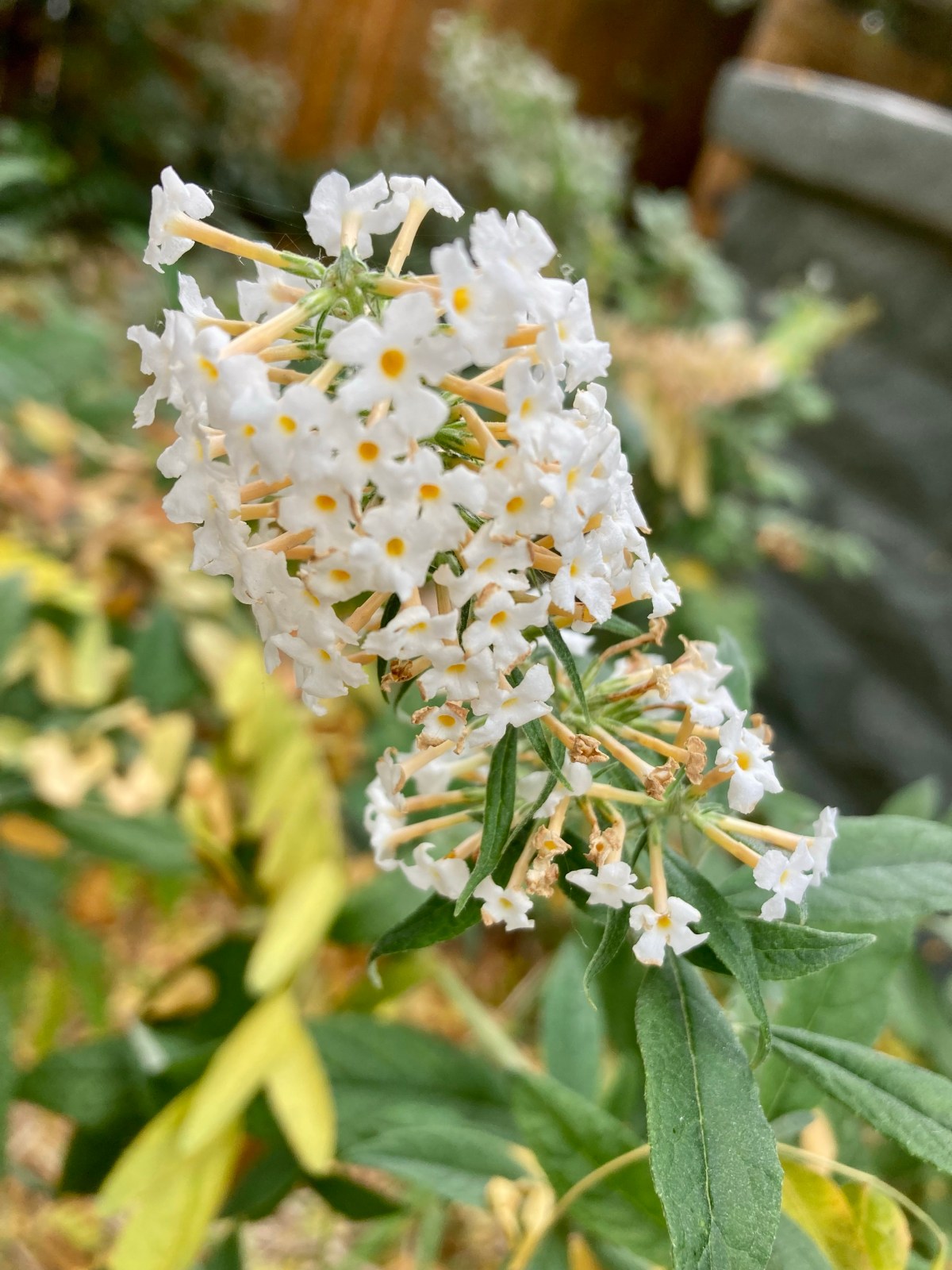
Still breathing. Still breathing. Still here. Bee balm. Astagache. Butterfly bush. All compete with weed after weed after weed. I will work this flower bed, mixing compost into clay, planting everything bright thing I can. Until the snow flies, until bitter cold casts mist from my mouth, then, when spring lures colors from these tender plants, I will kneel down once more.

Back yard astagache bush, also known as hummingbird mint.
Categories
humor mental health

Crankxiety

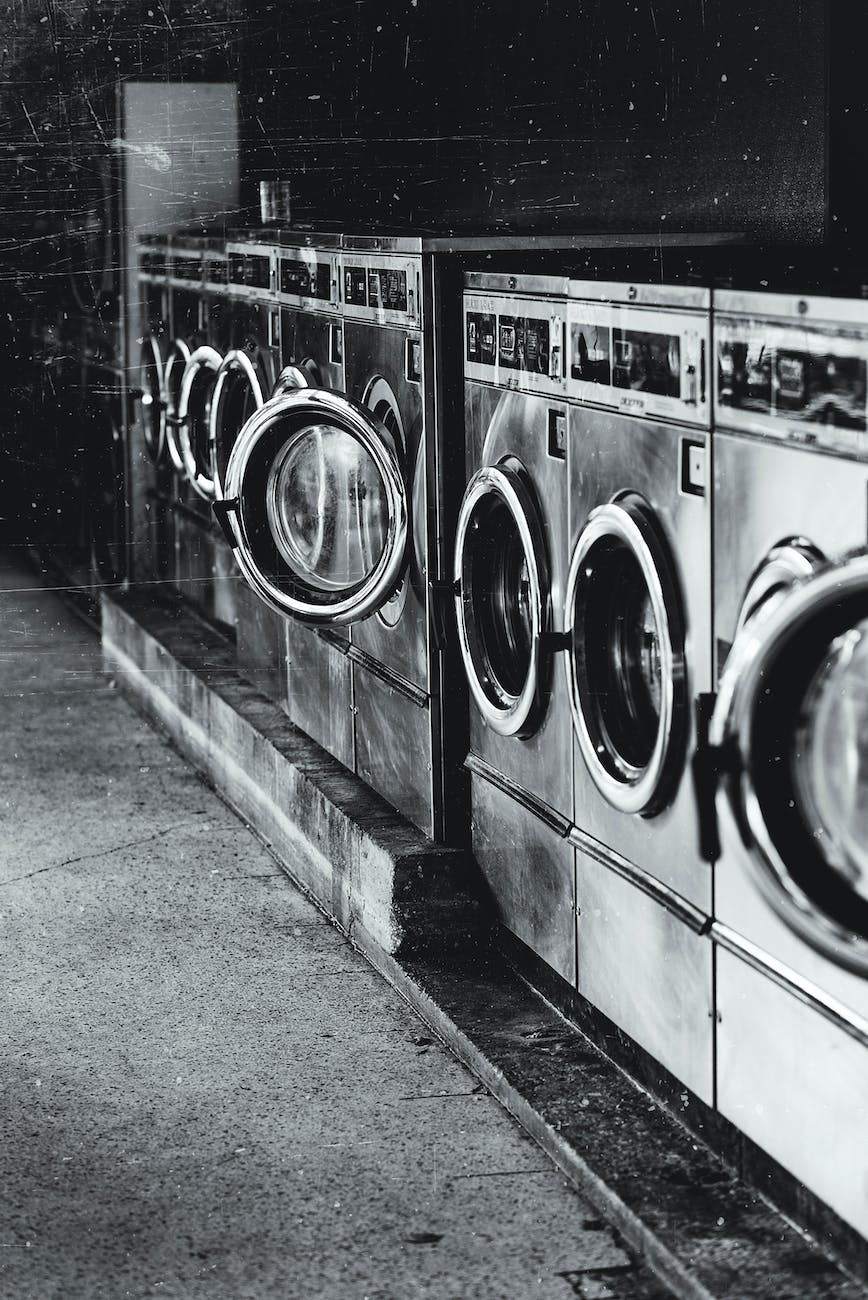
Dry means dry, I think to myself, as I watch a big metal cylinder flip my clothes around and around. I’m frowning, arms crossed, in a July-hot laundromat in Chesterton, Indiana. The husband thinks that dry means done, which means he takes clothes out of the dryer when he’s tired of waiting for them, even if the necks of my t-shirts and the toes of my socks are still damp. How wrong he is to not understand that dry means dry! How frustrating when he does things wrong! I watch myself agitate, feel my shoulders and jaw turn to gravel. At that moment, dear reader, the husband is six hundred miles away. His laundry misdemeanor occurred a week earlier.

Cranxiety: the crunchy combination of grumpiness and worry.

Everywhere I go, cranky mixes with anxious into a new kind of miserable. On a hushed mountain morning, the husband walks by as I write, on his way to the kitchen for a cup of tea. His footsteps and the kettle’s hissing jolt me into worry that I can’t write, not now, probably not ever again. Why can’t he just be in the other room until I’m done? And why must I be so ill-tempered?

Crankxiety is what happens in my head when the wifi goes out. Where does the wifi go when it goes out? When will it come back? I ruminate on how wrong I am wrong to focus on what is wrong. I am supposed to be sweet, happy, and productive. I am not supposed to flip out when the husband makes tea or the wifi goes for a walk.

Cranxiety is part of what led me to re-start therapy last spring. A few weeks in, I got into an argument with my therapist. Jenny-Lynn, he said to me, so kindly that you would have thought he was a nice person. Hot tears were streaming down my face. Damp tissues were wadded in my left hand. Jenny-Lynn, he said, it is all right to feel. My objection was immediate and visceral—opposition from my toe joints all the way to the hardest part of my skull. I only wanted know why I was crying so I could stop. But I didn’t know why, and I couldn’t stop, and for some reason, I hated that he told me it was okay.

For me, anxiety is a despairing and physical need for everything to be different, inside and outside myself. It is a belly churning worry over the past and the future, including how much worse the anxiety might get, and how much crankier it might make me.

A few days after my laundromat diatribe, I tell my doctor, Crankxiety is a new circle of hell. She nods sympathetically as she fills my first-ever prescription for an anti-depressant. I’m not depressed, I report, I am just miserably irritable. Eight weeks after starting a low dose anti-depressant, crankxiety still rears its ugly head, but its talons don’t grip my belly for hours or days at a time. I can shrug and go on with my next, more helpful thought. I don’t have to be different, and neither does anyone else. These days, I say to myself, Jenny-Lynn, it’s all right to feel sad. It’s all right to feel anxious. More than anything, I feel more like myself, complaining and sweet in turn, and just exactly good enough.