Categories
mental health Writing

Helpers

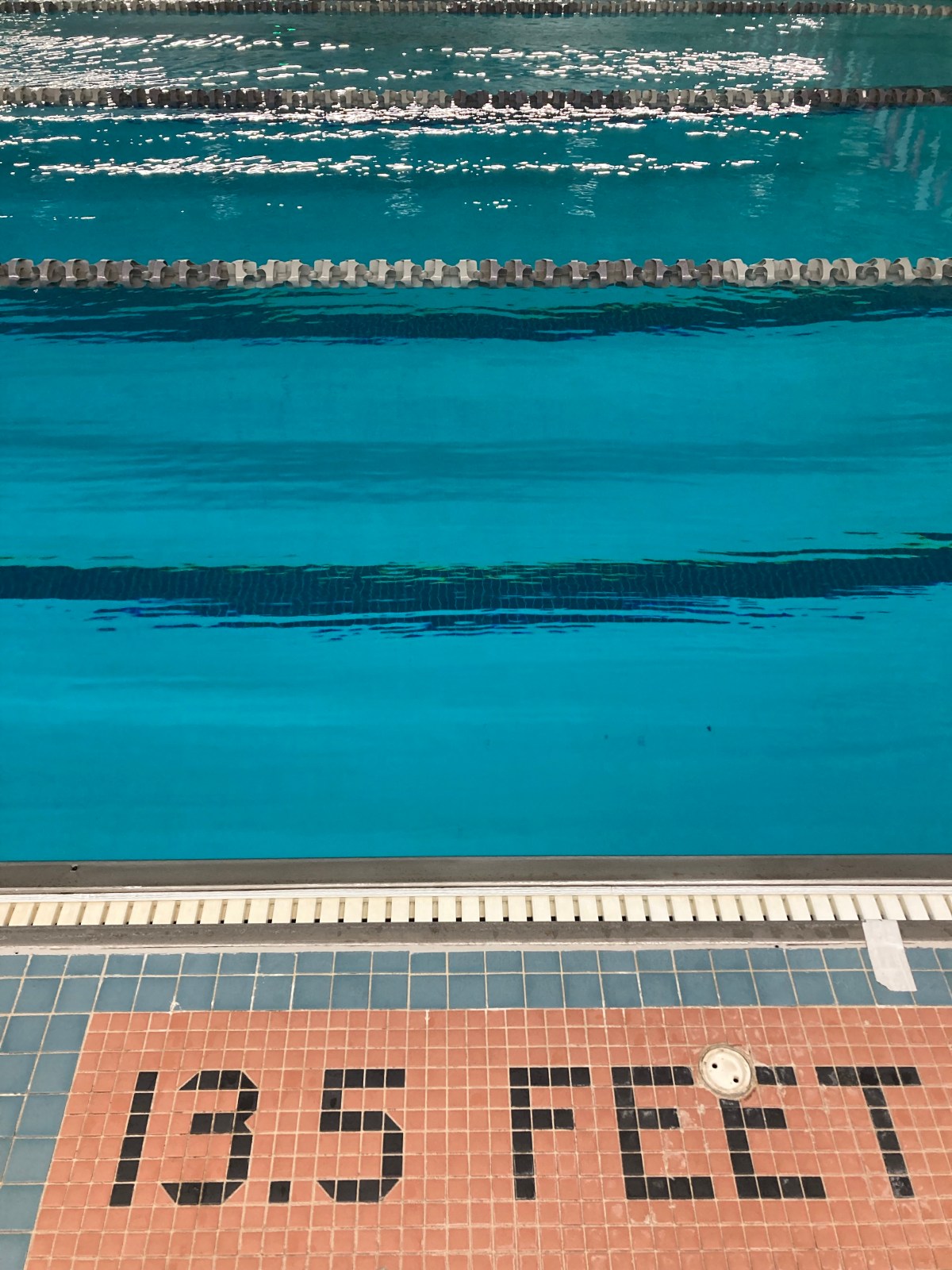
As I swim in a quiet gym pool, sun brightened bubbles form under my fingernails then rise to the surface. I turn my head and inhale, first on the left, then three strokes later, on my right. The bliss of being in water has never left me. Seven months after tripping over rough sidewalk and bashing my forehead and shoulder onto concrete, swimming consistently erases the post-concussion headaches that have plagued me for months. Today, my left shoulder feels like a hunk of canned meat—heavy, impenetrable, shadowy.  Is my swim stroke completely asymmetrical?

The only other person in the pool is a large man, maybe in his thirties, with a pale round belly and a butterfly kick that roils his lane into a froth. At the end of the pool, we both pause to catch our breath.

Hey, I venture, any chance you could spec my left shoulder for me? I can’t tell if my elbow is going up like it’s supposed to or tipping off to the side.

He doesn’t hesitate, smiling through the kind of big beard I see all over town. No problem! Let me get out of the pool so I can see better.

I do a quick half lap, out and back. It looks good, coming up even with the right side. Is it feeling nice and strong?  

What a nice guy!

It feels stiff and weak, but I broke it a while back, so that still happens sometimes. I’m glad my stroke looks okay. Thanks a lot for looking at it—you saved me a swim coaching session!

Oh, I’m a swim coach at a different gym. Happy to help!

You won’t believe this, I tell him with a smile, but I once had my bike brakes go out at a trailhead in a parking lot full of people, and I asked some guy if he would look at them. He said my brakes had been recalled, and I should go into town for a replacement set. Then he asked me how I had known he was a bike mechanic! I guess I’m lucky that way.

The swim coach laughs at my story then barrels on with his tsunami butterfly kicks. As I burble my own way back into my workout, I smile to myself at another memory. Twenty years earlier, when my husband, Brad, was new to mountain biking and had way more leg power than sense, he did a classic “endo” speeding over a berm. He launched over his handlebars and must have added a twist, because he also “face dabbed,” earning a decent cut over his right eyebrow. When I reached him, it was bleeding pretty well, making me wonder if we should hustle to urgent care for a stitch or two. By the time a couple of super fit bikers came along and checked on us, I’d run some clean water over the cut and was thinking a butterfly band aid would probably do the trick. One of the riders came over and took a close look at the cut. She said, You know, it doesn’t look at all bad. If it were me, I’d get it real clean in the shower and bandage it like you said.  After we thanked her for her help, she told us she was an ER nurse.

Lucky, lucky, lucky.

I finish my swim, shower, then meet Brad for the drive home. I tell him all about it, like I tell him all about everything. Knowing how avoidant I’ve been of writing because of my headaches, he softens his voice to an extra-gentle tone and says, This would make a good blog post. I miss your blogs.

Me, too, I say. Me, too.
Categories
Memoir Writing

That Time I Didn’t Have a Concussion

On February 18, I learn that if you have an open head wound, there’s no waiting at the ER. They make sure you’re in a wheelchair and take you right back to a room. Before seven stitches close the gash above my left eye, and before an x-ray confirms my shoulder fracture, a doctor tells me I have a mild concussion. I twist my face into a disdainful smile. What an idiot, I think.

The next day, when I overhear my husband telling a friend that I am concussed, he gets the same ugly smirk. Bah! I think. Why can’t he get his facts straight?

After my fall, I am propped up on pillows on the couch, doing that miserable calculation between pain management and side effects. Sleep is elusive and brief. On day three, I announce to Brad that the grand collie hasn’t been walked for six hours. While he’s out with her, I remember that, in fact, middle son took her not that long ago.

When he comes back, I apologize. I completely forgot Westy took her!  Then comes an ugly moment of recognition, followed by a confession.  Oh my god—I think I had a concussion!

Yeah, I think you did. This man of mine looks at me with such kind patience. He unhooks the collie from her harness and starts dinner.  I get up from the couch and wince, tugging my sling around my elbow.

In the kitchen I ask, Was I daffy that day, when you got home?

Yup. You told the same stories over and over. You’ve been pretty goofy.

Weston, who sat in the ER with me for hours, joins us and adds, Mom, you told me like ten times to go get some lunch. And you were really, really happy to see every single person who came in the room. I mean, even more than your usual personality.

A few days later, a half-moon of pain appears inside my forehead, a pulsing white headache that extends backwards through my skull. I am, once again, simply amazed. On bright days, I wear sunglasses inside. I close my eyes and become curious about the shapes of my headaches, how the half-moon becomes a crescent or sometimes splits into two purple lights. Over zoom, my doctor tells me that concussions need time and rest. She tells me not to go back to my normal activities and to limit screen time. No more one-handed loading of the dishwasher so I can feel at least minimally useful. No more binging Love is Blind on my iPad as the meds smooth down some of my bone pain. And no writing for week after long week.

Categories
mental health Writing

Flowers of Light

Ten thousand feet on a Friday, and I am happy again. The shadowy November mood flood has finally receded. Along with it, at last, has gone the lingering mistrust of my mind.  

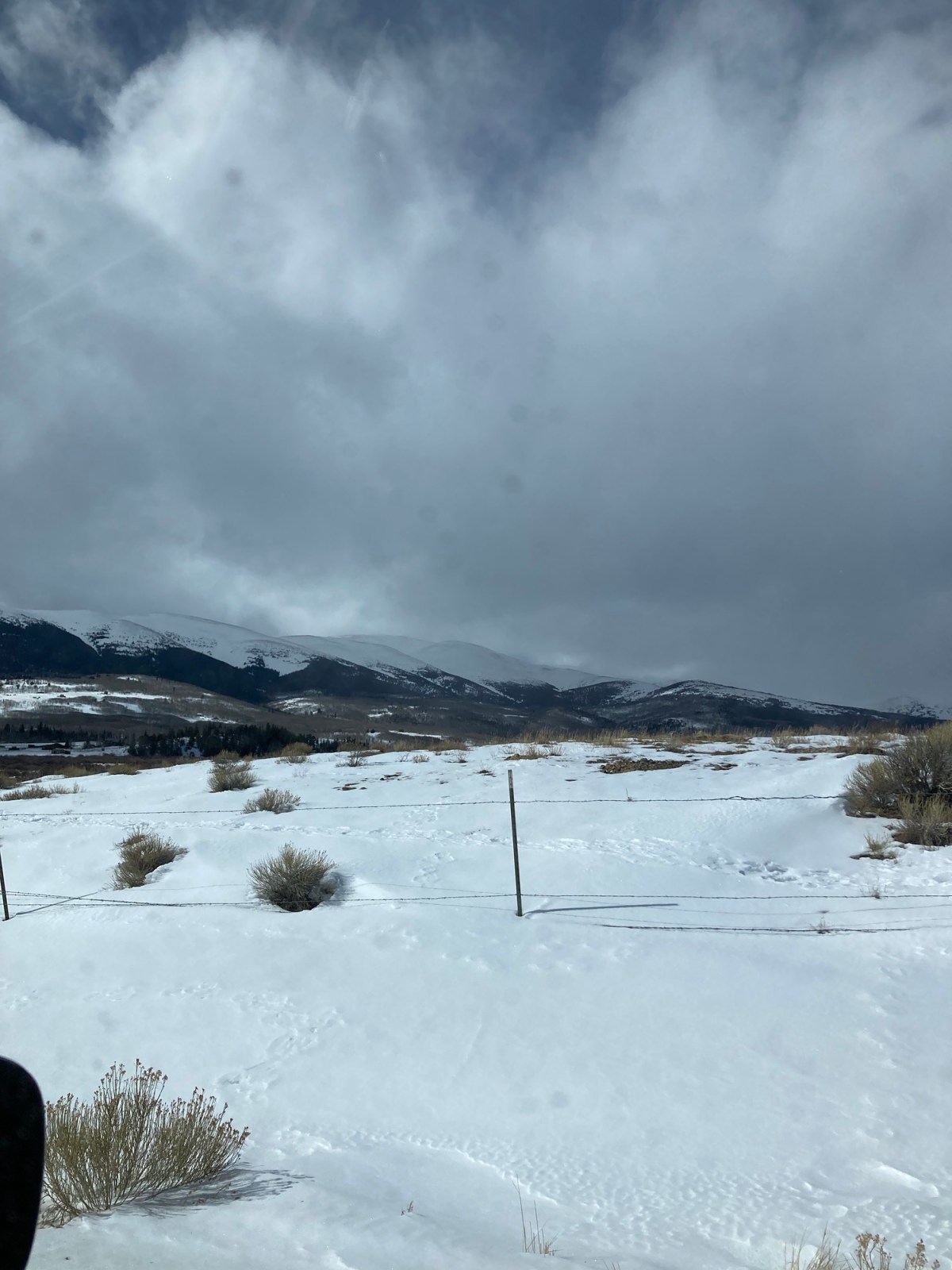
Flowers of light scatter over the snow. Aquamarine and burnt orange glint fire into the winter air.  Weston Pass Road splits this broad field of prism-flowers. My sky-blue skis float over the gathered cold-water specks, cutting paired boat wakes that cast minute waves. In the quiet morning, snow hums a high-pitched “swish.”  My heart drums faster with each push up the hill. Still hesitant to let myself fully reach, to stretch my capacity, I slow a bit and remind myself that undercurrents of grief-fueled sadness won’t take me over today. The season has turned.

I whoosh over last night’s wind-smoothed dusting, then leave the unplowed road to flounder between sets of aspen and over brown tips of sunken grass.  The small slab under me compresses, then sinks with a groan. Are there mice below, whose tunnels have been buried?  Are there fish? 

The more I write, the more grateful I am for the elemental freedom to convey experience, to net up words then plop them down, to embrace imperfection in a moment just like this.

Categories
humor Memoir Writing

That Damn Mustard

Whenever I write about my dad, who died almost ten years ago, at 91, I feel happy. He had a big heart and a brilliant wit. Of course, as my sister likes to say, our folks didn’t read all those fancy parenting books, but even writing about hard times, I appreciate finding my father on the page. He always reminds me to take pleasure in words, in food, and in family.

I want to tell you about the mustard. I wandered outside on a break from the book and looked around for a stone to add to the marker where his ashes are.  How my father’s ashes ended up buried here by the Fairplay cabin, and not in Iceland as he had wished, is not the mustard story. Why I place stones when I go see that spot is also a different story. I will, however, tell you this, loosely related to mustard, which was his favorite condiment. My father loved going to church, and this place felt like church to us. Both of us used to cry when we sang hymns, maybe out of relief. (God does love a sinner, I’ve heard, because we tend to be more interesting people.) Dad also loved old drinking songs: “How Dry I Am” and “In Heaven there is No Beer” were two favorites that he might sing to wind up a night at the campfire.

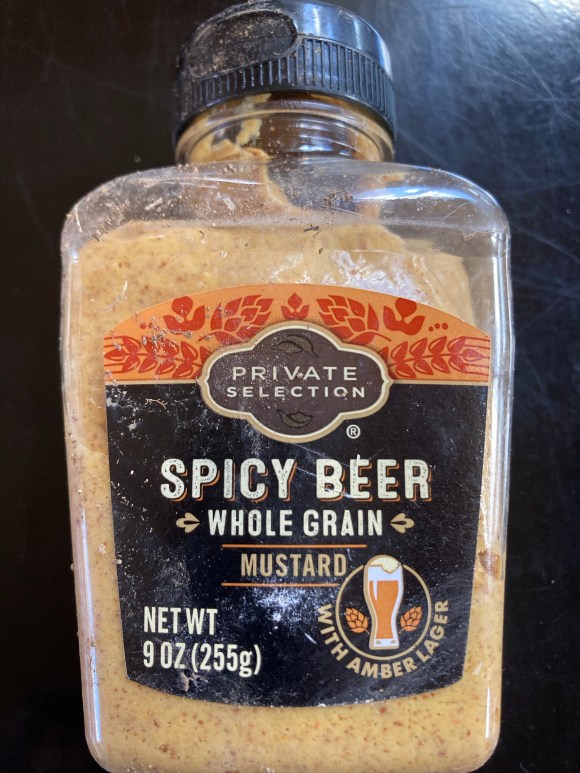
This morning, hunting around for the right stone, I came across a plastic bottle of mustard next to the fire pit. It’s Safeway brand: spicy beer whole grain mustard. Dad loved our neighborhood Safeway, and whenever I go there, I put in the old phone number he gave them twenty years ago so we could get our discount.  It always makes me smile. The Safeway mustard is peppery, like my dad could be. And it’s got lager in it. He preferred Stroh’s, but now and then, he could really enjoy a fancy beer.

Before the cabin got walls and a roof, my parents would visit from Florida and sit outside with my husband and our boys. Dad demonstrated the fine art of making his wife laugh, and soon, my husband took up the habit. This has been one of my dad’s most lasting gifts.

Today I picked up this mustard that one of our sons left out a couple of nights ago. Dad would be glad I didn’t even think of throwing it away. I carried it with me to the little bench by his ashes and his stones and said Hi Dad! Like I always do. And I said I miss you, which I don’t always do.

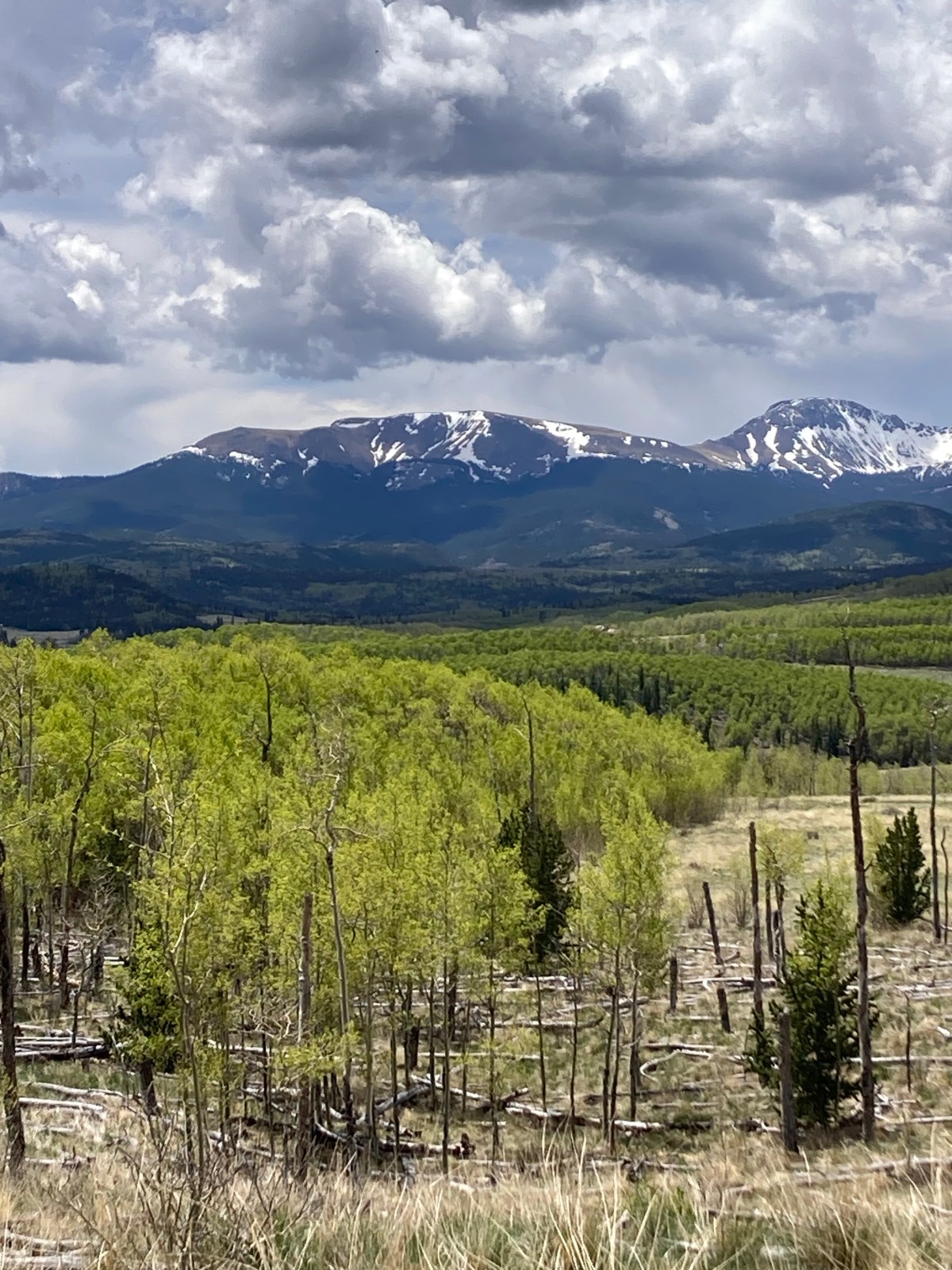
Then out of nowhere—and I mean nowhere, because I’m grateful for his long life and his peaceful death and wherever he is now; this is a man who drank (almost) all the beer he wanted and danced (almost) all the dances he could. He had a good, good life, and a long one. Still, out of nowhere, I said, I wish you were here, I wish you would come back!  And I burst out crying. I don’t usually cry hard anymore. I really have no reason. This morning, though, when I stood there with that mustard in my hand, I was just a little girl wanting to put her head on her daddy’s shoulder one more time. I sat on the bench for a while, and I’m telling you, the meadow was beautiful like I’ve never seen it, the kind of green in the new aspen leaves and in the sprouts of grass that can only happen after a month of rain.

I know there’s nothing special about my grief, how I walk around in middle age without parents and with four sisters instead of five. I know that when I was in my forties, the friends who scooted ahead of me into the beyond, the counseling clients who tried and tried but just couldn’t make it–I know all those funerals and tears were warmup for the privilege of getting older and missing more people. I know Junes can just be like this. And I’m perfectly all right.

Categories
Memoir Writing

Toad, or, Doesn’t a dream sometimes cross over into a prayer?

Early fall midnight at ten thousand feet, and a lot is happening. The stars are out. Their glimmers make me sit up and put my glasses on, then stand and look into the night at the half-circle of changing aspen. An owl is also wide awake and who-who-who’ing. I’ve never seen this owl, but my mind’s eye tracks her season after season. I lie down again and listen hard. After all, it’s not as if I can really expect to really sleep, anyway.

A few who-who’s later, I drift off, then wake to a soft mammalian whistle. What animal is making this snurfling sound. Elk? An elusive bobcat? Ah, just the husband’s breath, sighing him in and out of a dream. My favorite animal, this man who, like me, will one day take a last breath, and maybe in this very cabin. A wakeful thought, that.

And a part-time job, this sleeping, and not sleeping.  

I move to the couch at 4 and stargaze, waking to the whoosh of moving water. I think, rain, rain, rain! and am dunked in gratitude. Alas, only the coffee maker gurgling, telling me it is 5:30, officially morning. I close my eyes again.

Then. Three women doing dishes in semi-darkness. I pick up a big ceramic bowl and see a hefty toad there—lumpy, wide-eyed, and miraculously ugly. I lift the bowl and walk to the door. I want to set him free, but his container is empty. I understand the toad will be back. All I need to do is keep his water fresh. Later, this writing dream has me christen a fresh black notebook Toad. My pen drops blue ink on page after page. I remember, and deeply, the stillness and clarity of the silent creature and the harmony of the night-time women. Doesn’t a dream sometimes cross over into a prayer?

A month later, flakes fall fast in the city, where I write under a down comforter, struggling to stay awake after a solid night’s sleep. This old house is full. I can almost hear my young people all breathing the hush of their own dreams. All the beautiful ins and outs, all of the dreaming that will go on after me.

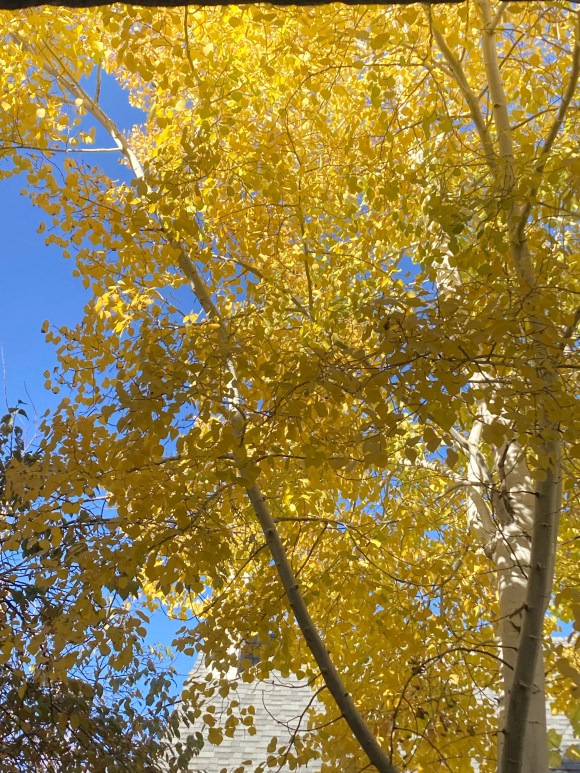
City aspen staying bright after the snow.

Categories
Memoir Writing

Creative Nonfiction: Girl, Alone by Jenny-Lynn Ellis

My mind swirls at the distance I am covering.

Creative Nonfiction: Girl, Alone by Jenny-Lynn Ellis
Categories
Memoir Writing

Road Trip with Nostalgia, A Wedding, and Pestilence

Mile markers slide past the passenger window on a June morning. Colorado. Nebraska. Nebraska some more. A bit more Nebraska. The husband and I unwind memories of the first time we drove to the Indiana Dunes together. We marvel at the year that a full moon rose over central Illinois as three little boys shared the back seat, a big white poodle spread out across their laps. Thirty-plus years of road trips, of picking rest areas and sharing stories. At dusk, the rolling hills of Iowa glow with summer’s deepest greens and warmest yellows.

Above Lake Michigan’s white sand beach, we sleep in the small downstairs space still called “Nanny’s apartment” decades after her passing. In the 1940’s, she and my Grandpa fell in love with this spot, set back on a small hill above the lake’s southern shore. My grandparents drove from their home in Norwood Park with my father and his seven sisters. Everyone who could helped carry groceries or building supplies a half mile down the beach. Three generations later, their descendants take turns sharing this memory-soaked refuge. We park our air-conditioned cars only two flights of wooden stairs above the back door. On these three longest days of the year, the water is cold and the weather blistering; we lie awake at night until the lake breeze cools us, shushing us to sleep with the murmur of small waves.

We drive on to Washington DC, where I was born and where my adored niece is getting married. At a picnic by the Anacostia River, Icelanders meet Israelis meet Canadians; Coloradans chat with Iowans and hug Marylanders. A band offers up some Stevie Wonder, some Lizzo, and I want never to stop dancing. As the musicians pack up their instruments, I step briefly into Icelandic with my sister-in-law, with my niece and nephew. Soon, sitting at an ice cream shop, we see the groom walk slowly past, shoulder to shoulder with his father. They are speaking quietly in Hebrew, the love between them a near-palpable glow.

On Sunday, I arrange lilies and mums, baby’s breath and daisies into five big vases for the reception. I wind white peonies together into a bouquet. Reader, will I surprise you when I say the bride is beautiful beyond beautiful? That the Rabbi is wise? That we cry and we laugh and we dance?

I hug sisters and nephews and a newly married woman goodbye. Thanks to my own husband’s pandemic-delayed fellowship in Connecticut, I drive back to Indiana alone. At a quiet hotel in Ohio, I stretch out for a long, unbroken sleep. This, almost certainly, is where bloodthirsty battalions of bedbugs conquer wide swaths of territory: my right shoulder, my belly, the tender tip of my big toe. As often happens, only days later, when the bites begin to itch and swell, will I know that anything happened at all.

I stake out three days to write at a BNB near the Dunes cottage, determined to work out my book’s outline–the confounding, dreaded, avoided outline. I sit and sit and I sit. I drive to the grocery store to pick out mauve and teal and yellow sticky notes. I have lunch. I sit down to color code my outline, then give up. The weight of discouragement behind my eyes is too thick for tears.

On the third day, I sit down to work on my outline in the three columns suggested by my teacher: Icelandic, Mamma, The Body. I stare at the columns until they make sense. I stick scenes under the headings, clustering them into sections. I keep going.

I read outside at dusk and marvel at how many mosquito bites I can get without a single buzzing in my ear. Overnight, I am awakened by itching that will not stop until I get home to Denver, where an urgent care doctor will prescribe turbo-charged steroid cream and nuclear-powered antihistamine.

But first, I hear that my baby cousin is at the Dunes cottage. I sit on the shaded deck as a group of relatives settle in on the beach. “Excuse me,” says a voice from on high. My baby cousin looks down at me through a screened window, her girl face stern as she asks who I am. I would know her anywhere, her confidence and brightness, my father’s bright blue eyes. I tell her who I am and add, “You look just like J!” “That’s because I am her daughter” comes the serious reply. I know, of course, that this is the baby of my baby cousin, but I am still startled by the passage of time. I play in the lake with her little sister, tossing back and forth a plastic pony she has named Sunshine.

Sitting on the sand, I contemplate a line of three red bites on my shin. The “breakfast-lunch-dinner” pattern of bed bug bites gives me a sickening jolt that is immediately squashed by stiff denial. Alone, I drive west, trying not to scratch the clump of welts on my shoulder. Five hours later, passing Des Moines, a strip of hives rises on my arm in threes.

Anxious and anxiouser, I call my cousin, my BnB hostess, a bedbug specialist. Sorry and sorrier, I drive on, refusing to stop in another hotel. I fine-tune my strategy to keep the monsters out of our house and to roast any car-lurkers with the heat of a 100-degree day.

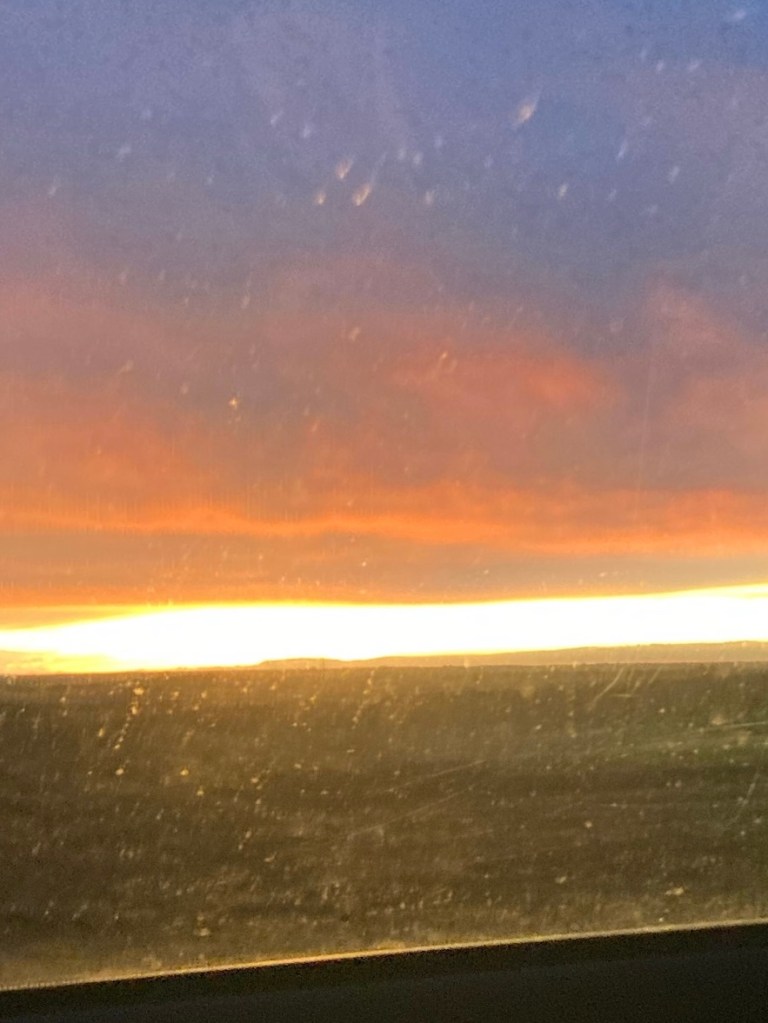
Rain lets up with just an hour more to drive. Suddenly, the burnt orange sun breaks free below a bank of turquoise clouds. My heart calms as I breathe in the richness of this Colorado sky like no other. To the east, a massive double rainbow domes the prairie, pulsing higher and wider as the sun sinks below the horizon. And I am gentled. I am welcomed home.

Categories
humor Writing

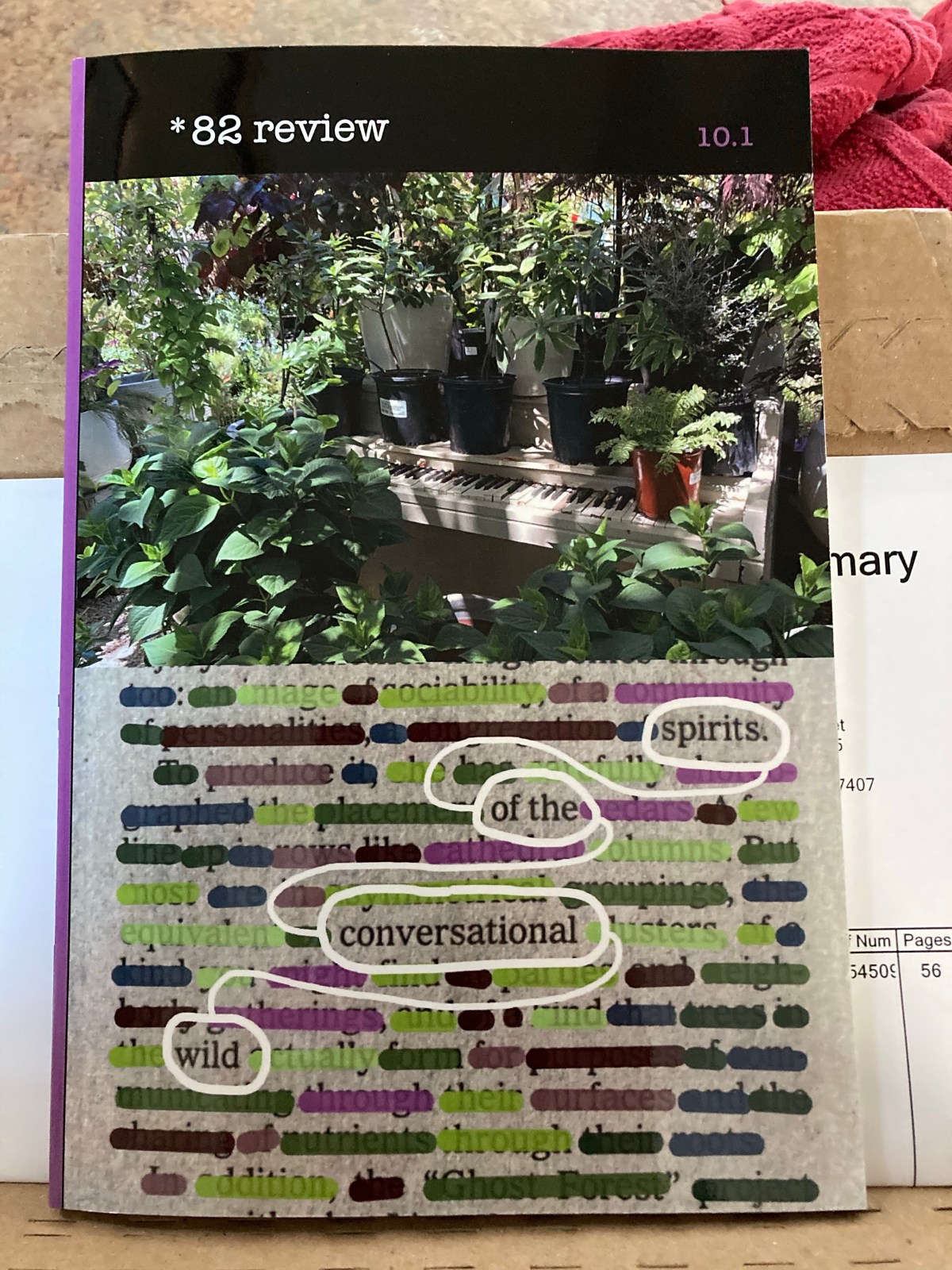
New Publication, *82

A December email from Alisa Golden, editor at Star 82 Review. She wrote: “Yes. I love it.” An acceptance! Da, da, da da DAH da da!! I skipped through the dining room, past the Christmas Fern, singing the I Love Lucy theme song.

Kiddo, kiddo, kiddo!  I chirped to my grown son as he came down the stairs. I caught my breath and announced:  I got an acceptance from a magazine I’ve submitted to five times!

Way to wear them down, Mom!  Funny man.

Not really. I just had to send her something good. In fact, I’d submitted to Star 82 Review not five, but eight times, over three years. After seven kind rejections in a row, I feel lucky the editor opened the last submission. Rejections pile up over time, of course, given my determination to keep sending things out. This time, I made the cut. It feels good.

I will try to do at least one slow, celebratory twirl when the next “thanks but no thanks” hits my in-box. Like all the others, it will remind me that I’m committed to the process, with its rare orchestral celebrations and its long fallow periods. Meanwhile, the publication of Beginning of the End of the Dream Job is a lovely reminder that the more I write, slowly but surely, the better I write.


Bonus: A real paper copy!
Categories
Memoir Writing

Not Just Quiet, But Peace

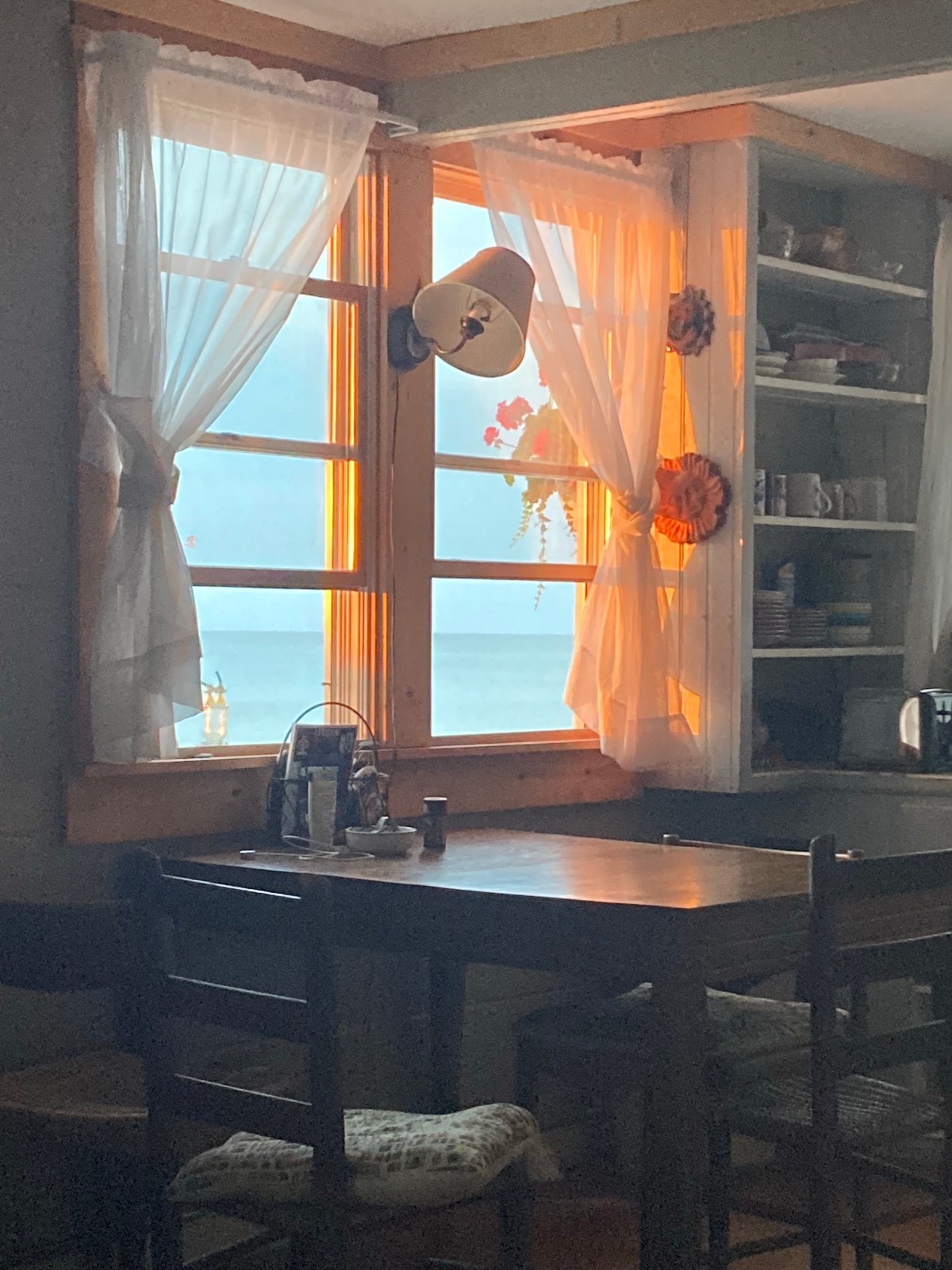
Wherever I am, every day is a tug-of-war between cranky anxiety and inner peace. It’s more than quiet here, the husband says, as dawn lands in shining patches atop the Buffalo Peaks. We watch from the cabin couch as pink sky brightens to clear blue. December already. We’ve been kept away from this sanctuary for many weeks by his bruised ribs–mountain biking giveth and mountain biking taketh away–and by my lingering bronchitis. We’ve missed these wide-open views and sheltering circles of aspen. Even in this retreat, the quiet morning harmony is not guaranteed to last, not if I’m involved.

In November, I went to DC and to Connecticut, soaking up time with some of my favorite people. One day, my morning Course in Miracles lesson is “Let all things be exactly as they are.” This message speaks directly to my perfectionism, my hyper-criticality and impulse to control. So I do it: I let all things be exactly as they are. I sit up in bed and breathe deeply, cradling my cup of coffee like a chalice. Yes, I will remember this one. This one is perfect, my mind crows. And then. And then: other people, the news, bronchial irritation. I am annoyed by not having slept well, bothered by how quickly my caffeine high fades. I write a little, but hate the sentences I produce, then I scan the headlines and seethe. What ails these politicians? Why do people make the simplest things so hard? My jaw clenches as I wonder if I will ever sleep without a cough again. A typical morning–basking in serene intentions at dawn, then falling flat on my spiritual face by nine am.

Setting my notebook aside, I drive along streets overhung with fiery maple and birch leaves to the Cornerstone Athletic Club in West Hartford. I sigh with pleasure as I lower myself into the hot tub. I relax. Then a slender young woman, blonde hair cropped short, annoys me. In response to an older man’s question, she says My ballet background informs my yoga teaching. Just two people making friendly conversation. I blend Yoga and Astrology and Art, she says. Oh, please! I think. I fight down the disdain, the eye roll at all things new age. This person needs to just stop: stop being so young, so well-rested, so graceful and sure of herself. Oops. Then I remember: let all things be exactly as they are.

I shake my head at myself and plunge into a deep swim lane dappled with sunlight. Quickly, the sheath of warmth cloaking my body dispels. I move through cool quiet, watching bubbles form under my fingernails as I push my hands forward. There is no quiet like underwater quiet, no view like underwater sunlight. My jumpy mind stills, and on I go. Back and forth in the pool, back and forth between my wandering thoughts and my steady beating heart. Every day, I set peaceful intentions, then forget that serenity exists.

Today, I meditate and look at the mountains. I write a sentence I don’t hate. I breath in the beauty, then criticize my privileged self-indulgence. Back and forth, back and forth. Even quiet that is more than quiet doesn’t guarantee peace. And while I’m deep into my post-religion adult life, I can’t help think of an illiterate Jewish peasant, his egalitarianism so threatening to the authorities that he was murdered, his calls for justice and connection so compelling that his friends somehow kept his story alive. I’ll go up to the mountains (forgive, forgive, forgive), down into the water (back and forth, back and forth). I’ll do the small things I can for my loved ones, for strangers. And as I used to sing in church every Sunday, I will ask: let there be peace on earth, and let it begin with me.

Categories
biking Memoir Writing

Beetle Murder & Bipolar Disorder

Japanese beetles are iridescent green, shiny–and beautiful. I admire the engineering genius in the strong grip of their tiny claws and the protective shell of their winged backs. I murder them because they feast on all my favorite garden plants: Virginia Creeper vines become laced skeletons; rose and hibiscus blooms are hollowed out before they can unfurl. Day after day for three summers running, I killed the destructive fliers by the hundreds–shaking them into drowning bowls of soapy water.

This summer was bountiful, disorienting, and full of noxious invaders. Covid 19 seemed to be exiting stage left while we adjusted to socializing and the smiles of strangers, then—well, you know that story. Between visits from long-missed friends and during breaks from clouds of wildfire smoke, I was on the couch or on a bicycle. My write-ride-repeat summer plan quickly became a ride, read-a-little, ride-some-more reality. Then all of a sudden, there was snow on the deck, and I hadn’t written in what seemed like forever.

I had fought a losing battle with hungry beetles in the city, and with noxious knapweed in Fairplay.  Knapweed is a thistle that sprouts in soft green tufts in the spring only to morph into two-foot high shrubs holding hundreds of needle-sharp seed heads. It has been my enemy roughly since the time that my son was diagnosed with bipolar disorder, which was around the same time that my mother was dying. My therapist then heard a lot about knapweed. And she once asked me to say out loud the names of each person I loved who had died over the previous eighteen months. I only made it to four, about half way, before losing track and crying. But I pulled a lot of knapweed that year, grateful for one thing that I could destroy back.

This August, while I was obsessing about beetles and knapweed instead of writing, Sunlight Press published an essay of mine that included more about bipolar disorder in our family than I’d written before. Encouraged by the journal’s editor, and with the full blessing of my son, I connected the dots between my mother’s illnesses, my own first major depression, and my son’s bipolar diagnosis. (Have a look if you missed my post about it on Facebook: https://www.thesunlightpress.com/2021/08/22/colfax-and-monroe/).

The more I write, the more I learn to write about (if not publish about) the hardest things. I step into those memories and experiences not out of self-pity, but because they are the truest stories I have. They help anchor me to my current happiness, providing contrast, expanding my gratitude. Maybe those stories also have the most potential to help others.

I chose to become a therapist many years ago because I wanted to be part of transformational conversations, and to be genuinely helpful. Maybe I was most helpful on days that I felt like a failure in my own life, when I was blind to the generational patterns that look so obvious in retrospect. Maybe the counseling I offered on days when I showed up to work confident and energized were my least helpful days in the profession. Possibly, the days I needed to cry in the parking lot for an hour before I could walk into my office were my days of most lasting service to clients.

No shining cosmic memo will tell me that something I did as a therapist or wrote since that time made a real difference to another person. But, like the genuine practice of psychotherapy, a genuine writing practice shifts me away from my petty, narcissistic side and toward a vision of a better world. Beetles and knapweed and bipolar and all. Looking deeply inside ourselves and telling the truth about what we find there, is, I believe, inherently healing. And the more I write, the more of that I want.

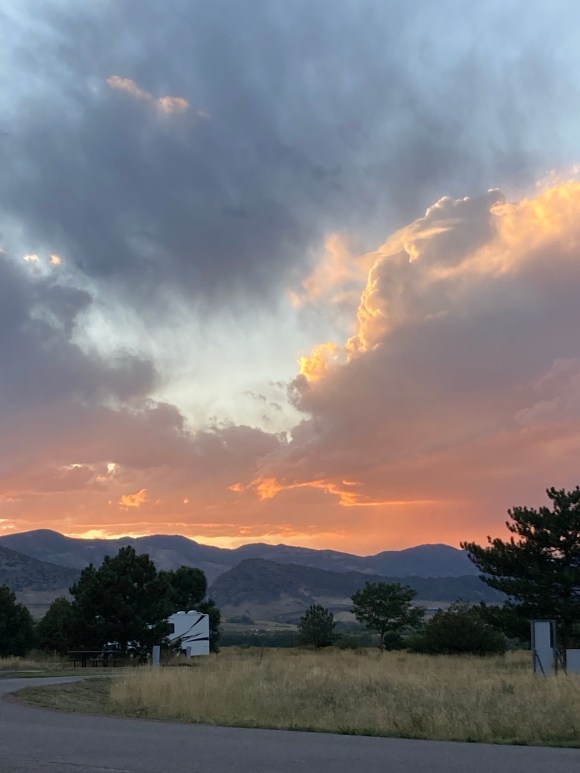
View from an evening ride.
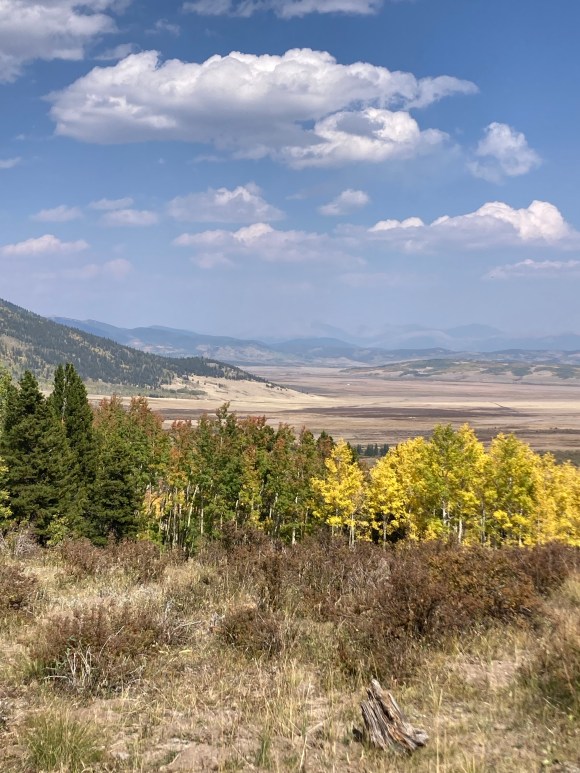
Looking toward Kenosha Pass
Late summer sparkle.