Categories
mental health Writing

Flowers of Light

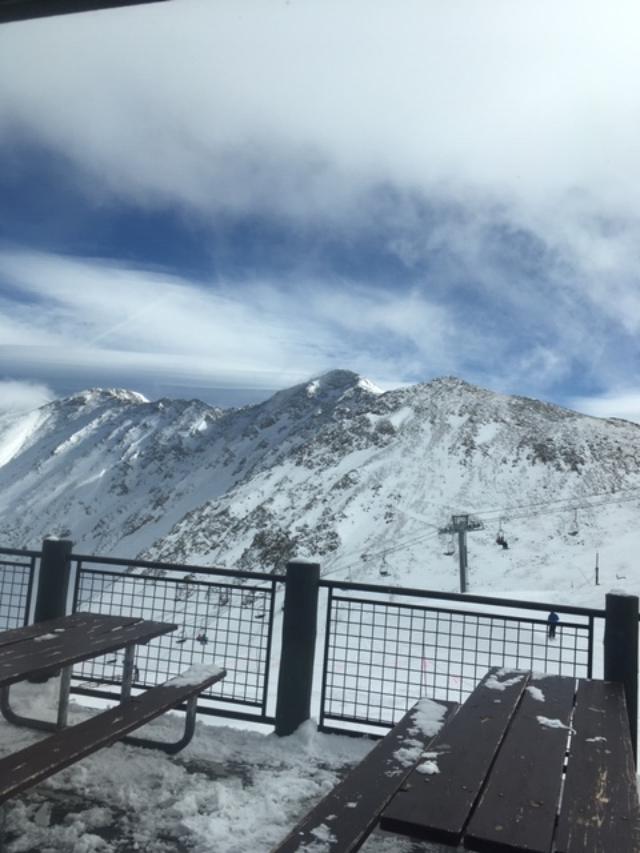
Ten thousand feet on a Friday, and I am happy again. The shadowy November mood flood has finally receded. Along with it, at last, has gone the lingering mistrust of my mind.  

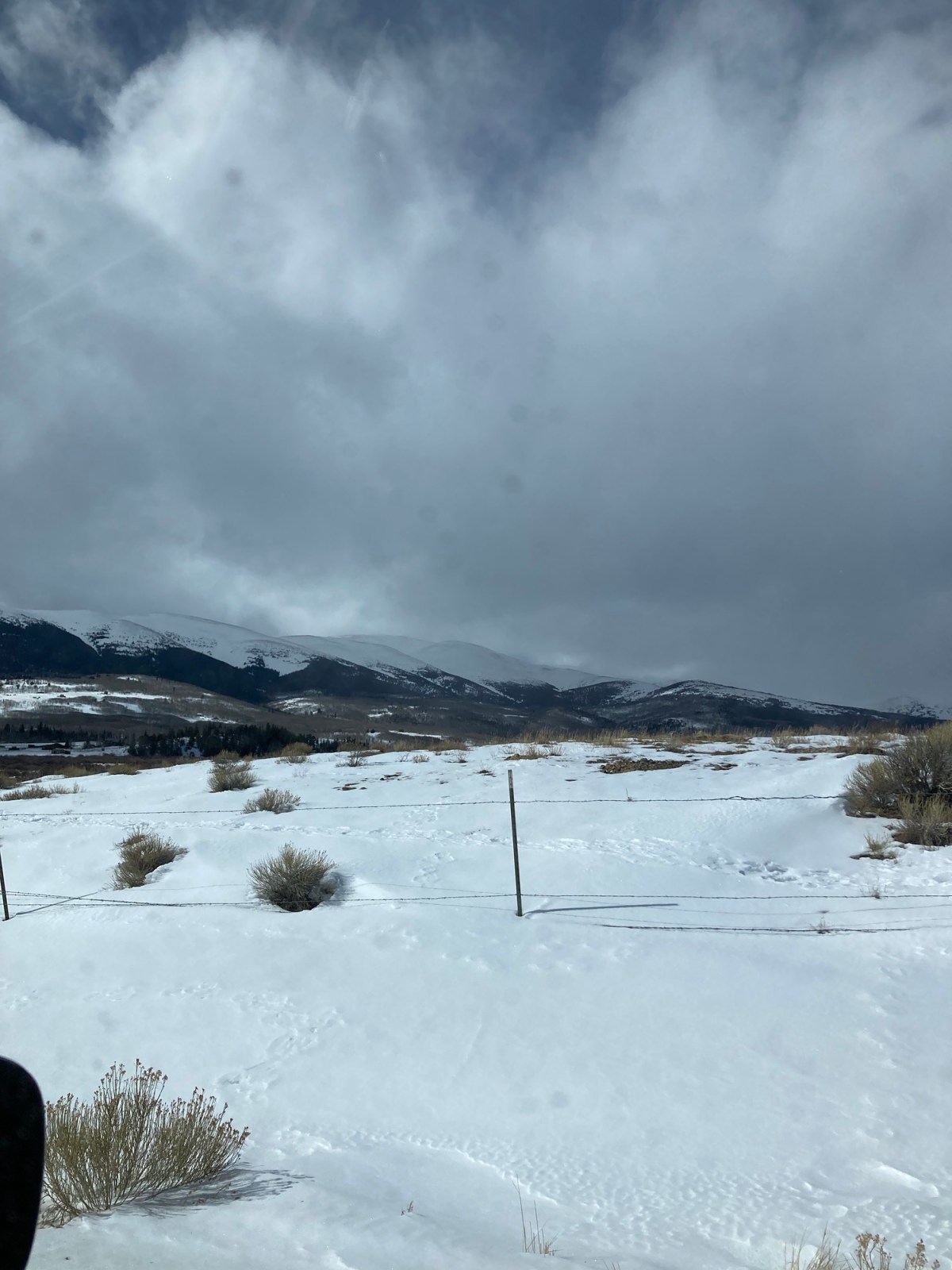
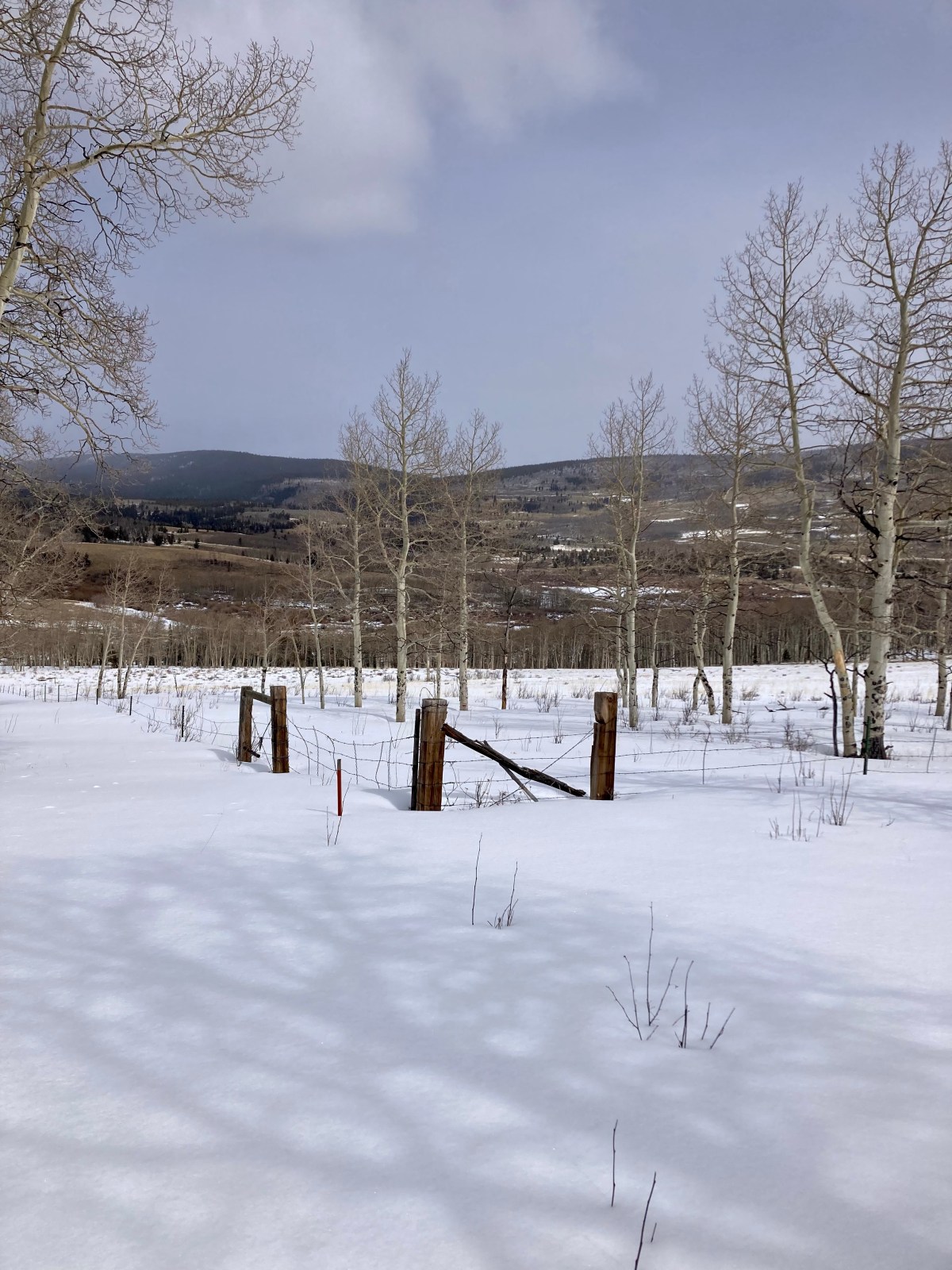
Flowers of light scatter over the snow. Aquamarine and burnt orange glint fire into the winter air.  Weston Pass Road splits this broad field of prism-flowers. My sky-blue skis float over the gathered cold-water specks, cutting paired boat wakes that cast minute waves. In the quiet morning, snow hums a high-pitched “swish.”  My heart drums faster with each push up the hill. Still hesitant to let myself fully reach, to stretch my capacity, I slow a bit and remind myself that undercurrents of grief-fueled sadness won’t take me over today. The season has turned.

I whoosh over last night’s wind-smoothed dusting, then leave the unplowed road to flounder between sets of aspen and over brown tips of sunken grass.  The small slab under me compresses, then sinks with a groan. Are there mice below, whose tunnels have been buried?  Are there fish? 

The more I write, the more grateful I am for the elemental freedom to convey experience, to net up words then plop them down, to embrace imperfection in a moment just like this.

Categories
humor

Magic Chef

Fifteen years ago, when we first showed our newly acquired antique cook stove to a friend in the construction business who is also a gourmet cook, his jaw dropped. “Whoah,” he said.  “I can’t say anything about this appliance until my erection subsides. Where did you find this thing?”

A 1930’s Magic Chef gas range with four burners, storage drawers, and a small oven, it is covered in pristine white enamel. Instead of horizontal handles to open the oven and the burner below it, we tug hanging vertical grips. The stove is a work of art, even if it weighs a gajillion pounds and was hell to lug up the two back stairs and into the cabin kitchen.

When the cook stove arrived, our “kitchen” here consisted of a white sink and very occasional running water. Wine crate shelves once nailed to the walls were still stacked in a corner when our gently used cabinets arrived. The same friend who first admired the stove had rescued them for us from a remodel project. Above the Magic Chef, the husband and two of our then teenaged sons installed a shelf and spice cupboard.  They list heavily to starboard. I straighten them now and then by tilting my head just a tad.

Through years of zero extra time or money, the stove sat cold, uninstalled. We percolated coffee or boiled spaghetti on a tiny camp stove perched on its top. Redemption came one day in the form of a Fairplay plumber who confidently ran propane to the originally natural gas burners. A trick he taught me:  to turn on the sluggish front ring after the pilot is lit, just give it plenty of propane and blow a good, strong, birthday-candle breath over the top to help with ignition. Only bits of stray bangs and the very top of an eyebrow have been sacrificed over the years using this technique.

One Thanksgiving, we filled the cabin with young folks and set about heating side dishes and warming pies, coaxing extra heat from the fickle oven. More than once, with a small “boom,” flames erupted ever so briefly from the Magic Chef’s torso. These weren’t explosions, exactly, but they were big enough to leave black smudges on the cabinet next to the stove. Now that the husband is the only one brave enough to run the oven, he likes to warm up the house on winter visits by baking enchiladas or banana bread in the ninety-year-old, leaky heat cave.  This November, we will once again, with courage, heat savory and sweets, proteins and greens, in the Magic Chef. We will throw a tablecloth over pine planks long ago nailed to a set of alley-found white table legs.  Before the husband and I reach our own tenth decades, surely, we will have a more predictable, less magical stove here.

Turns out we can both wait at least one more season.

Categories
humor Memoir Writing

That Damn Mustard

Whenever I write about my dad, who died almost ten years ago, at 91, I feel happy. He had a big heart and a brilliant wit. Of course, as my sister likes to say, our folks didn’t read all those fancy parenting books, but even writing about hard times, I appreciate finding my father on the page. He always reminds me to take pleasure in words, in food, and in family.

I want to tell you about the mustard. I wandered outside on a break from the book and looked around for a stone to add to the marker where his ashes are.  How my father’s ashes ended up buried here by the Fairplay cabin, and not in Iceland as he had wished, is not the mustard story. Why I place stones when I go see that spot is also a different story. I will, however, tell you this, loosely related to mustard, which was his favorite condiment. My father loved going to church, and this place felt like church to us. Both of us used to cry when we sang hymns, maybe out of relief. (God does love a sinner, I’ve heard, because we tend to be more interesting people.) Dad also loved old drinking songs: “How Dry I Am” and “In Heaven there is No Beer” were two favorites that he might sing to wind up a night at the campfire.

This morning, hunting around for the right stone, I came across a plastic bottle of mustard next to the fire pit. It’s Safeway brand: spicy beer whole grain mustard. Dad loved our neighborhood Safeway, and whenever I go there, I put in the old phone number he gave them twenty years ago so we could get our discount.  It always makes me smile. The Safeway mustard is peppery, like my dad could be. And it’s got lager in it. He preferred Stroh’s, but now and then, he could really enjoy a fancy beer.

Before the cabin got walls and a roof, my parents would visit from Florida and sit outside with my husband and our boys. Dad demonstrated the fine art of making his wife laugh, and soon, my husband took up the habit. This has been one of my dad’s most lasting gifts.

Today I picked up this mustard that one of our sons left out a couple of nights ago. Dad would be glad I didn’t even think of throwing it away. I carried it with me to the little bench by his ashes and his stones and said Hi Dad! Like I always do. And I said I miss you, which I don’t always do.

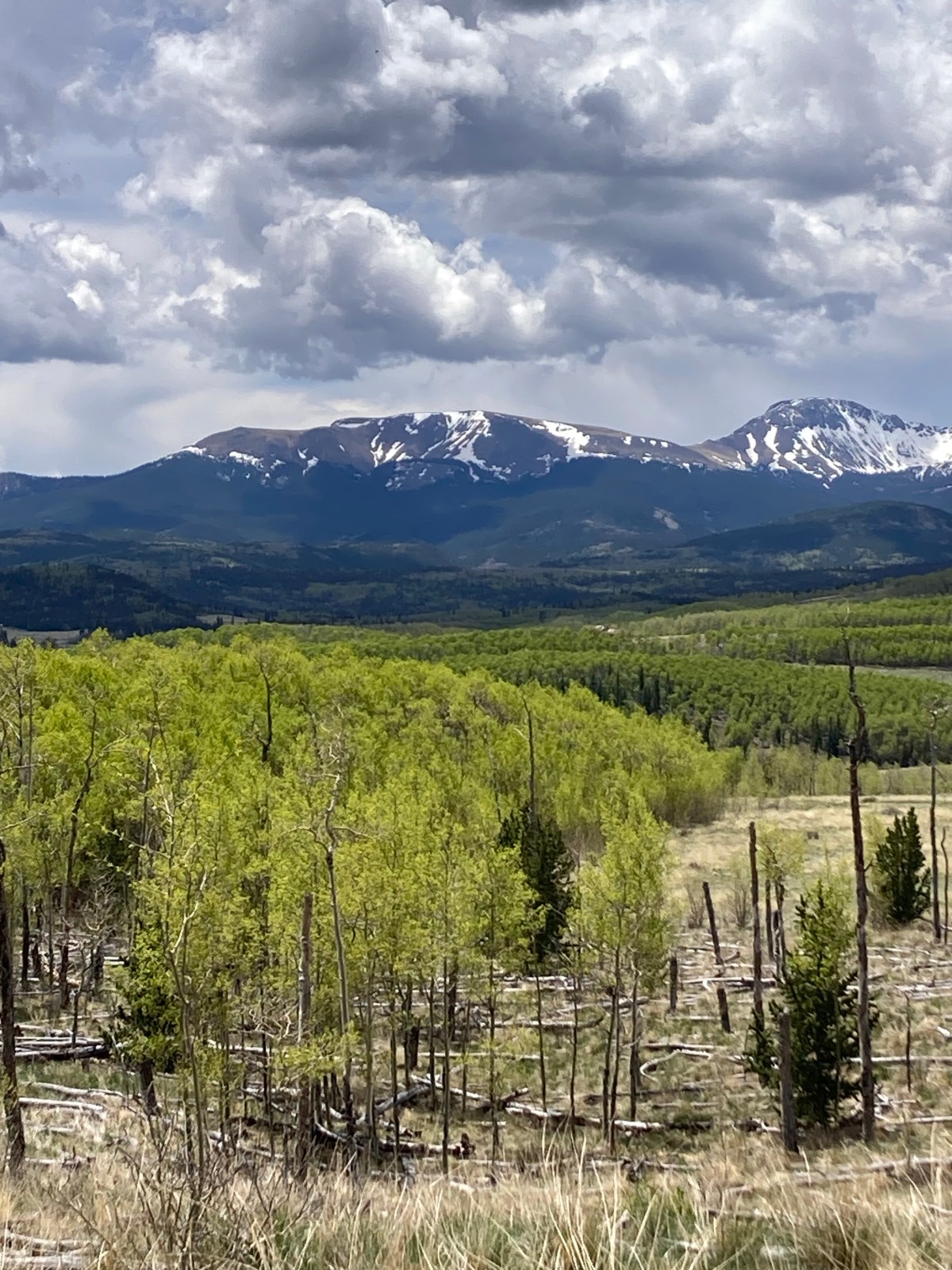
Then out of nowhere—and I mean nowhere, because I’m grateful for his long life and his peaceful death and wherever he is now; this is a man who drank (almost) all the beer he wanted and danced (almost) all the dances he could. He had a good, good life, and a long one. Still, out of nowhere, I said, I wish you were here, I wish you would come back!  And I burst out crying. I don’t usually cry hard anymore. I really have no reason. This morning, though, when I stood there with that mustard in my hand, I was just a little girl wanting to put her head on her daddy’s shoulder one more time. I sat on the bench for a while, and I’m telling you, the meadow was beautiful like I’ve never seen it, the kind of green in the new aspen leaves and in the sprouts of grass that can only happen after a month of rain.

I know there’s nothing special about my grief, how I walk around in middle age without parents and with four sisters instead of five. I know that when I was in my forties, the friends who scooted ahead of me into the beyond, the counseling clients who tried and tried but just couldn’t make it–I know all those funerals and tears were warmup for the privilege of getting older and missing more people. I know Junes can just be like this. And I’m perfectly all right.

Categories
humor mental health

Him, Me, Him, Me

Its 5:40, I can get coffee!

No, it’s 4:40, your phone is messed up. We have to go back to sleep. Let’s curl up. Ooof, if I’m on my left side, my knee hurts, if I’m on my right, my shoulder hurts and my vertigo turns on.

You are a wreck.

I am a wreck. I need to call Frank Azar. Remember? Been in a wreck? Call Frank Azar!

[snoring]

[aching]

5:40. Actual 5:40

I think I went back to sleep.

Yes, you did. I had an imaginary conversation in my head with a holocaust denier. That took a long time, so you definitely slept.

Coffee!

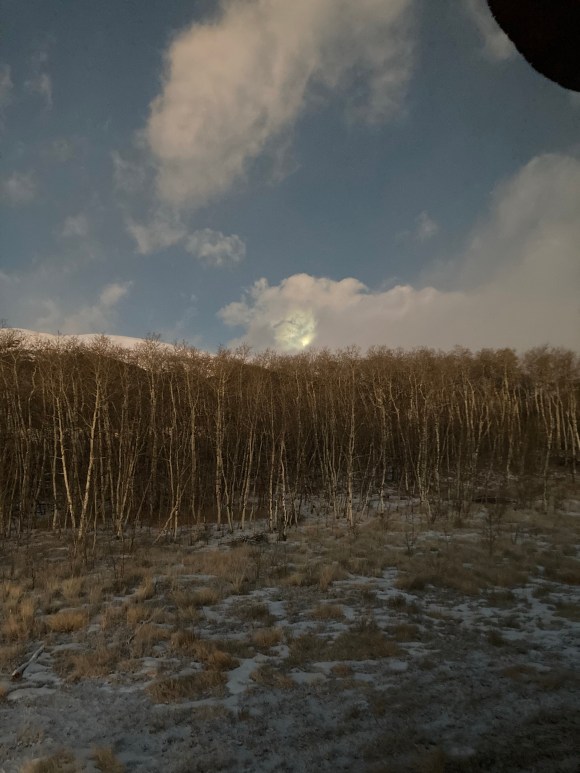
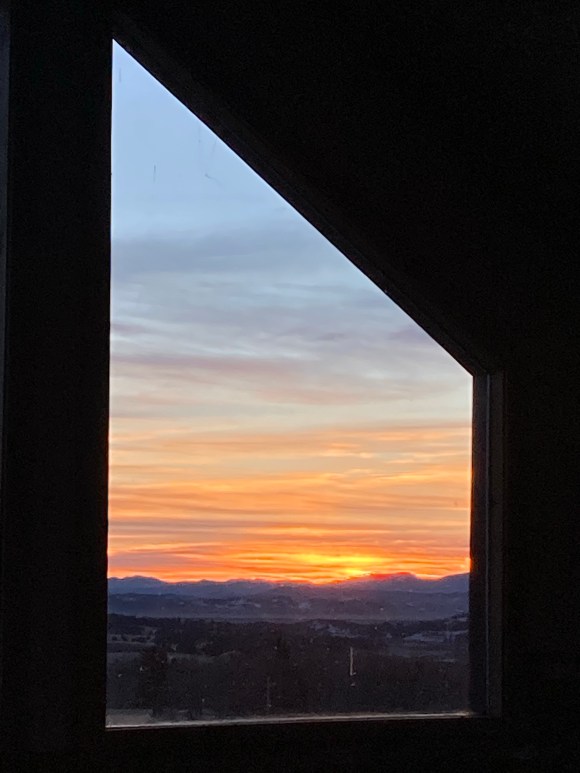
All night, the full moon poured itself in the windows. All night until the sun came up. My friend has told me it is an agitated full moon, with mars snuggled close. I say, not sleeping, if it weren’t so cold, I could sit outside and knit in the moonlight. I say, to me, standing by the propane stove at midnight, clouds scuttling north at high speed, covering the moon to reveal a pocket of dark sky dotted with stars: Dear God, how is so much beauty possible?

Did you see the moonset from our bedroom window?

No, I’m watching the sun come up.

Categories
Memoir Writing

Toad, or, Doesn’t a dream sometimes cross over into a prayer?

Early fall midnight at ten thousand feet, and a lot is happening. The stars are out. Their glimmers make me sit up and put my glasses on, then stand and look into the night at the half-circle of changing aspen. An owl is also wide awake and who-who-who’ing. I’ve never seen this owl, but my mind’s eye tracks her season after season. I lie down again and listen hard. After all, it’s not as if I can really expect to really sleep, anyway.

A few who-who’s later, I drift off, then wake to a soft mammalian whistle. What animal is making this snurfling sound. Elk? An elusive bobcat? Ah, just the husband’s breath, sighing him in and out of a dream. My favorite animal, this man who, like me, will one day take a last breath, and maybe in this very cabin. A wakeful thought, that.

And a part-time job, this sleeping, and not sleeping.  

I move to the couch at 4 and stargaze, waking to the whoosh of moving water. I think, rain, rain, rain! and am dunked in gratitude. Alas, only the coffee maker gurgling, telling me it is 5:30, officially morning. I close my eyes again.

Then. Three women doing dishes in semi-darkness. I pick up a big ceramic bowl and see a hefty toad there—lumpy, wide-eyed, and miraculously ugly. I lift the bowl and walk to the door. I want to set him free, but his container is empty. I understand the toad will be back. All I need to do is keep his water fresh. Later, this writing dream has me christen a fresh black notebook Toad. My pen drops blue ink on page after page. I remember, and deeply, the stillness and clarity of the silent creature and the harmony of the night-time women. Doesn’t a dream sometimes cross over into a prayer?

A month later, flakes fall fast in the city, where I write under a down comforter, struggling to stay awake after a solid night’s sleep. This old house is full. I can almost hear my young people all breathing the hush of their own dreams. All the beautiful ins and outs, all of the dreaming that will go on after me.

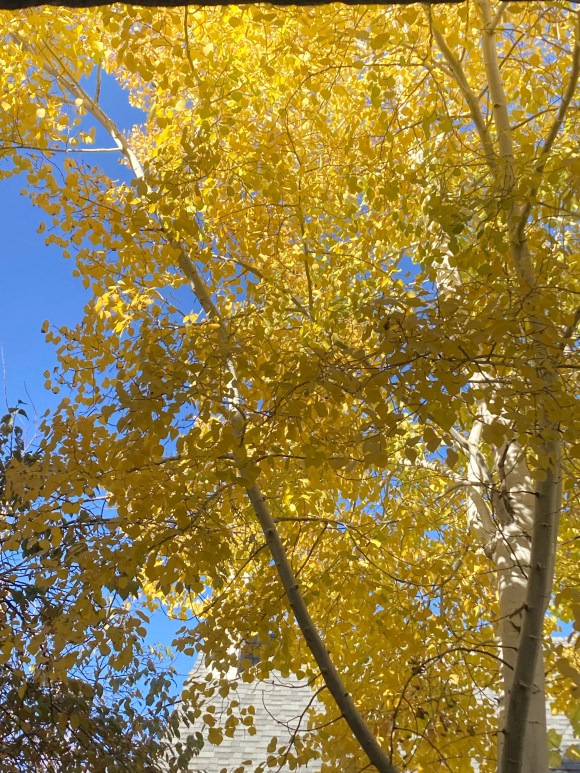
City aspen staying bright after the snow.

Categories
mental health Skiing

More Bumps, More Beauty

As an anxious adventurer, I have to play tricks with my nervous system, use shortcuts to get down mogul runs free of halting fright.

Recently, riding up the Beavers lift at Arapahoe Basin, I confessed to my unflappable ski buddy Carl just how nervous I had been, how downright shaky, on a run we had just finished. He was surprised when I reminded him how anxious I felt on the slopes. You don’t seem scared. Just very determined. A typically kind response.

When I ski down to Carl and exclaim, Beautiful! I am not just catching my breath. I say beautiful because acknowledging beauty burns off my crackle of anxiety and turns down my self-criticism.  

When I say beautiful, I mean that I’m scared out of my mind, but I can calm myself by looking at the trees, at the sky. I say it knowing that if I face my torso downhill and plant my left pole firmly, my legs will have to swing my skis around into a turn.

I say beautiful, feeling the semi-wilderness around me and the eternal blue above, knowing that the mountain and I are connected.

Beauty is why I ski, why I ride my bike in the mountains, why I want to be in this messed up world. Hearts break every day. Wars rage. The human family appears beyond dysfunctional, downright broken.

And as part of this world, far too often, I forget beauty, forget generosity and grace. I fret about the busted pipe in our cabin. Sheltered and warm, I worry about the weather. I look at the news, and look away again. Then, out of nowhere, magic happens.

Last night, for the first time in a quarter century of looking out at these woods, the husband said, Bobcat! I have heard him say deer, elk, moose. One memorable morning, he even said bear. But never, until last night, bobcat.

She was graceful and still, square face lined in elegant geometrics, black ear tips twitching. We watched her in the early spring dusk as she sat stock still, perfectly camouflaged in her white and brown coat. After listening intently, she made a quick pounce for a mouse tunneling underneath the snow—a near miss. With the confident serenity of a predator, she watched us for a few minutes, as we watched her. She made a few strides toward us, took a showy turn or two, then stepped gracefully over the hard packed snow into the silent woods. Beautiful.

Categories
Skiing Writing

Refuge

Inciting Email

After being cooped up too long with a cold, looking out at a brown Denver January, I drank coffee and quickly skimmed my email. The day was set aside for writing, to get one revision closer to finishing a stalled essay I’d started two years earlier. My brown backpack leaned heavily against the back door as I scanned my messages. Joy! A powder alert from Arapahoe Basin ski area! My favorite playground had gotten six inches of snow overnight, and ten inches in the prior twenty-four hours. I threw my skis into the car and tucked a small notebook into my pocked. It would be a different kind of writing day than I had planned.

I drove west on 1-70 and an hour later crested Loveland Pass, where blue sky outlined the majestic ridges of the Continental Divide. In the hundreds of times I’ve seen that 360-degree panorama, it never looks the same. With every fresh look, it stalls my anxious thoughts, deepening my breath from chest to belly.

Two hours after leaving the house, I was on the two-seat Pallavacini lift. Below me, expertly curled powder tracks on steep rocky terrain; above me, shafts of sunlight on sparkling evergreen boughs. I skimmed along the aptly named Cornice run with its views of the Ten Mile Range, then made my way to the Loafer trail. Powder flowed over the top of my ski boots as I glided through the widely spaced tree trunks along its flank. I stopped and angled my skis against the slope to look uphill, where a dark band of boulders offered a bounty of snow back up to the open sky.

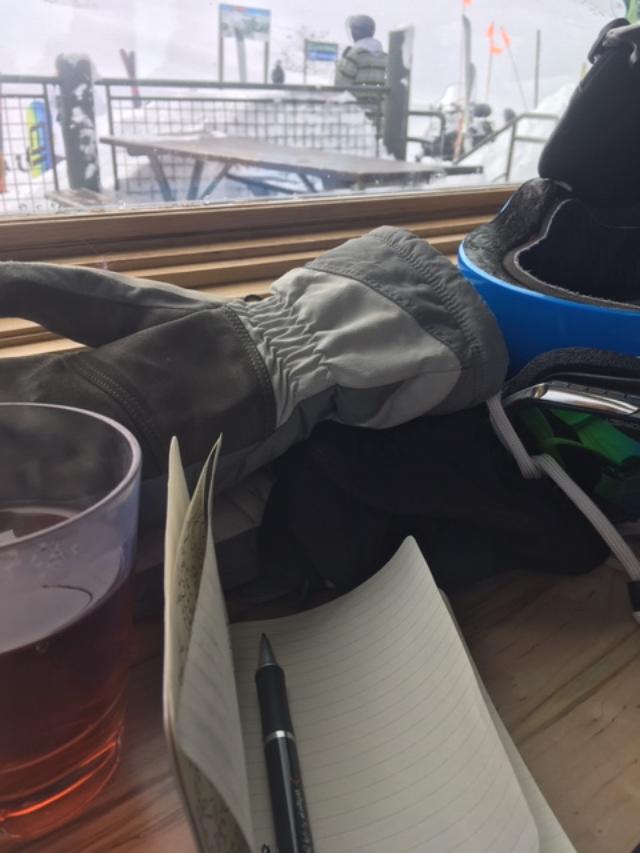
Heavy with a story I yearned to tell well, I soon ascended the Beavers lift and made my way to a tiny restaurant named Il Refugio, a sanctuary at 12,000 feet above sea level. Resting my tired legs, I drank tea slowly, and started to write—again–about that time in my life when I hovered between the wisdom of innocence and the scarring messages of a shame-based culture.

As I wrote, Frank Sinatra crooned out of a hidden speaker, You make me feel so young! You make me feel there are songs to be sung. I looked out at the view and smiled at the sleight of hand that is time, the healing refuge that is beauty.

Categories
biking Writing

Death by Butterfly

In Staunton State Park, a haven of hiking and biking trails near Conifer, Colorado, Elk Creek becomes Elk Falls in one precipitous cliff dive. Smooth dirt trail winds through majestic evergreens, then transitions to connected squares of hewn rock swirled through with reds and grays, as if from an artist’s brush. Expertly etched into the hillside, the trail is wide as a sidewalk and rides like a dream. On a recent Sunday, I gripped my handlebars and pushed hard into my pedals, then relaxed to coast a gentle downhill with stunning views.

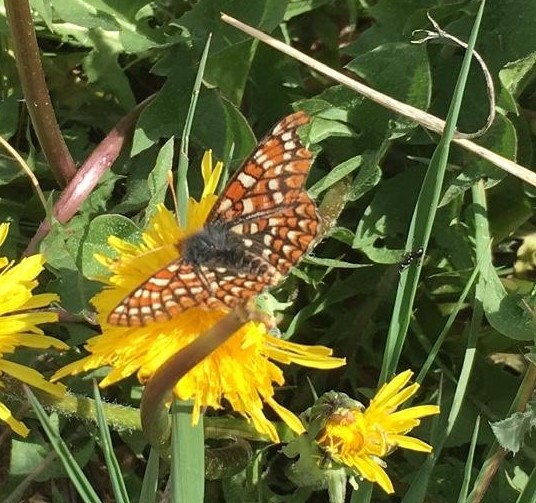
Suddenly, my mountain panorama was bisected by the dazzled flight of a butterfly. It floated upward and to my left, shimmering with the bright yellow of fleeting summer. My inner five-year-old sang out, Butterfly! Look! Ooh! Beautiful!  My front tire was instantly way too close to the edge, but a surge of adrenalin powered my handlebars up and my left foot down, preventing a gritty shoulder grind into the trail. A no-fall wake-up call.

Oh, the perils of daydreaming—that creative drift so essential to a writing life, and so perilous to life on the trail. The more I write, the more awake I am; conversely, the less I write, the less connected I seem to be to the world and what I am doing in it. If I’m not working making things, all the biking in the world won’t bring me focus or peace of mind. This has been my lesson of mid-summer.

In my notebook and on my bike saddle, I ask, Am I here yet? Trying to gauge whether I’ve dumped my distractions and self-criticisms sufficiently to have a date with creativity. On the bike, I instruct myself aloud: Right here, Right now!

On downhill rocks or in writing slumps an uncluttered mind offers the body a chance to do what the busy mind can’t conceive.

A few days after my near-death by lepidoptera, I get another, gentler, wake up call. Near our cabin is a short, steep forest road that I use as a timed fitness test, challenging myself—obsessively this year–to shave five or ten seconds off the quad-burning climb.  Today, the husband asks me, Are we busting your personal record today? And I tell him, Nope. Today, I’m going to see how slowly I can ride it.

img_1118
Another day, another trail

I switch gears and steer a wide arc to avoid smushing a caterpillar that lumbers blindly across the dirt road. Last year, with drought everywhere and wildfires not far off, I don’t remember seeing a single caterpillar. But now, a small white butterfly ambles from right to left in front of my tire and slips through the spokes of my slowly turning wheel. I keep this insect-friendly pace and look left and right as I make the steep climb. I see for the first time how a flower-filled meadow is shaped like an arrow, pointing down toward the light-layered hills of South Park. My slowed breath scents wild rose mixed with pine, as if a mountain-sized flower has just opened all around me. Life after death by butterfly.

Categories
Writing

May Stillness

It’s a three-season week in Denver—technically spring but with a recent day close to 80 degrees and snow in the forecast for tomorrow. Above my back-yard fence, recently unfurled aspen leaves touch each other in surprise, too soft to make a sound as the breeze floats their fresh green in slow cirlces. The fountain tinkles water into the bird bath, and a bee buzzes past—a cliché of this season I can’t resist. The goddess Nyx, regal in her shimmering black coat, steps dainty paws onto the mulch behind the blooming crab-apple. She eats a blade of grass then retreats to the shade of the house.

The sun over my left shoulder tosses shadows from my damp curls onto my notebook paper. If I look inside the dark loops scattered across the page, rather than at them, I see moon shapes and slices of pie. I tilt my head, and bright oblong footballs give way to a constellation of marbles, light circles planets plopped onto a newly discovered cosmos. Half a block away, a chainsaw jets raw noise into the stillness, and suddenly the magical universe of miniature shapes becomes just shadows on paper.

Dogs bark next door. My hand moves over the page, determined to find dreamy stillness again.

nyx

The hundred-year-old maple across 24th Avenue has only the faintest green on its twig tips. With age comes caution. The mass of its old trunk holds as much wood as five of these quaking aspens, with their heart shaped leaves. The sun heats my arms into beaches and sandbars. On goes the chainsaw, then off again. Vroom.  Quiet. VRROOM. Into one lull drops the click of a fence latch as another neighbor steps into her yard. A mourning dove coos, supplicant and charming.

The more I write, the more I appreciate the variety of stillness and interruption in all of my favorite places. Peaceful mountain meadows erupt into thunder claps, or into the  rattle of disturbed grasshoppers. The loud stare of a moose stops quiet thought faster than any city siren. She might as well be yelling as your eyes meet on the muddy road: I will bash you. Just give me an excuse.

City quiet, though, is especially rare, an almost inner hush as traffic sounds and background rumbles miraculously cease. The multitude of neighborhood children all sigh into contemplation at once, daydreaming in unison. An hour west, the mobbed spring ski hill also silences unexpectedly. As the crowd swishes down a popular run and the chairlift creaks overhead, I take one short turn toward that pair of pines, and a celestial mute button silences everything but pure light, inside and out. In high volume motion closer to home, as I cycle next to a tumbling creek, perfect silence descends, startling as the cry of a blue jay in this sunny back yard.

A squirrel clacks and squawks at me from the top of the magnolia. Its tail twitching over its head, it spends its outrage then offers a friendlier noise from low in its rodent throat, its contrite little heart telling a story all its own. The chatter of the world meets my determination to making something in stillness–despite or in harmony with this creative symphony of interruption.

Will I learn to listen to the noise and the quiet? I crave motion and distraction as much quiet contemplation. I fall in love with the messy world all over again in the spring, my attention leap-frogging to the next season. It’s easy to be infatuated with summer when it’s not here yet, roasting both city and forest. It’s easy to be happy now, as a white butterfly slips through the holly-spikes of the mahonia bush laden with blooms. I marvel at the tender clematis vine threading itself into the air above the fecund earth. Yesterday’s heat has singed the late tulip petals and sent the hyacinth into retreat, but I’m in love, falling into spring with all of the irrational anti-gravity of romantic bliss.

A baby cries across the fence, his first warm season begun. In my house, the husband clatters a baking sheet into a drawer, jarring yet more sound to me through the open window. Voices take up conversation in the front yard. I crank open the green umbrella for shade, but keep the right half of my body in the white-hot light.

Categories
Writing

Spending it All

Down Elk Creek Road from the Buck Snort Saloon and a few miles outside Pine, Colorado, the North Fork of the South Platte River winds its way toward a popular mountain biking area known as Buff Creek. (What fun hog has time to say Buffalo when they can say Buff, after all?) This recreation mecca offers over fifty miles of flowing trails that roll through historic burn areas and offer views of the Continental Divide, or that meander in lush creek-fed forests. The Baldy Trail scoops riders over granite humps and tours them under the hat-shaped dome named Little Scraggy.  For me, the place is a reminder of how my riding life overlaps the writing life.

On a recent mBuff creek in backgroudorning, I stood in the Buff Creek parking lot with a group of very fit mountain bikers–mostly women and mostly racers. My friend Mary—gregarious, blonde, and seriously strong–made introductions. This is Jenny-Lynn. She is an amazing writer, she said. Even when spoken clearly, rider and writer sound almost identical, so I quickly clarified that my kind friend was talking about writing, and that, as a rider, I would do my best to not slow down the group. Seriously, don’t wait for me, I said. I’ll be fine.
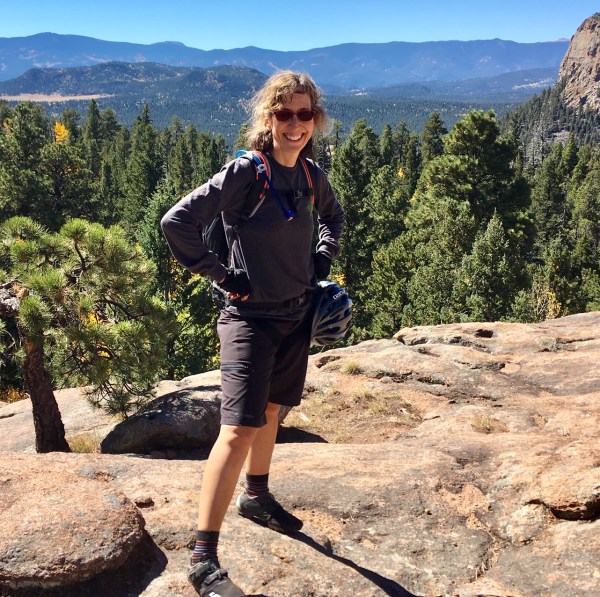
As I chugged behind them all up the Nice Kitty trail, four miles of climbing through switchbacks and over small rocks, I felt an old temptation to conserve my energy, to hold back my breath and power. I answered it out loud: Spend it, Jenny-Lynn, spend it!  I’d read an Annie Dillard comment some time ago that also fits the bike riding life: “One of the things I know about writing is this: spend it all, shoot it, play it, lose it, all, right away, every time. Do not hoard what seems good for a later place in the book or for another book; give it, give it all, give it now.” She goes on to say, “These things fill from behind, from beneath, like well water.” Athletic and creative efforts share this trait of filling from below, I remembered, as I caught sight of Mary at the top of the hill. She’d had enough time to adjust a setting on her bike and have a leisurely snack while the group waited for me to arrive, red-faced and sweaty.

I have fought a temptation to hoard my stories, to save the most compelling or difficult ones until later. On a bike, I hear the same fearful voice advising me to hold back, to save my legs for another section or for another day. But strength and suppleness do fill from below—we need to empty ourselves over and over, to spend the spins of the wheel, to tell the stories as best we can right now, every all-out effort making us more generous, freer spenders.

Don’t save it, I remind myself, go, go, go. Pursue the conversation with the novelist, brave the anxiety of the workshop class, schedule a coaching session even though—or precisely because—the story you are grappling with is bringing up spend-able tears.

I’ll squander copious gratitude now on my “Getting it Done” pomodoro method teacher, Mark Springer and his Fiction Unbound portal into the world of speculative fiction.  And joyful appreciation to my neighbor and bike-repair consultant, Josh Mattison, who gathers the voices of Colorado’s creative community on his Denver Orbit podcast and always has a kind word. Always. Congratulations galore to Joy Roulier Sawyer, compassionate teacher and beautiful poet, for her recent Pushcart Prize nomination. Check out her new book, Lifeguards. Kudos as well to  Dreamers Magazine (the kind Canadians who published my  essay, I Don’t Speak Icelandic) for their recent inclusion in Reedsy’s list of the best magazines of 2018.

Sweet trail and rewarding narrative to one and all!