Categories
Memoir mental health

Summer, 2024

Five of us sit at a round table in a back corner of The Shed, a Santa Fe restaurant with low roof timbers and art on every wall. To my right is my youngest son’s girlfriend, Felicia. Her chin-length brown hair is pulled back in a clip, her long dancer’s legs crossed under the table. Across from her is Weston, my middle son. At thirty, he looks much like his father did when we met, with the same long ponytail and those bright blue eyes. Tom, our youngest and tallest, is often mistaken for Max, who is seven years his senior. They have matching dark eyebrows and smiles that light up a whole room. 

I have started calling this four-day August road trip the “foodcation.”  We have laughed our way through heaping plates of enchiladas smothered in chili sauce and told story after story over chocolate cake and caramel flan.

“Tom,” I say, “Remember when we came here for Thanksgiving, and you couldn’t walk back to the hotel because you were so full?” 

“How could I forget?  You almost killed me making me move around after that buffet!”  We recall the perils faced by youngest brothers who refuse to surrender during eating contests.    

Brad says, “We have some bad memories here, too.”

“Hey,” I respond, “let’s not talk about those sad times.”  Felicia hasn’t heard the Santa Fe chapter of Max’s mental health saga, and part of me is afraid that she will be horrified. Another part of me wants to avoid the belly-clenching fear this story invokes, a fright that has lived inside me like a restless tenant. 

Tom asks, “What happened? I don’t really remember.”  He was only eleven then.  I sigh and look across the room at a landscape painting that conveys the sheltering feel of this high valley surrounded by mountains. Captured in a simple frame are the taupe and green, the unexpected flashes of gold, that animate this part of New Mexico.

“It’s okay,” Brad reassures me and rests his warm hand on my shoulder.  “When Max was eighteen,” he explains, “we dropped him off at college here.”

“It was his dream school,” I add.  “He was so happy when he got accepted. We shielded you from a lot of the details.” I look over at my youngest, who lives half a country away.  “After we dropped Max off, he stayed in his dorm room for two days. Then, when a Resident Assistant checked in with him, he told him that he wasn’t safe. That night, the RA drove north, and we drove south. We met halfway, in the middle of the night, to get him home.”

Weston remarks, “Sounds like a pretty incredible RA.”

“He was.” And I see Max’s pale face as he stepped out of that stranger’s car at a rest stop near Trinidad.  My son’s despairing silence on that three-hour drive lands once again on my chest.  “I don’t know what we were thinking dropping him off at school when he was so depressed.”  A wave of remorse washes over me at the depth of my denial then. I pretended that a little bit of Lithium and a fancy college would make Max well, that his depression would magically give way to the brilliant future we had all expected for him.

I put my dessert spoon down and feel around inside myself for the shame I carried at failing to keep Max safe. My mind holds a clear wish that I had been wiser in those years.  Yet, glancing at the faces of my family, the regret is met by clear, bright gratitude. Max is in Denver today, going to work, building skateboard community, taking care of the dogs.  

Brad has filled in more details of the Santa Fe saga.  “A few weeks after we brought him home, we had to come back and get the rest of his stuff.”   

“Oh, yeah, I forgot that part.”  Our smiles to one another are rueful.

“Tom, remember you were carpooling with Carolyn that fall?  She told me that when she asked you how Max was doing, all you said was that he was really sad.” 

“I don’t remember telling her that, just coming home from school and he was still on that futon couch.”

Weston looks at his baby brother. “Yeah. He was on that couch for a long, long time.”

I nod. “I would go to work and worry about him, but coming home was even harder. I felt like I could help my counseling clients more than I could help my own kid.”  I take a deep breath, switch gears.  “And then he bounced back like a rubber ball, not sleeping, never happier, like his mood grew wings.”

We are all laughing now.

            Dessert plates cleared, we wait for the check. Weston says, “This was cathartic. I’m glad we talked about it.”

            “Me, too,” I respond.  “I guess sometimes the past just gets to be the past.”

Categories
mental health

Thanksgiving

To not be depressed, again, pretend you are okay. Buy new makeup. Feel the touch of the lovely young woman who steps out from behind the counter and uses a soft brush to smooth foundation over your face. Listen as she tells you with kindness how important it is to blend with care.  After she puts blush on your cheeks, look in the mirror and feel better.  Accept the samples she gives you.  At home, use a cotton ball to remove the layers of pale brown, of cheerful pink, until you look like you did before, just a little less tired.

Avoid going to therapy. Believe you can afford perfume that makes you want to love yourself again, but therapy is too expensive.

Keep exercising, no matter what. You know how to cope. You know you won’t give in. Crave the shelter of your queen size duvet like you once craved summer. Resist the craving. Remind yourself that the living room catches enough November light that even if your eyes are closed, one speck of encroaching darkness might have been frightened off.

When your back starts to hurt, know whose fault it is. Hear the voice blaming you for exercising when you needed rest. Question its logic. The next day, notice that you think you are in pain because you didn’t do enough.  Crawl under the duvet at noon and prop pillows under your knees. Sleep until you feel like getting up. Be cheerful as you eat the dinner your sweet husband made for you. Go to bed early.  Wake up late.

Decide that you can eat all the sugar you want, then do it.  When you wish you could cry, eat ice cream because for a few minutes, you feel like a normal person.

Let your sleep patterns become Fucked Up Beyond All Recognition. Walk around thinking FUBAR, FUBAR. I am FUBAR.

Cancel plans. Stay home. Ignore texts and emails. Anyone who loves you, really loves you, knows that this happens to you sometimes. Wish it weren’t happening as you avoid people who you now think have no reason to love you.

Wake up early today, feeling something. Stand outside shivering under it all as the blue-greens and purples deepen, as they shift to orange and pale pink. Touch your wet face and feel grateful for a kind of letting go. Remember that crying for yourself and all of your invisible losses–that weeping for the world and all the wasted lives—can be a prayer, too, can be, in fact, a form of thanksgiving.

Categories
Memoir

Colfax and Monroe

In 1985, almost twenty and on my own in Denver, I worked as a hostess at a restaurant on the fringe of downtown. Legend had it that the building–three narrow floors encased by roughhewn brick–had once housed a brothel. My manager called me the “door whore” and made sport of sidling up to me to brush his hand against my behind.

The gleaming wives and glittering girlfriends of Denver’s powerful men would sashay through the large glass doors with a gust of winter wind. Standing next to my podium, they shrugged off their fur coats for me to catch mid-air. I hung those expensive wraps in a long, oak-paneled room that soon filled with the smell of designer perfume—Cline’s Obsession, Dior’s Poison. During lulls on busy Saturday nights, my fingers brushed along the comforting softness of mink, raccoon, and fox. At the end of the night, rich men veiled in cigar smoke filled my tip jar with five-dollar bills.  Their cash paid for white Russians at the corner bar, or– sometimes—for lines of cocaine at all-night parties.

Finally away from the small flat house in Florida where my mother drank and raged, the sane and stable independence I’d envisioned eluded me. Instead, a gnawing loneliness festered under my rib cage, growing sharp and dangerous edges.  I shared an apartment off the corner of Colfax and Monroe–a block from the number fifteen bus downtown–with a roommate I once hoped to befriend but now avoided. A few nights a week were spent with my boyfriend, who liked to “wake and bake” on his days off, pressing his mouth to a bong as he sat up in bed, then raising his glazed eyes to the late morning.  Sometimes, he and I would walk from his place near Cheeseman Park to a small grocery and buy Soft Batch cookies to binge on together. The chemical sweetness of those cookies was choking, but like so many things then, I thought I could take it, that I should be able to withstand any discomfort, no matter how tainted.

That second winter away from home, a long coke high morphed into depression and thoughts of suicide. I sat in the back of a cab one night after work, under the midnight streetlamps, and watched the reflections of tidy brick bungalows flick past the window.  Families lived there who were safe and normal, people who knew how to be good, to be happy. As the cab pulled over on Monroe Street, I quietly handed the driver a small wad of one-dollar bills.

As I entered the dark vestibule and trudged up the grimy flight of stairs to my apartment door, my tabby cat meowed her insistent welcome. In the bathroom, she waited for me to pull dental floss along the cracked linoleum, then pounced on the white thread in mock ferocity. She turned on her back, and I knelt to play my fingers over the warmth of her belly. Batting at my hand, claws retracted, she purred. When we went to bed, she curled into the bend of my knees while I cried in the dark. I could never abandon her.

On the back page of Westword magazine, near the personal ads and photos of escorts for hire, I found a therapist with a sliding scale fee. Esther was tall and beak-nosed, her dark hair faintly shot through with gray, and her gaze both alert and tender. Session after session, she listened to my stories, then offered a brief hug as we said goodbye. When Esther told me You’re a very strong person, I believed her. Before long, I registered for classes at the Denver campus of CU, toting shiny pumps that I’d slide on after class to hostess the dinner shift.

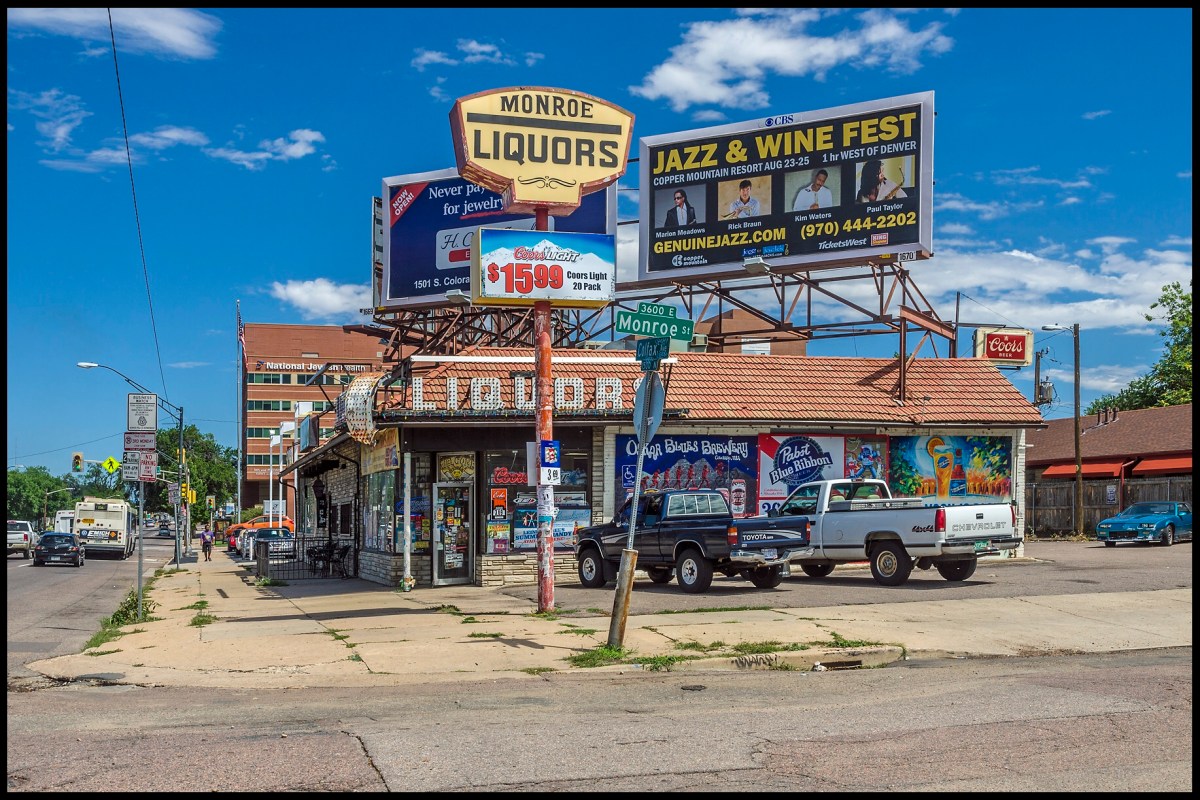
I didn’t understand–as I started my adult life that year–how my moods would continue to cycle. The tentacles of sadness that wound around my chest in November would sometimes swing upward in spring until I was filled with more energy than my body seemed able to handle. Much later, my mother’s family tree was lit up like a hazard sign with bipolar symptoms and diagnoses of her siblings and grandchildren. While my mood problems never crossed the threshold to that diagnosis, my patterns of withdrawal and impulsivity were much like my mother’s and—like hers–driven more by heredity than lack of effort or love. Now and then, with my grown sons, I will drive past the gentle slope of porch roof where my old cat would lounge on sunny days. Inside the upstairs bedroom that was mine are freshly painted white walls and a whirring ceiling fan. The neon light of Monroe Liquors still glows on the corner, but across from its parking lot are an upscale restaurant and a pie shop. Like a tour guide, I have pointed out to my family the landmarks of my lost days. My boys know well the vulnerabilities they’ve inherited, the tender traps they must navigate as they map their own adult lives.

Categories
Writing

How Not to be Depressed

Don’t tell anyone. Smile through it and look okay. Put on mascara while wishing you were asleep again. To not be depressed, tell it to stop, even though you know that fighting only feeds the long shadows. To not be depressed, stop crying every day, just stop.

Or try this. Try telling it in words. Try writing it out as clearly as you read out a favorite poem, as slowly as you search a lover’s face. Try lacing up its shoes while it sits on the bottom step, late for school, again. Try telling it You don’t have to go. You can stay here, while remembering with every breath:  this is not me. This may not have me.

On Thanksgiving, try sitting up and letting a shaft of morning sun hover your pen over the page. With a lump in your throat, watch the light land on the coverlet. Trace its brilliance across the wrinkles of blue fabric heaped around your knees.

Try spinning in reverse up a hill you coasted down in summertime.

Try not caring. Then, tell the weight that heaves inside your chest and marbles onto your belly to be welcome, to have another cookie.

To not be depressed, do not see the fur of the cat standing needle bright in that same ray of sunshine. Slow your breath to the pace of the dog’s dark rib cage, and imagine inside its cave the pure beating of her heart. Accept that one day she will die, and you will die, and the planet will die. And today? Today. Today’s mug of coffee rests on the winter belly. Today’s fresh notebook sits wrapped in cellophane with her sisters, three sets of blank pages sealed together. Try cutting through the clear plastic, pulling one away, and beginning.

To not be depressed, think of calling the kind therapist of decades, but don’t. Think about sleeping through the afternoon dusk. But don’t. Think I understand why people give up. But don’t. Don’t give up.

IMG_9730Stand near a sunny window and look at the succulent jade. Think of your mother, and try shopping. See her lines on your face. Love them into deeper grooves.

Try remembering that you might miss this depression when it’s gone. You may long for this very morning, and crave the comfort of warm animals on your bed.